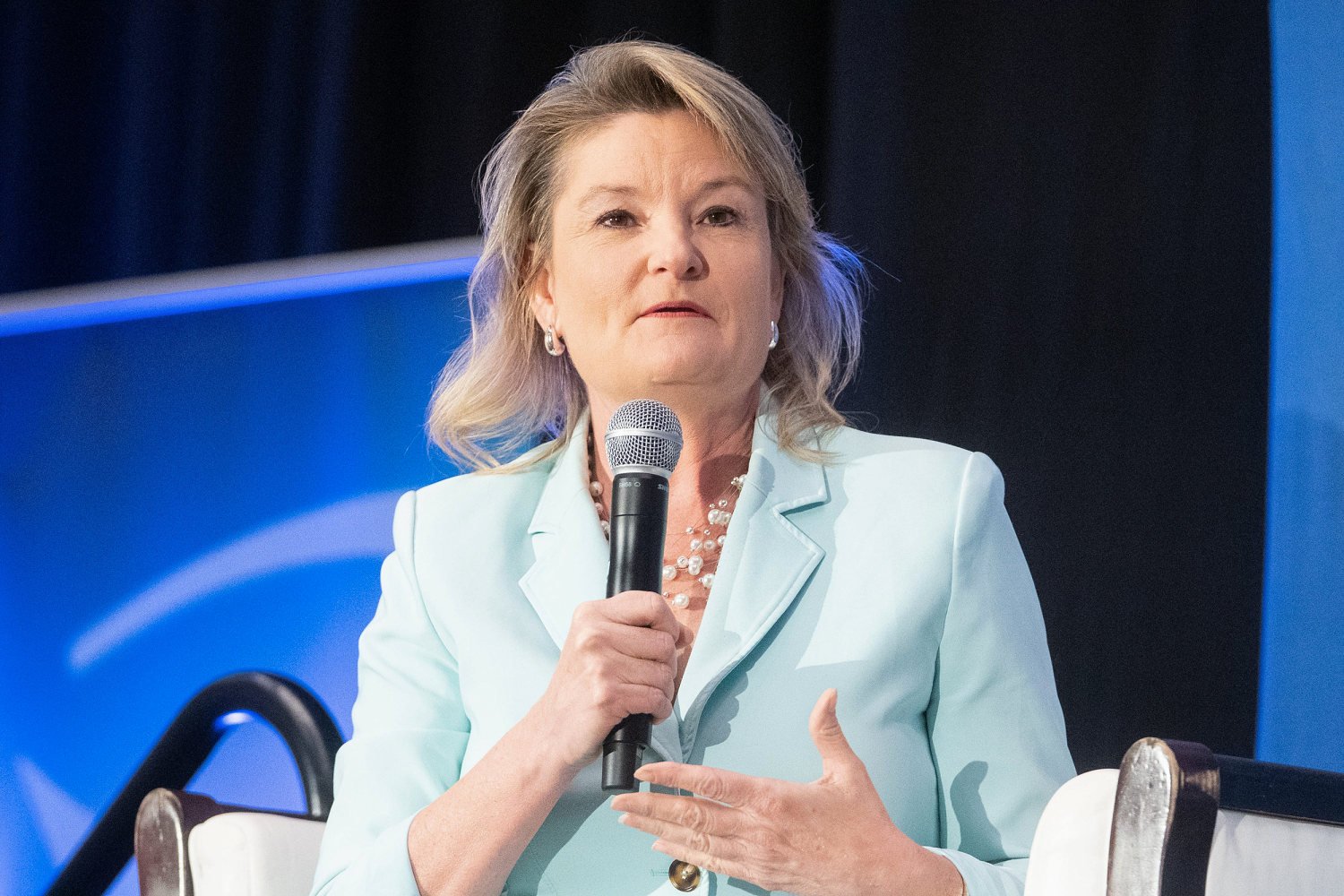
National pundits had already written the obituary for Democrats in Topeka. Every major political handicapper—including The Cook Political Report and Sabato's Crystal Ball—rated the open seat Lean Republican heading into late October. Donald Trump had carried Kansas by more than 16 percentage points just two years earlier, and national Republicans dumped over $10 million into attack ads burying the Democratic nominee.
Then the ballots were counted. For a closer look into this area, we suggest: this related article.
When the Associated Press finally called the race on November 12—nine days after Election Day—Democratic state Sen. Cindy Holscher had defeated Republican Senate President Ty Masterson. She won by less than a single percentage point, pulling 50.4% of the vote to Masterson's 49.6%, a razor-thin margin of roughly 7,600 votes out of nearly 1.1 million cast.
Her victory makes history in Kansas. For the first time ever, the state will have back-to-back female Democratic governors, with Holscher succeeding term-limited incumbent Laura Kelly. More importantly, her win offers a blueprint for how a Democrat can survive—and win—in deep-red territory without abandoning core party principles. For further information on this development, extensive reporting can also be found on USA Today.
Why the Polls and Betting Markets Missed It
If you checked prediction markets on Election Day, Masterson looked like a lock. Both Polymarket and Kalshi gave Republicans roughly a 70% probability of flipping the Kansas governor's mansion. RealClearPolling's final average showed Masterson ahead by 1.8 points.
Those numbers missed a massive geographic shift happening right under everyone's noses.
Holscher, who represents Overland Park, didn't just win Johnson County—she crushed it, capturing over 60% of the vote in the state's most populous suburban hub. That suburban surge completely neutralized Masterson's lopsided margins across rural western and central Kansas. It was the exact same coalition that carried Methodist pastor Adam Hamilton to a stunning upset in the U.S. Senate race on the very same ballot.
Honest political observers know that nationalized attacks often backfire in Kansas suburbs. Republicans spent months trying to paint Holscher as a radical socialist who wanted to turn Kansas into California. That message fell flat with moderate, college-educated voters in Johnson County who had already elected Holscher repeatedly in Republican-leaning legislative districts. As Holscher pointed out during a September campaign stop, you can't be too extreme when Republican voters keep sending you back to the statehouse every cycle.
The Primary Battle Nobody Expected Holscher to Win
Before she could take on Masterson, Holscher had to survive a bruising Democratic primary in August that the party establishment didn't want her to win.
Outgoing Gov. Laura Kelly and former Democratic Gov. Kathleen Sebelius both endorsed state Sen. Ethan Corson, a traditional moderate seen as the safe, hand-picked successor. Holscher ran to his left with a populist, kitchen-table message focused on working families and corporate accountability.
She beat Corson anyway.
That primary victory forced Holscher to build a grassroots fundraising engine from scratch. While she raised roughly $810,000 during the primary, her general election haul nearly tripled to $2.34 million between late July and late October. She still entered the final stretch at a cash disadvantage compared to Masterson's war chest and the flood of outside GOP money, so she compensated by holding roughly 80 town halls across the state.
Data Centers and the Rural-Suburban Crossover Issue
Most outside analysts assumed Holscher won purely on abortion rights or public education. Those mattered, sure. What actually broke through in rural and exurban communities was an issue barely registering on national radars: hyperscale data centers.
In 2025, the Republican-led Legislature passed sweeping 20-year tax breaks to lure massive tech data centers to Kansas. Masterson defended the incentives as vital economic development, pointing to a Google-affiliated project approved in Barber County as proof that local communities wanted the investment.
Holscher took the opposite stance and called for a statewide moratorium on new data centers.
During her town halls, she tapped into genuine anxiety among farmers and homeowners. Voters weren't thrilled about billion-dollar tech companies getting two decades of tax exemptions while soaking up scarce groundwater and driving up local electric bills. Holscher hammered Masterson over roughly $1 million in tech industry backing that helped fuel his campaign, framing him as a politician who prioritized corporate donors over local water supplies and utility rates.
Republicans tried to tag her as a flip-flopper because she had previously voted for certain data center tax exemptions. Voters didn't care about legislative procedural history. They cared that someone was finally questioning why taxpayers were subsidizing big tech's power and water consumption.
Taxes, Vouchers, and the Ghost of Sam Brownback
Whenever a Republican legislative leader runs for governor in Kansas, they have to outrun the shadow of former Gov. Sam Brownback's 2012 tax experiment. Holscher made sure Masterson couldn't escape it.
Throughout the campaign, including a fiery September debate at the Kansas State Fair, Holscher tied Masterson directly to the Brownback-era income tax cuts that triggered years of state budget crises and starved public schools of funding. Masterson countered that Holscher was a big-government spender who had never met a tax dollar she didn't want to spend twice.
Property Tax Relief vs. Tax Caps
Both candidates agreed homeowners were getting crushed by property taxes—by 2024, residential owners were paying 57% of the state's property tax bill compared to 43% for commercial properties. Their solutions couldn't have been more different:
- Holscher's approach focused on doubling the residential property tax exemption for schools from $75,000 to $150,000, creating a $60 million state incentive fund for local governments that cap budget growth under 3%, and rolling back corporate tax breaks.
- Masterson's approach centered on a constitutional cap on property tax valuation increases, a flat income tax structure, and aggressive restrictions on local government spending.
The Battle Over School Vouchers
Education funding drew an equally sharp line. Masterson championed private school voucher programs, arguing that Kansas kids shouldn't be trapped by their ZIP codes. Holscher called vouchers a scam that transfers public money from working-class families to wealthy private school parents, pointing out that rural counties often don't even have private schools to choose from. In a state where the local public school is often a small town's largest employer and social anchor, Holscher's defense of public education resonated far beyond traditional Democratic precincts.
Governing With a Hostile Legislature
Winning the election was the hard part. Governing might be even harder.
Unlike a governor sweeping into office with a friendly majority, Holscher will take the oath in January facing a heavily Republican Kansas Legislature. Even worse, the man she just defeated—Ty Masterson—remains the Senate President and the top Republican power broker in Topeka.
Every major plank of Holscher's platform faces an uphill climb:
- Medicaid Expansion: Kansas remains one of the few states that has refused to expand Medicaid under the Affordable Care Act. Holscher campaigned heavily on expanding coverage and lowering prescription drug costs, yet legislative leaders have blocked floor votes on expansion for years.
- Cannabis Legalization: Holscher backs legalizing both medical and recreational marijuana to generate new tax revenue for schools and infrastructure, a proposal that faces fierce resistance from social conservatives in both chambers.
- The Veto Pen: Like Laura Kelly before her, Holscher's most effective tool won't be passing progressive legislation—it'll be blocking conservative bills. She has already signaled she will veto private school voucher expansions, flat-tax proposals that favor top earners, and restrictions on mail-in voting grace periods.
If you want to track how Holscher's transition unfolds before her January inauguration, pay close attention to her cabinet appointments—starting with her choice of a veteran legislative attorney as chief of staff—and watch whether moderate Republicans in the House break ranks with Masterson on property tax relief and data center regulations during the opening weeks of the 2027 legislative session.