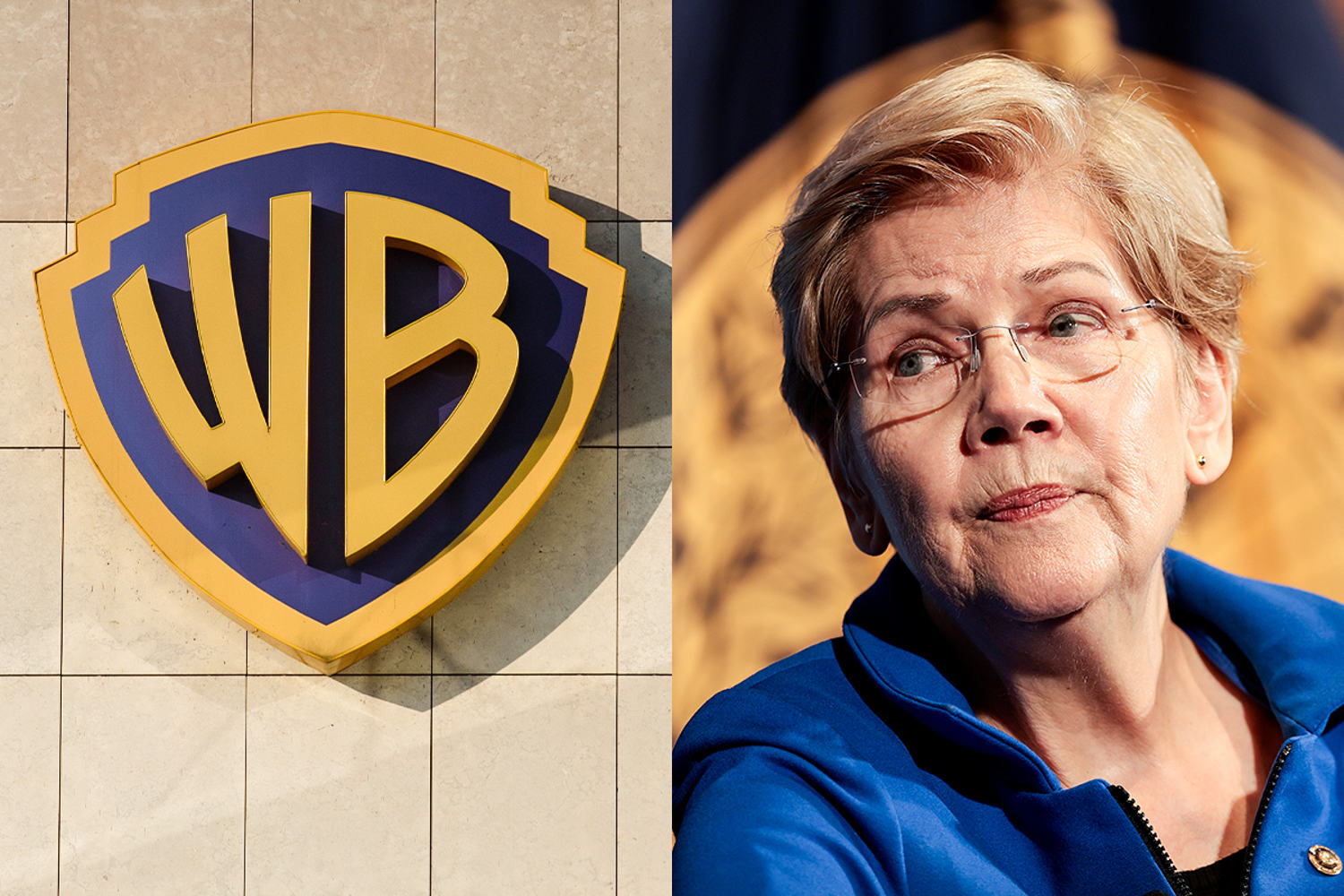
The era of "quiet" corporate mergers is dead. Right now, a messy collision between Hollywood's biggest players and the Trump administration has Democratic lawmakers demanding answers. They aren't just curious; they're suspicious. A group of influential Democrats, led by Senator Elizabeth Warren and Representative Joaquin Castro, just fired off a series of demands to figure out exactly what was discussed behind closed doors between Netflix leadership and Trump administration officials.
At the heart of the storm is the collapsed $83 billion attempt by Netflix to swallow Warner Bros. Discovery (WBD). For a few months, it looked like a done deal. Then, in a sudden pivot that left Wall Street dizzy, Netflix walked away. Now, Paramount Skydance—backed by the deep pockets of the Ellison family—is the last one standing at the altar. Democrats want to know if the government put its thumb on the scale to favor a more "politically friendly" suitor.
The secret meetings that changed everything
In late February 2026, Netflix Co-CEO Ted Sarandos made a high-stakes trip to Washington. He wasn't there for a screening. He was there to save a deal that would have merged the world's top streaming platform with a legendary Hollywood studio. But the timing of his visit raised eyebrows. Reports surfaced that Sarandos met with White House staff just as the Department of Justice began leaking its intent to block the Netflix-WBD merger on antitrust grounds.
The sudden collapse of the Netflix bid, occurring almost immediately after these meetings, has triggered a firestorm of oversight. Lawmakers are asking if the administration used the threat of a DOJ lawsuit as a "carrot and stick" strategy.
The suspicion isn't coming out of thin air. President Trump previously warned Netflix of "consequences" regarding its board members—specifically targeting former Obama advisor Susan Rice—while simultaneously commenting that the Netflix-WBD deal had "very big market share" problems. When the president says he'll be "involved" in a merger decision, it stops being a routine regulatory review and starts looking like a political negotiation.
Why the Paramount pivot matters
When Netflix exited the room, Paramount Skydance didn't just walk in; they ran. David Ellison’s Paramount is now the frontrunner to absorb WBD, including the crown jewel of news: CNN. This is where the political stakes get explosive.
Democratic lawmakers aren't just worried about streaming prices going up. They're worried about the "MAGA-ification" of the news. During Paramount's own acquisition by Skydance, the Ellisons reportedly installed an ombudsman at CBS—a move some staffers called a "hall monitor" for political leanings. If the same playbook is applied to CNN, the landscape of American news changes overnight.
- Market Dominance: A combined Netflix-WBD would have controlled nearly half the streaming market.
- Content Control: The merger would have consolidated the Harry Potter, DC Universe, and HBO libraries under one roof.
- Political Leverage: Critics argue the administration is blocking "liberal" Netflix to pave the way for a more "compliant" Paramount.
Antitrust or just anti-Netflix
The Department of Justice's Antitrust Division, led by Gail Slater, claims their scrutiny is strictly about the "marketplace of ideas" and economic competition. Under the 2023 Merger Guidelines, the Netflix-WBD deal was a "highly concentrated" nightmare. The numbers don't lie. A pre-merger HHI (Herfindahl-Hirschman Index) of over 2,000 already signals a market with too few players. Adding WBD’s 15% film distribution share to Netflix’s dominance would have pushed that index into the danger zone.
But the "purely economic" argument falls apart when you look at how other deals are being handled. Lawmakers are pointing out that while Netflix was being grilled by senators, Paramount received what looked like a smoother path, despite also posing significant consolidation risks.
"The government shouldn't be imposing its will on companies... dangling antitrust review based on content changes," noted Representative Becca Balint during a recent House Judiciary subcommittee hearing.
What happens to your subscription
Let's get real for a second. If you're reading this, you probably care more about your monthly bill than a letter from Elizabeth Warren. But they're connected. When these mega-mergers happen, the "efficiency" they promise usually translates to two things for you: fewer shows and higher prices.
- The Library Shrink: To pay off the massive debt used to fund these multibillion-dollar buyouts, companies often "write off" existing shows for tax breaks or license them away.
- The Price Hike: With fewer competitors, there's no reason to keep the $15.99 price point. We've seen this movie before.
- The Labor Crunch: For the people making the shows—the writers and actors—mergers mean fewer places to sell their work. This leads to less "risky" or original content.
The paper trail Democrats are chasing
The letters sent to the DOJ and the White House aren't just for show. They're demanding all communication logs, emails, and meeting notes between administration officials and the CEOs of Netflix, Paramount, and Warner Bros. Discovery. They're looking for evidence of a "pay-to-play" environment where regulatory approval is traded for editorial shifts.
If it turns out that the administration pressured Sarandos to drop Rice from the board or change CNN’s editorial direction as a condition for the WBD deal, it’s a First Amendment crisis wrapped in an antitrust violation.
What you can do next
The dust hasn't settled on the Paramount-WBD deal yet. If you're concerned about further media consolidation or the potential shift in news independence, keep a close eye on the House Judiciary Committee's upcoming hearings in March 2026. You can also track the Department of Justice’s formal filings regarding the Paramount acquisition to see if they apply the same "market share" logic they used to scare off Netflix.
Check the public comments section on the FTC and DOJ websites. They're legally required to read them before finalizing merger reviews. Don't assume these deals are "too big" for you to have a voice in—the Netflix collapse proved that even the biggest players can be forced to blink when the spotlight gets too bright.