Dawn in the Saudi Arabian interior does not arrive with a gentle gradient of gray. It breaks like a sudden welding spark. One moment the dunes are bruised purple under a fading constellation, and the next, the sun is a white-hot coin hammered flat against the horizon.
For generations, the people who traversed these empty quarters measured distance in the steady swing of a camel’s gait or the exhaustion of an engine idling in fifty-degree heat. Today, they measure distance in hours saved across continents. And soon, they will measure it by the hundreds of new aluminum bodies descending through that blinding morning light. For another perspective, consider: this related article.
Riyadh is writing a check that will rewrite the geography of global aviation.
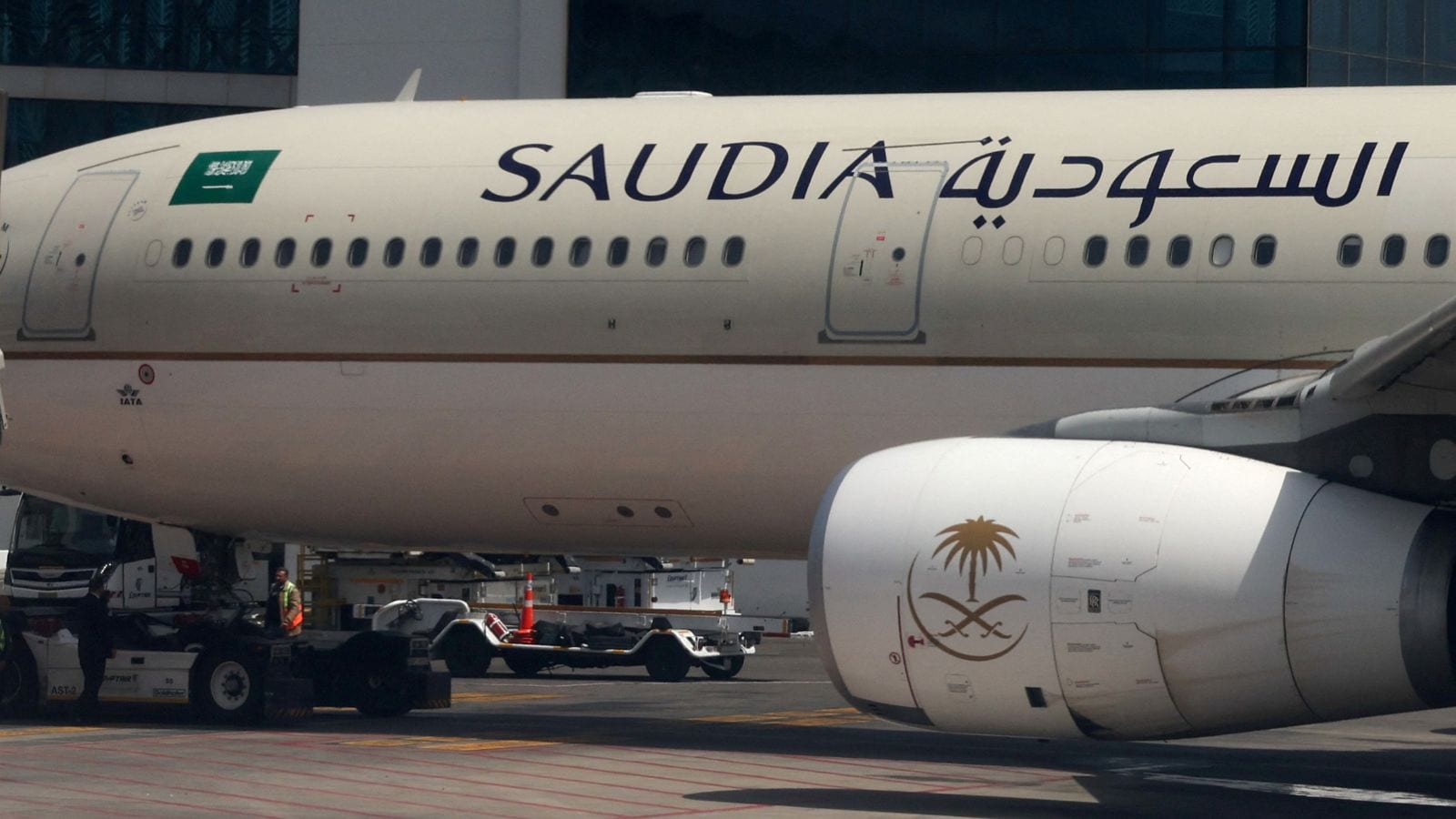
Behind the guarded glass of corporate suites in the diplomatic quarter, spreadsheets glow with numbers that cause traditional Western carriers to break out in a cold sweat. Whispers have hardened into procurement schedules. A colossal aircraft order is materializing, designed to bridge the empty spaces between the Kingdom and the rest of the planet with a fleet of widebody titans. Further analysis on this trend has been provided by Financial Times.
To understand why this matters, you have to stand on the tarmac at King Khalid International Airport at midnight.
The heat lifts off the concrete in shimmering ribbons. A Boeing 777 roars upward, its wings flexing under the immense weight of fuel and ambition, punching a hole through the velvet dark toward London, New York, Tokyo. Inside that cabin, a young Saudi engineer named Tariq sits by a window, staring down at the illuminated grid of a city that barely existed in its current form when his grandfather was herding goats in the Asir mountains. Tariq is part of Vision 2030 in the flesh. He studied aerospace engineering in Seattle, slept in a cramped apartment fueled by cheap coffee, and returned home because the center of gravity in civil aviation is shifting eastward.
Tariq does not care about supply chain bottlenecks. He cares about trajectory.
For decades, the global transit map was simple. You flew through London, Frankfurt, or New York. Those cities were the turnstiles of the world. But empires of concrete and legacy hubs grow brittle with age. They choke on their own terminal expansions, labor strikes, and ancient infrastructure. Meanwhile, the Arabian Peninsula has quietly positioned itself at the literal crossroads of the earth. Look at a globe from the top down. Riyadh is not on the way to somewhere else; it is the center of gravity itself. Eight hours from London. Eight hours from Singapore. Eight hours from almost every human being who matters in the global economy.
The upcoming aircraft order is not merely about buying big tubes with wings. It is an existential declaration.
Consider the mechanics of ambition on this scale. When an airline orders fifty, eighty, or a hundred widebody aircraft, it does not call up a catalog and circle a model. It initiates a decade-long economic marriage. It forces assembly lines in Toulouse and Seattle to retool. It dictates the fortunes of engine manufacturers in Derby and avionics labs in Munich. It requires thousands of pilots, mechanics, dispatchers, and caterers who must be trained from scratch in a country where commercial aviation was a minor state-run utility only a generation ago.
The stakes are invisible to the passenger sipping warm tea in seat 14A, but they shape the geopolitical weather.
When national identity becomes airborne, diplomacy takes on a different velocity. Riyadh is building a brand new mega-hub, a sprawling city-airport designed to handle over a hundred million passengers a year. Imagine a terminal the size of a small European principality, where autonomous electric pods ferry travelers between botanical gardens and duty-free palaces shaped like dunes. This is not science fiction. It is currently pouring out of concrete mixers and steel mills under the desert sun.
Yet, ambition of this magnitude always carries a quiet tremor of risk.
Walk through the training academies on the outskirts of Jeddah, and you will see the tension. Young men and women in crisp uniforms practice emergency evacuation drills in hydraulic simulators that pitch and roll in the dark. Their instructors are weathered veterans from Delta, British Airways, and Lufthansa—men who have flown through North Atlantic ice storms and Pacific typhoons, now earning high tax-free salaries to instill precision into a generation that grew up driving sports cars across six-lane highways.
There is a cultural friction here. Aviation is an industry built on rigid, unyielding British-derived safety protocols that brook zero deviation. The desert, by contrast, has historically valued improvisation, hospitality, and patience with the clock. Marrying those two worldviews is harder than paying for the airplanes. You can write a check for forty billion dollars in five minutes, but you cannot buy a thirty-year safety culture off the shelf. You have to build it one frightened trainee, one failed checkride, and one corrected manual at a time.
Tariq knows this better than anyone.
Last year, during a sim session, his engine fire warning light illuminated amber. His first instinct was to hesitate, to wait for guidance, to defer to the senior captain beside him. The instructor slammed a heavy hand down on the center console, cutting off the simulation with a loud, mechanical hiss.
"In the air," the instructor said, his voice echoing in the metallic gloom of the box, "the machine does not care who your father is. It does not care about your vision. It cares about your checklist. Run it again."
Tariq ran it again. And again. Until his thumbs moved across the switches with the cold, unthinking accuracy of a surgeon.
That is the hidden story behind the impending fleet expansion. It is not just about competing with Dubai or Doha, though the regional rivalry is fierce enough to curdle milk. It is about a nation trying to leapfrog a century of industrial evolution in the span of a single afternoon. They are moving from nomadic tents to widebody cockpits with barely a pause for breath.
When these new aircraft finally line up on the tarmac, smelling of fresh plastic, factory grease, and unburned jet fuel, they will carry more than tourists and executives. They will carry the weight of a kingdom trying to reinvent its own soul before the oil runs dry.
The sun dips below the horizon now, leaving the desert sky the color of a fresh bruise. Out on the runway, a silhouette breaks the twilight—a massive twin-engine giant easing out of the shadows, its navigation lights blinking a slow, rhythmic pulse against the gathering stars. Inside the flight deck, the screens glow green. The engines spool up with a rising, subterranean howl that vibrates right through the soles of your shoes.
The desert is clearing its throat. And the sky is waiting to see who owns the morning.