The Genesis on Forty Seventh Street
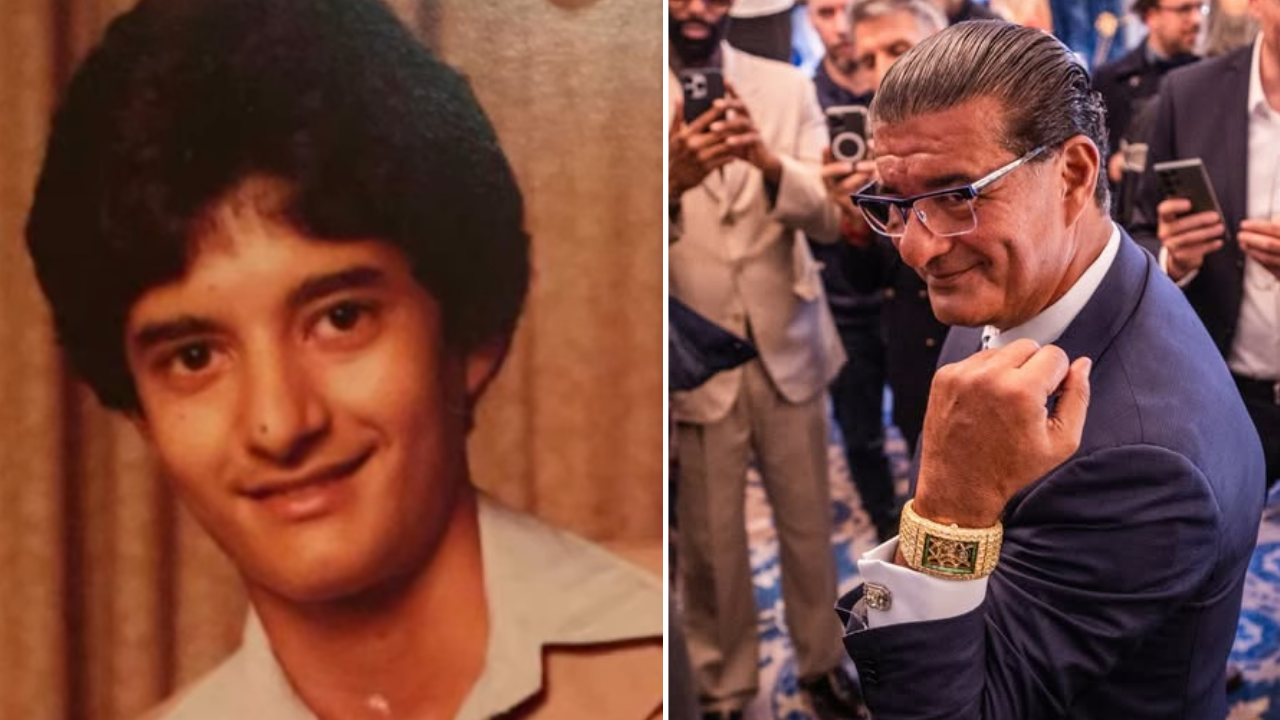
In 1978, a young Jacob Arabo received a timepiece from his father, a modest mechanical object that did little to signal the colossal empire it would eventually inspire. Back then, the watch was simply an artifact of utility and tradition, marking hours in a modest life before emigration reshaped his trajectory. Decades later, the name Jacob and Company became synonymous with wristwear that defied gravity, ignored convention, and commanded millions of dollars from collectors, athletes, and royalty. But the journey from a cramped booth in Manhattan's Diamond District to the upper echelons of global haute horlogerie was not a gentle glide through polite Swiss salons. It was an aggressive, high-risk climb born of immigrant hustle, raw audacity, and an uncanny ability to read cultural shifts before anyone else in the room.
To understand Jacob Arabo, one must understand Forty-Seventh Street in the late nineteen-eighties and nineties. The diamond district operated as a high-stakes arena where dealers traded loose stones over handshakes and whispered margins under harsh fluorescent lights. Arabo did not start with centuries of aristocratic heritage or an ancestral workshop nestled in the Val-de-Travers. He started with a jeweler's bench, an eye for brilliance, and an absolute intolerance for boring design. While established Swiss brands clung to conservative gold cases and understated dials, Arabo understood that watches could serve as canvases for hyper-conspicuous consumption. He offered clients what the Swiss establishment considered vulgar at the time: immense diamonds, oversized proportions, and uninhibited flash.
The strategy was risky. Traditionalists dismissed his early work as gaudy jewelry rather than serious horology. Yet Arabo recognized a fundamental truth about human desire. Wealthy buyers do not always want quiet discretion. Sometimes they want tangible proof of their ascent strapped directly to their wrist. By catering to clients who valued individual expression over historic pedigree, he carved out a lucrative niche that traditional houses were too proud or too blind to occupy.
The Hip-Hop Vanguard
The turning point for Jacob Arabo was not an endorsement deal orchestrated by a public relations agency in Geneva. It was a cultural alliance forged in New York recording studios. In the mid-nineties, hip-hop artists were reshaping global culture, acquiring unprecedented wealth, and demanding symbols of success that matched their meteoric rise. Traditional luxury houses frequently overlooked or outright dismissed these emerging cultural titans. Arabo did the exact opposite. He welcomed them into his shop with open arms and open counters.
Notorious Big famously dubbed him "Jacob the Jeweler," immortalizing the man in lyrics and cementing his status within hip-hop lore. Icons like Jay-Z, Pharrell Williams, and Fifty Cent walked into his storefront seeking custom pieces that pushed physical and aesthetic boundaries. Arabo accommodated them with multi-time-zone watches like the Five Time Zone piece, which let wearers track New York, Los Angeles, Paris, Tokyo, and local time simultaneously. It was functional arrogance wrapped in shimmering precious stones. This was not merely selling timepieces. It was co-creating a visual language of triumph for a generation that refused to wait for permission from the old guard.
The relationship went beyond transactional sales. Arabo understood the aspirations of his clients because his own story mirrored theirs—outsiders who built empires through sheer tenacity. When hip-hop royalty wore his custom diamond-encrusted creations in music videos and red-carpet events, the effect on global culture was seismic. The center of gravity for luxury endorsement shifted away from polo fields and yacht clubs toward recording studios and basketball courts. Arabo proved that cultural relevance could outmuscle centuries of Swiss tradition.
The Mechanical Metamorphosis
Critics for years dismissed Jacob Arabo as a jeweler masquerading as a watchmaker. They argued that his creations relied on quartz movements or modified third-party calibers housed inside extravagant diamond shells. For a long time, that critique held partial truth. But ignoring the brand's mechanical evolution became impossible by the twenty-teens.
Arabo made a calculated pivot. He wanted the respect of the Swiss watchmaking establishment. That ambition required engineering prowess that could match or exceed the most storied houses in Geneva and Neuchâtel. The result was a series of staggering complications that left horological traditionalists completely speechless.
Enter the Astronomia. Launched in two thousand fourteen, the Astronomia Tourbillon abandoned traditional dial layouts entirely. Instead, it featured a multi-axis gravitational tourbillon rotating alongside a magnesium globe and a diamond-cut moon, all floating under an enormous sapphire crystal dome. It was watchmaking executed as kinetic sculpture. The mechanical complexity required to power multiple intersecting axes while maintaining precision timing was monumental. Arabo partnered with visionary independent watchmakers like Valentin Ebner and Luca Soprana to turn wild concepts into functional micro-machinery. The message was unmistakable. Jacob and Company was no longer just about diamonds. It was about defying physical constraints.
Subsequent iterations pushed boundaries even further. The Astronomia Sky introduced a sidereal display and celestial panorama, while other models incorporated miniature opera boxes playing music or vibrating pistons mimicking high-performance engines. These watches required thousands of hours of hand-finishing and micro-engineering. They proved that beneath the dazzling exterior stones lay genuine mechanical mastery capable of standing toe-to-toe with any grand complication coming out of Switzerland.
The Economics of High-End Scarcity
Building multimillion-dollar mechanical marvels is an expensive, high-stakes gamble. The modern ultra-luxury market operates on economic principles that defy standard retail logic. The more exclusive, complex, and seemingly impractical a timepiece is, the higher the demand among ultra-high-net-worth collectors.
Arabo mastered this ecosystem with surgical precision. By limiting production runs of masterpieces like the Astronomia or the Bugatti Chiron Tourbillon—which features a working miniature engine replica driven by titanium pistons and a crankshaft machined from a single block of steel—the brand manufactured intense scarcity. These are not timepieces bought for daily office wear. They are portable art pieces, alternative asset classes traded among elite collectors who view traditional fine art as too static.
The profit margins on these hyper-exclusive pieces are astronomical, yet the development costs can crush lesser enterprises. Sourcing flawless stones, machining microscopic titanium gears to tolerances measured in microns, and hand-finishing every bridge requires deep capital reserves and immense patience. Arabo weathered legal and operational hurdles over the decades, transforming controversies into fuel for a resilient brand narrative. The business model relies entirely on maintaining an unshakeable aura of audacity. When a watch costs more than a suburban home, affordability is irrelevant. The only currency that matters is exclusivity.
Cultural Resonance in the Modern Era
Today, the watch market is saturated with heritage brands leaning heavily on archival revivals. Steel sports watches with integrated bracelets dominate auction houses and waiting lists. Amid this sea of conservative nostalgia, Jacob and Company stands out precisely because it refuses to look backward with reverence.
Instead, the brand leans into modern collaborations with hypercar manufacturers, contemporary artists, and digital creators, capturing the attention of a younger, wealthier, and far more global clientele. Asian markets, Middle Eastern collectors, and tech billionaires comprise the new vanguard of buyers who do not care about a two-hundred-year-old family crest from the Jura Mountains. They care about spectacle, technical audacity, and owning something that looks like it arrived from the future.
Jacob Arabo started with a simple watch gifted in nineteen seventy-eight. Nearly half a century later, his creations do not merely adorn elite wrists. They dictate the upper limits of what is possible when raw entrepreneurial ambition collides with uncompromising mechanical engineering. The old guard in Geneva still whispers about tradition. Meanwhile, Jacob and Company continues to build a universe where rules are suggestions and extravagance is the absolute standard.


