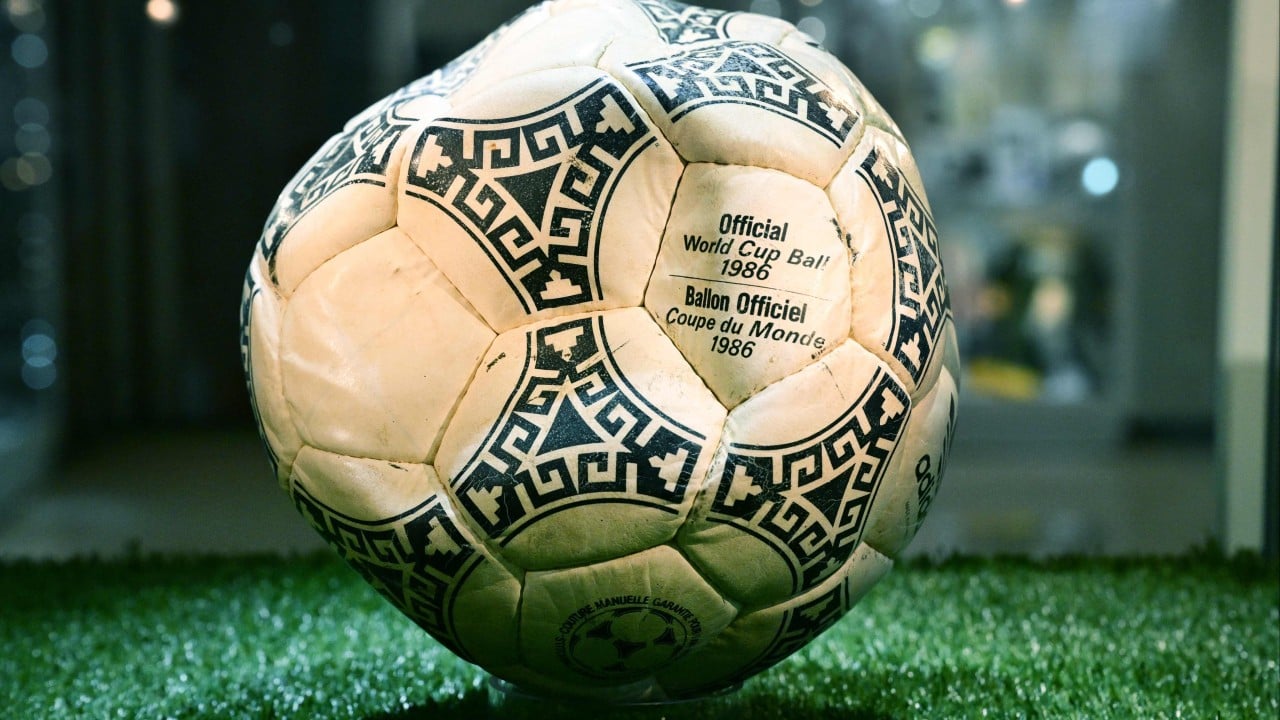
You can't talk about football history without landing squarely on June 22, 1986. At the Estadio Azteca in Mexico City, Argentina faced England in a World Cup quarter-final loaded with geopolitical tension and raw athletic rivalry. What happened on that pitch changed the sport forever. Now, the actual object that triggered the chaos—the legendary soccer ball used by Diego Maradona—is heading to a major United States auction house with an expected price tag hitting eight figures.
Let's break down why a worn, deflated piece of leather is commanding numbers that could buy a small island. If you found value in this piece, you might want to look at: this related article.
The Match That Defined Modern Football
The 1986 World Cup quarter-final wasn't just a normal ninety minutes. It featured two moments that encapsulate the absolute duality of Diego Maradona. Four minutes into the second half, the diminutive Argentine genius rose against English goalkeeper Peter Shilton. Instead of heading the ball, Maradona punched it past the keeper with his left hand. Tunisian referee Ali Bin Nasser missed the infraction, the goal stood, and soccer history took a bizarre turn.
Minutes later, Maradona scored what FIFA officially named the "Goal of the Century". He picked up the ball deep in his own half, spun past five English outfield players, rounded Shilton, and slotted it home. For another perspective on this story, check out the latest update from CBS Sports.
That single Adidas Azteca ball was witness to both utter controversy and sublime genius.
How the Referee Kept the Ultimate Prize
Most fans assume match balls vanish into equipment bags or get lost in the chaos of the final whistle. In this case, fate took a different route. FIFA regulations at the time allowed the central referee to keep the match ball. Ali Bin Nasser walked off the Estadio Azteca pitch with the physical artifact tucked under his arm.
For decades, the ball sat in Bin Nasser's possession. He eventually decided to part with it, putting it up for auction in London a few years ago where it failed to clear a high reserve despite heavy bidding. Now, heritage auctioneers in Texas have secured the piece, setting the opening bid at $2.5 million and predicting a final hammer price of $10 million.
When you look at comparable memorabilia, these figures start to make twisted sense. Maradona's match-worn jersey from that exact game sold for a staggering $9.3 million. If a shirt can command nearly ten million dollars, a ball touched by the "Hand of God" and used to carve through the entire English defense is bound to break records.
The Market for Sports History
Sports memorabilia used to be about dusty pennants and signed baseball cards kept in shoeboxes. Today, it functions as high-stakes alternative asset trading for billionaires. Museums, private collectors, and investment syndicates view iconic items like this ball as cultural touchstones.
Think about what owning this item actually means. You aren't just buying leather and rubber. You own the exact point of impact where one of the most debated plays in sports history occurred. It represents human cunning, refereeing failure, political background noise, and unmatched athletic brilliance all rolled into one object.
Heritage Auctions expects intense bidding when the auction runs from August 21 to 23. Whether it hits the lofty $10 million mark remains to be seen, but the sheer hype proves that the ghost of 1986 still casts a massive shadow over the sport.
Keep an eye on the final tally later this month. If it clears its estimate, it cements sports artifacts as some of the most resilient luxury investments on earth.