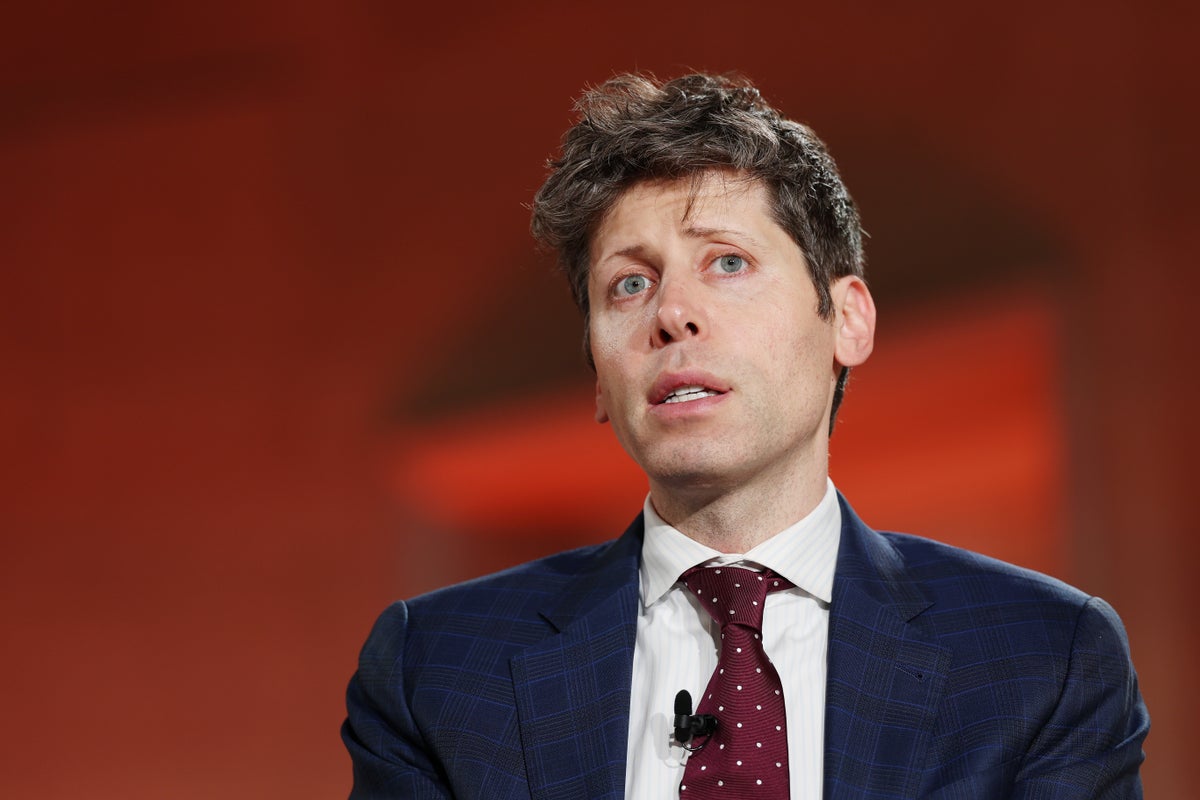
The arrest of a suspect linked to a planned physical assault on OpenAI CEO Sam Altman has exposed a volatile subculture that has moved far beyond online venting. For months leading up to the intervention by federal authorities, the individual reportedly circulated a "hit list" of Silicon Valley executives, using the term Luigi’ing—a reference to the Super Smash Bros. mechanic of knocking a powerful opponent off the stage—to describe the intended removal of tech leaders from the physical world. This wasn't just a disgruntled employee or a lone eccentric. It was the culmination of a specific, darkening strain of anti-technological accelerationism that views the current AI trajectory as an existential threat requiring a manual override.
The suspect's rhetoric focused on a perceived need to "reset" the industry by targeting its figureheads. While the media has focused on the quirky, video-game-inspired terminology, the investigative reality is much grimmer. This case highlights a massive security gap in the "open" culture of Silicon Valley, where CEOs often maintain high public visibility while steering technologies that sections of the population now view with genuine, visceral terror.
The Mechanics of Modern Luddism
The term "Luddite" is often thrown around as a slur for people who can't figure out a TV remote. That is a historical misunderstanding. The original Luddites weren't anti-technology; they were anti-exploitation, smashing the frames that threatened their specialized labor and community autonomy. What we are seeing now is a digital-age evolution of that desperation, but with a dangerous twist: the target isn't the machine, but the architect.
The suspect in the Altman case didn't focus on the code. He focused on the man. By advocating for the Luigi’ing of CEOs, the rhetoric shifted from debating policy to advocating for the physical elimination of the "drivers" of AI development. This logic follows a simple, albeit fractured, premise: if you cannot stop the algorithm, you must stop the person who signed off on its deployment.
This specific brand of radicalization often brews in fringe forums where the "AI alignment" debate has been stripped of its academic nuance and replaced with a "kill or be killed" mentality. These groups believe that the window to prevent a total societal collapse—either through economic displacement or "runaway" intelligence—is closing. When people believe the end of the world is a multi-billion dollar product line, they stop looking for legislative solutions.
The Security Illusion at 1801 Variety
Silicon Valley has long operated under a "campus" mentality. It’s an environment designed to feel accessible, transparent, and collegiate. Even as OpenAI grew from a non-profit research lab into a global power center valued at over $80 billion, the physical security around its leadership didn't immediately mirror that of a defense contractor or a high-ranking politician.
That has changed.
The threat against Altman has forced a massive, quiet mobilization of private security forces across the Bay Area. We are talking about six-figure monthly burn rates for executive protection details, armored transport, and sophisticated digital countersurveillance. The "Luigi" threat served as a cold bucket of water for an industry that thought it was still the "cool" disruptor. Now, they are the establishment, and the establishment is always a target.
Mapping the Radicalization Pipeline
How does a person go from reading a white paper on Large Language Models (LLMs) to being arrested for plotting an attack? It follows a predictable, yet increasingly accelerated, path.
- Economic Anxiety: The initial spark is usually the fear of obsolescence. Seeing a tool perform a task that took a human years to master creates a sense of profound powerlessness.
- Existential Framing: The individual moves into "Doomer" circles where AI isn't just a productivity tool; it is a "Great Filter" that will likely destroy humanity.
- Dehumanization of the "Architects": Figures like Sam Altman, Satya Nadella, and Jensen Huang are stripped of their humanity and viewed as "biological precursors" to a machine god or as greedy villains willing to trade the species for a stock bump.
- The Call to Action: The belief that "someone must do something" to break the cycle. This is where the Luigi’ing terminology enters the fray—it gamifies the violence, making it feel like a necessary move in a high-stakes simulation.
The Failure of Current Threat Assessments
Law enforcement and corporate security teams are traditionally trained to look for specific "indicators of interest." Usually, this involves tracking people with a history of violence or those who make direct, traceable threats. The problem with the anti-AI underground is that it is populated by highly intelligent, tech-literate individuals who know how to mask their digital footprints.
The suspect in the Altman case wasn't a standard "stalker" archetype. He was an analyst of the system he sought to destroy. His calls for action were often buried in dense, philosophical screeds about the nature of intelligence and the "moral necessity" of intervention. Traditional social media moderation tools, which look for "slurs" or "violent keywords," often miss these sophisticated justifications for harm.
Furthermore, the decentralized nature of these communities means there is no "leader" to arrest. You can take down a forum, but the sentiment remains. The "Luigi" concept has already been meme-ified; it exists now as a shorthand for a specific type of resistance.
A Culture of Hyper-Personalization
We live in an era where CEOs are the brand. When we think of Apple, we think of Tim Cook. When we think of Tesla, we think of Elon Musk. OpenAI has leaned heavily into the persona of Sam Altman—the soft-spoken, visionary wunderkind who wants to usher in a new era of human flourishing.
This hyper-personalization is great for marketing and fundraising, but it creates a massive target. When the public is told that a single individual is the one "steering" the future of the species, the dissatisfied members of that public will naturally look to that individual as the source of their problems.
If AI is going to take your job, or ruin the internet, or "end history," and Sam Altman is the guy saying he’s the one in charge of it, the logical (if deranged) conclusion for a radicalized mind is that removing Altman solves the problem. It is the "Great Man" theory of history applied to domestic terrorism.
The Response From the Valley
The reaction from tech giants hasn't been to engage with the fear, but to harden the perimeter. We are seeing a "Green Zone-ing" of the tech elite.
- Increased Use of AI for Surveillance: Ironically, the very tools being protested are being used to track the protesters. Facial recognition and predictive behavior modeling are now standard in the security suites of major tech campuses.
- Reduced Public Interaction: The days of the CEO wandering the open-plan office or grabbing coffee at a local shop are effectively over for the top-tier firms.
- Litigation as Defense: Companies are using broader definitions of "harassment" to get restraining orders against critics who haven't even made physical threats yet, attempting to preempt any potential escalation.
This creates a feedback loop. The more the tech elite isolate themselves behind walls and security guards, the more they appear like an "other" to the radicalized fringes. This reinforces the narrative that these leaders are "unaccountable" and "untouchable," which in turn fuels the desire to "reset" the system through force.
The Missing Debate
The focus on the "Luigi" threat and the suspect's mental state allows the industry to ignore the underlying cause of the radicalization. There is a genuine, widespread fear about the lack of agency the average person has over the future of technology.
When people feel they have no democratic or economic way to influence a technology that will fundamentally alter their lives, they look for other ways to exert power. This doesn't excuse violence—nothing does—but it explains why the rhetoric is finding a receptive audience.
The industry likes to talk about "guardrails" for AI, but it rarely talks about guardrails for the power held by the companies themselves. Until there is a legitimate, transparent way for the public to feel they have a "kill switch" or at least a seat at the table, the fringe will continue to dream of their own, more violent versions of a manual override.
The Logistics of the "Luigi" Philosophy
To understand the threat, you have to understand the specific logic of the Luigi’ing term. In the game Super Smash Bros., Luigi’s "Taunt" or his "Super Jump Punch" can result in an instant KO if timed perfectly against a superior foe. It is the "underdog" move.
In the suspect's manifesto, this was the central theme: the "little guy" using a specific, well-timed strike to remove the "overpowered" entity. This reflects a deep-seated feeling of being an "NPC" (Non-Player Character) in someone else's story. By planning an attack, the suspect was attempting to become a "Player" again.
Federal investigators found that the suspect had been tracking Altman’s movements through public flight records and social media check-ins—a process known as "doxing" that has become a precursor to physical stalking. This level of dedication suggests that we are moving out of the era of "crank mail" and into the era of sophisticated, mission-oriented threats.
The Problem with "Open" Innovation
OpenAI started with a mission of transparency. However, as the stakes have risen, the "Open" in their name has become increasingly ironic. This shift from a public-good research entity to a closed-door corporate titan has created a sense of betrayal among early followers.
Many of the most radicalized anti-AI individuals are former tech enthusiasts. They feel that the promise of the internet—decentralization and empowerment—is being traded for a centralized, AI-controlled future. They see Altman as the face of this "Great Betrayal."
Evaluating the Threat Landscape
Is this an isolated incident, or the start of a trend? If we look at historical precedents like the Unabomber or the anti-biotech movements of the early 2000s, there is a clear pattern. When a technology moves faster than the legal or social framework can handle, a subset of the population will react with violence.
The difference today is the speed of the feedback loop. A radical thought can be validated by thousands of people globally within minutes. The "Luigi" concept wasn't just one man's delusion; it was a shared meme in certain corners of the web.
We must also consider the role of "AI-generated" content in this radicalization. There are now bots and automated accounts that pump out "Doomsday" scenarios 24/7 to drive engagement. These accounts don't care about the truth; they care about clicks. But for a person on the edge, this constant stream of "The World is Ending" content is the final push they need to take action.
The Hard Reality for Silicon Valley
The "Luigi" suspect is currently in custody, but the ideological vacuum he inhabited is being filled by others. Silicon Valley can no longer pretend it is a neutral actor in a playground of ideas. They are building the infrastructure of the future, and that makes them the most significant political targets on the planet.
Security guards and NDAs are a temporary fix. They protect the person, but they don't protect the "image" of the industry. As long as AI development is seen as something being done to the public rather than done for them, the list of names on the digital hit lists will only grow.
The industry needs to stop treating "AI Safety" as a purely technical problem of alignment and start treating it as a social problem of trust. If you don't want people to try and "knock you off the stage," you might want to stop telling them the stage doesn't belong to them anymore.
The arrest of one man didn't end the threat; it merely signaled that the "phoney war" of online debate is over. The physical world has entered the chat, and it is far more dangerous than any algorithm.
Security details will get tighter. The walls will get higher. But the core problem remains: you cannot build the future while looking over your shoulder for the people you left behind.
Every new breakthrough in the lab now carries a hidden cost in the security budget. That is the new tax on innovation. It is a tax paid in paranoia, and it is a price that Sam Altman and his peers will be paying for the rest of their careers.
The "Luigi" threat was a warning shot. The next one might not come with a video game reference attached. The industry is now in a race not just to achieve AGI, but to do so before the social fabric frays to the point where "Luigi'ing" becomes more than just a meme.
Silicon Valley is no longer a collection of startups. It is a collection of targets. The "reset" that the suspect wanted hasn't happened, but the "business as usual" era of the tech CEO is officially dead.
Finalize your security protocols. The "underdogs" are no longer just posting; they are scouting.