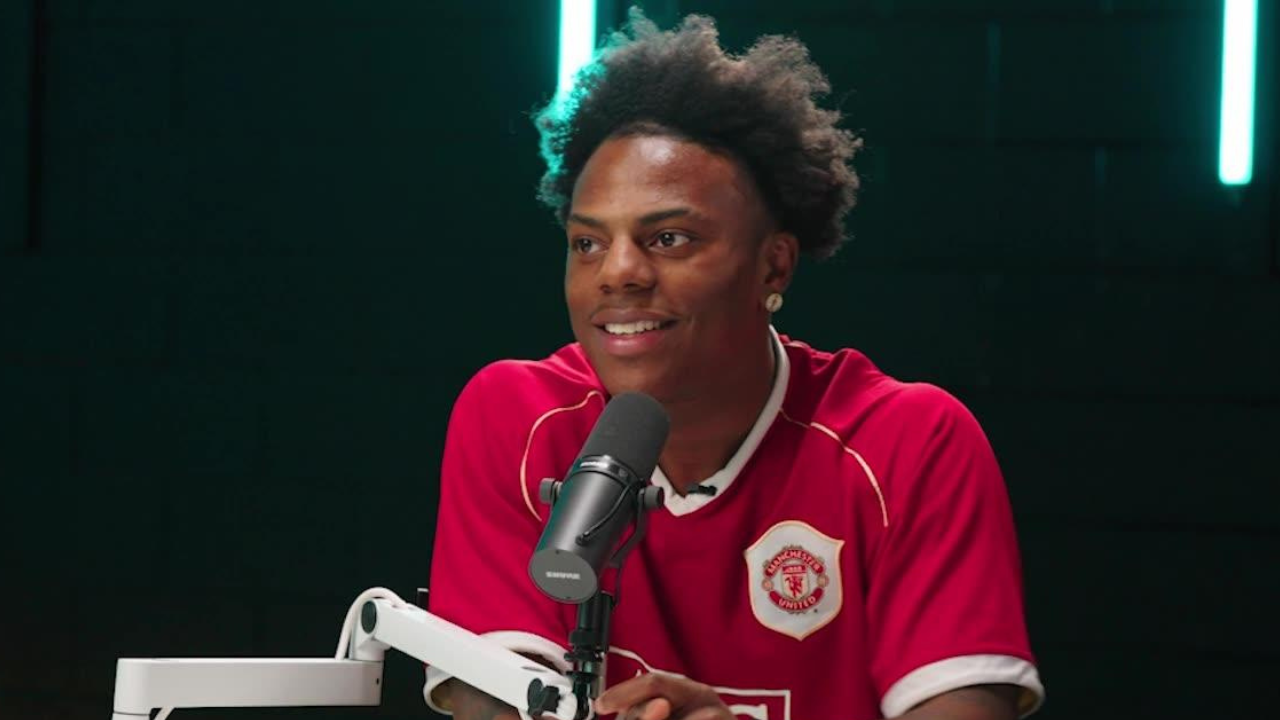
The convergence of high-velocity creator economy influence and legacy broadcast infrastructure has reached a friction point defined by jurisdictional ambiguity and the rapid deployment of generative AI. During a recent Sacramento Kings vs. San Antonio Spurs broadcast, Darren "IShowSpeed" Watkins Jr. was featured in an AI-integrated advertisement that was abruptly flagged by his own management team as "illegal." This event serves as a foundational case study in the breakdown of tripartite licensing: the intersection of Name, Image, and Likeness (NIL) rights, league-wide broadcasting mandates, and the unregulated application of synthetic media in live sports environments.
To understand why this occurred, one must look past the surface-level drama of a "streamer in a commercial." The incident reveals a systemic failure in the current framework of digital asset management. We are witnessing a transition from traditional talent appearance contracts to a more volatile model of Synthetic Licensing Units.
The Tri-Node Conflict of Digital Likeness
The illegality claimed by Watkins’ team stems from a fundamental conflict between three distinct legal and operational nodes. When a creator of Watkins' scale enters a professional sports arena, their presence is governed by a patchwork of permissions that were never designed for the era of generative content.
- The Venue Participation Node: Standard NBA ticketing and media credentials include boilerplate language granting the league the right to use a spectator's or attendee’s image for "promotional purposes." However, these clauses are historically interpreted as passive captures—appearing in the background of a shot or on a "jumbotron" segment.
- The Commercial Integration Node: The transition from a passive crowd shot to a targeted, AI-driven advertisement represents a shift from "incidental use" to "commercial endorsement." If the AI tool used Watkins’ specific biometric data to generate or enhance a segment without a separate commercial talent agreement, it bypasses the standard financial compensation models that protect high-value talent.
- The Platform Exclusivity Node: Many top-tier creators operate under exclusivity or "first-look" deals with specific streaming platforms or brands. An unauthorized AI ad appearing on a broadcast may inadvertently trigger breach-of-contract clauses in the creator’s other multi-million dollar partnerships.
The claim of "illegality" in this context likely refers to Right of Publicity violations. In many jurisdictions, using a person’s likeness for a commercial advantage without consent is a statutory violation, regardless of whether the person was physically present in a public space like an arena.
The Cost Function of AI Personalization in Broadcast
Broadcasters are increasingly utilizing AI to "hyper-personalize" the viewing experience. The goal is to maximize engagement metrics by inserting recognizable influencers into the broadcast flow. However, the cost function of this strategy is currently lopsided. The marginal gain in viewer retention is being offset by the massive legal liability of "Synthetic Misappropriation."
The mechanism at play here is a Likeness Arbitrage. The broadcast team attempted to capture the high market value of Watkins’ brand—which commands premium rates for traditional advertisements—without paying the "talent premium" associated with a formal ad buy. By using AI to process his image in real-time, they converted a high-cost asset (a celebrity endorsement) into a low-cost production feature (a broadcast filter or segment).
This creates a logic gap:
- Fact: IShowSpeed has a quantifiable market value per impression.
- Mechanism: AI allows the broadcast to "render" his value into an ad format without a contractual trigger.
- Result: Management intervenes to prevent the devaluation of the talent’s commercial IP.
The Governance Vacuum in Synthetic Media
The "unexpected situation" during the Kings vs. Spurs broadcast is a direct result of the lag between technological capability and governance protocols. Most NBA broadcast agreements were drafted before the democratization of real-time AI video manipulation.
The Problem of Recursive Consent
In a standard broadcast, consent is linear. You sign a release, and the footage is used. In an AI-enhanced broadcast, consent becomes recursive. Does a general release for a crowd shot extend to the use of that shot as training data for a real-time generative model? Does it cover the "style transfer" of a fan’s reaction onto a branded template?
The technical architecture of these AI ads often involves:
- Latent Space Manipulation: The system identifies a high-interest face in the crowd.
- Feature Extraction: It isolates the specific "nodes" of the face.
- Synthetic Overlay: It applies an advertising layer over the live feed.
Because this process happens in milliseconds, there is no manual "legal check" to see if the person being augmented is a private citizen (subject to lower privacy protections) or a public figure with a multi-million dollar likeness value. The AI is "blind" to the contractual status of its subjects.
Strategic Failure in Talent Integration
The Sacramento Kings and the NBA are leaders in digital innovation, but this incident highlights a breakdown in Talent Ops (Talent Operations). When an influencer of Watkins’ magnitude is invited or hosted at a game, the "Asset Protection" protocol should override the "Fan Engagement" protocol.
The failure occurred because the broadcast team treated a "Top 1% Creator" like a "Standard Spectator." From a data-driven perspective, Watkins is not a spectator; he is a competing media entity. His presence in the arena generates more "Social Graph" value than the broadcast itself for certain demographics. To process his image through an AI ad engine without a dedicated rider is an operational oversight that invites litigation.
The Future of Biometric Licensing in Sports
This incident will force a shift toward Granular Biometric Permissions. We can forecast that future talent contracts will include specific "Opt-Out" clauses for synthetic augmentation.
The industry will likely move toward a tiered permissioning system:
- Tier 1: Basic Broadcast: Rights to appear in standard game coverage.
- Tier 2: Augmented Engagement: Rights to be featured in interactive, non-commercial polls or graphics.
- Tier 3: Synthetic Commercialization: Rights to be processed by AI for branded content.
The IShowSpeed incident proves that Tier 3 cannot be "grandfathered in" through old-school ticket language. It requires a distinct transactional event.
Navigating the Rights Bottleneck
For organizations looking to deploy AI in live broadcasts, the path forward requires a shift from reactive legal defense to proactive asset tagging.
- Real-time Opt-out Registries: High-value talent should be "whitelisted" or "blacklisted" within the AI's computer vision system. If the camera identifies a registered celebrity, the AI ad-layer must automatically disable to prevent unauthorized commercialization.
- Micro-Licensing Smart Contracts: If an AI system wants to use a creator's likeness in an ad, a smart contract could theoretically trigger a micro-payment to the creator's agency in real-time, though the infrastructure for this is years away.
The primary takeaway for the sports and tech industry is that AI is not a loophole for talent costs. It is a new medium that requires the same—if not more—rigorous intellectual property protections as traditional film and print. The "illegal" label used by Watkins’ team is a warning shot to every broadcast entity attempting to scale "free" engagement through synthetic means.
The strategic play for teams and leagues is to develop a Creator Likeness API. Instead of risking "illegal" AI ads, leagues should partner with creators to create pre-authorized digital twins. These assets can then be safely used in AI-driven broadcasts with clear, pre-negotiated revenue-sharing models. This moves the interaction from a legal liability to a scalable revenue stream, aligning the interests of the broadcaster, the creator, and the AI platform.