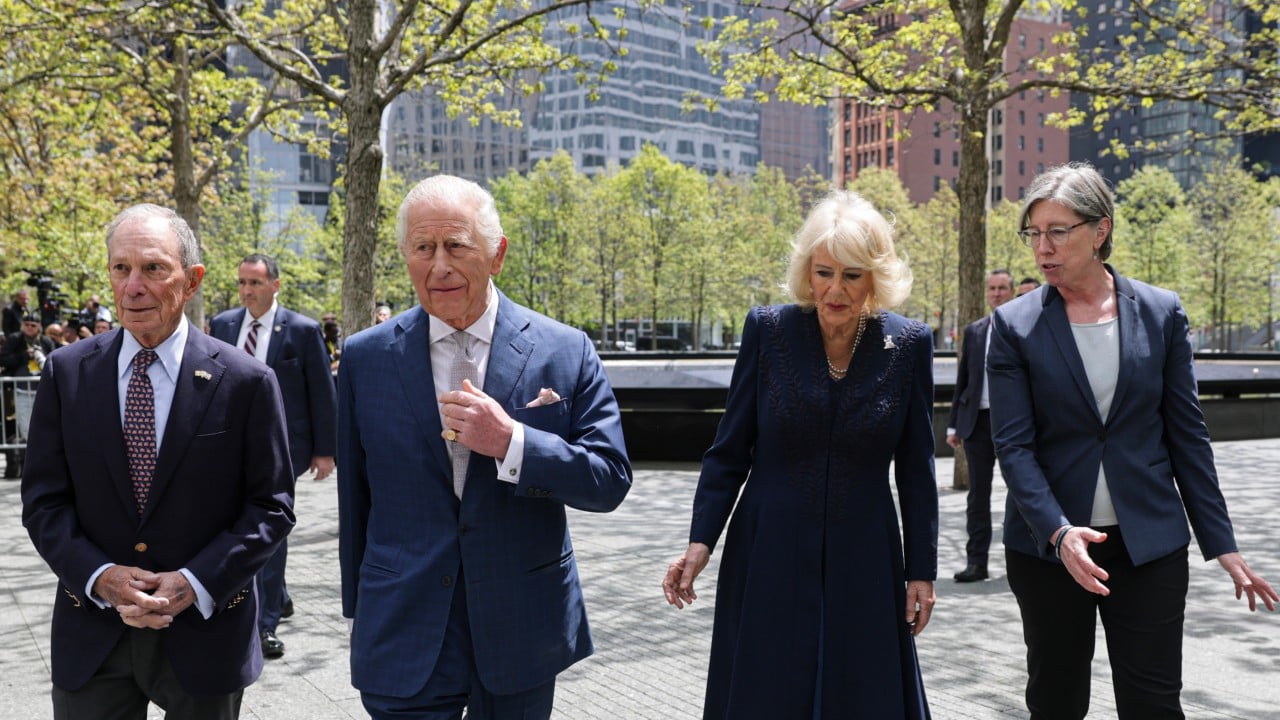
The modern state visit by a British monarch functions less as a ceremonial gesture and more as a high-precision instrument of "soft power" calibration. When King Charles III commemorates 9/11 victims in New York, the event is not merely a moment of reflection; it is a calculated deployment of the British Sovereign’s unique status to reinforce the Anglo-American security and cultural axis. This specific engagement operates within three distinct structural layers: the validation of shared historical trauma, the reinforcement of intelligence-sharing protocols (the Five Eyes framework), and the stabilization of the "Special Relationship" during periods of geopolitical volatility.
The Tri-Lens Framework of Royal Diplomacy
To understand the strategic value of a New York visit, one must bypass the sentimental narrative and examine the functional output. The visit serves as a force multiplier for the Foreign, Commonwealth & Development Office (FCDO) through three specific mechanisms:
- The Continuity Function: Unlike elected officials, the Monarch provides a multi-generational link to historical events. By visiting the 9/11 Memorial, the King anchors the current UK administration to a shared defensive history that predates the current political cycle.
- The Narrative Neutralization: Royal presence can bypass partisan friction in the United States. While a Prime Minister’s visit might be viewed through the lens of current trade disputes or climate policy, the Sovereign operates as a non-political entity, allowing for a "reset" of the bilateral mood without requiring policy concessions.
- The Symbolic Reciprocity: The United States remains the UK’s most critical security partner. Participation in high-stakes American commemorative rituals acts as a form of diplomatic interest payment on the security debt owed to the U.S. for its role in European stability.
The Anatomy of the 9/11 Commemorative Engagement
The logistics of a Royal visit to the National September 11 Memorial & Museum are governed by strict protocols that maximize visibility while maintaining the required gravity. The ceremony is a demonstration of Sovereign Solidarity, a term used to describe the rare instances where a foreign head of state adopts the grieving posture of a local citizen.
Structural Components of the Commemoration
The King's itinerary typically involves a sequence of high-impact interactions:
- The Wreath Laying: This is the core "visual asset" of the visit. The choice of flora, the wording on the card, and the duration of the silence are all negotiated weeks in advance. The goal is to provide a definitive image that signals British permanence in the Western security coalition.
- The Family Meeting: Private audiences with the families of the 67 British victims of the 9/11 attacks serve to bridge the gap between the Crown and the populace. This fulfills the "Comforter-in-Chief" role, which is the Monarch’s most effective domestic and international PR tool.
- The British Garden at Hanover Square: Often a secondary stop, this location serves as a physical monument to the UK-US bond. The maintenance and royal endorsement of this space ensure that British presence in Manhattan is permanent and physical, not just digital or diplomatic.
Quantifying the Impact of Royal Soft Power
Standard metrics for measuring the success of a state visit often fail because they focus on social media impressions rather than structural shifts. A more accurate analysis utilizes the Diplomatic Return on Investment (DROI), which considers:
- Media Saturation Value: The equivalent advertising cost of the positive coverage generated across U.S. networks, which serves to soften the American public's perception of British "post-Brexit" relevance.
- Access Arbitrage: The ability of the King to secure meetings with high-level American financiers and political leaders who might otherwise deprioritize a meeting with a cabinet minister.
- Security Alignment: The degree to which the visit facilitates quiet, back-channel discussions between the Royal entourage (which includes high-ranking FCDO officials) and their American counterparts.
The Bottleneck of Ceremonial Diplomacy
While the New York visit is a masterclass in optics, it faces a fundamental constraint: the Diminishing Marginal Utility of Tradition. As the demographic makeup of the U.S. shifts, the historical and cultural resonance of the British Monarchy is under pressure. The 9/11 commemoration is a powerful tool for the Gen X and Boomer cohorts who lived through the event, but its effectiveness as a diplomatic anchor for younger, more skeptical generations is unproven.
The second limitation is the Political-Apolitical Paradox. The King must remain strictly apolitical, yet his very presence is a political statement. If a visit is seen as too closely aligned with a specific U.S. administration, it risks alienating the opposition. Therefore, the 9/11 site is chosen specifically because it is one of the few remaining "sacred spaces" in American life that remains largely insulated from partisan bickering.
The Mechanism of Intelligence and Security Signaling
The timing of such visits often correlates with renewals of defense agreements or shifts in NATO strategy. By standing at the site of the greatest intelligence failure of the 21st century, the King subtly reaffirms the necessity of the UK-US intelligence apparatus. The "Five Eyes" agreement—comprising the US, UK, Canada, Australia, and New Zealand—is the invisible infrastructure beneath the surface of the royal visit. The King, as Head of State for several of these nations, acts as the living embodiment of this intelligence union.
Comparative Analysis: The Queen vs. The King in New York
The 2010 visit by Queen Elizabeth II to the same site established a benchmark. Her presence was defined by "Stoic Endurance," reflecting her role as a World War II-era figure. King Charles III must pivot this narrative toward "Shared Future Resilience." His focus on environmental sustainability and urban planning often bleeds into his diplomatic engagements, creating a more "activist" sovereign profile than his predecessor.
This shift creates a new friction point. Where the Queen was a blank canvas upon which the U.S. could project its own ideals of Britishness, the King has a well-documented history of specific advocacy. In the context of a New York visit, this means the King’s engagement with 9/11 must be carefully balanced to ensure his personal causes do not overshadow the primary mission of bilateral stabilization.
The Cost Function of Global Representation
Maintaining the Royal infrastructure for such visits involves significant expenditure, often categorized under the Sovereign Grant. Critics frequently point to the "Cost of Majesty," but a data-driven view suggests that the Sovereign Grant—roughly £86 million annually—is a negligible price for the diplomatic leverage it provides. A single successful state visit can influence trade sentiment or defense cooperation in ways that a £100 million ad campaign could not replicate.
The logistical complexity includes:
- Security Cascades: The coordination between the Metropolitan Police Department (NYPD), the Secret Service, and the Royalty and Specialist Protection (RaSP) command.
- Protocol Synching: Ensuring that the King's movements do not conflict with the complex social and political hierarchies of New York City’s elite.
- The Advance Team: A 6-to-12 month lead time involving hundreds of personnel to ensure that every "spontaneous" interaction is scripted for maximum diplomatic effect.
Strategic Recommendations for the FCDO
To maximize the utility of the King’s New York engagements, the following structural adjustments are required:
- Digital Integration: Move beyond traditional broadcast media and leverage the King’s presence for high-tier LinkedIn and professional network narratives that resonate with New York’s financial and tech sectors.
- Thematic Diversification: While 9/11 is the emotional anchor, the visit must be paired with "Future-Facing" engagements—such as a visit to a green-tech hub in Brooklyn—to prove that the UK-US relationship is not purely retrospective.
- The Commonwealth Pivot: Utilize New York’s status as a global hub to host Commonwealth leaders simultaneously, turning a bilateral visit into a multilateral power play.
The King’s visit to New York is the ultimate "Long-Game" maneuver. It recognizes that while trade deals are signed by politicians, the environment in which those deals are negotiated is shaped by the enduring, symbolic presence of the Crown. The 9/11 commemoration is the most potent tool in this arsenal, as it reminds the American superpower that in its darkest hour, the British Sovereign was—and remains—present.
The final strategic move for the UK is to institutionalize these visits not as occasional events, but as a recurring "Sovereign Audit" of the Special Relationship. This ensures that the cultural and emotional bonds between the two nations are refreshed before they reach the point of critical decay. The 9/11 site will remain the primary theater for this audit for the foreseeable future.