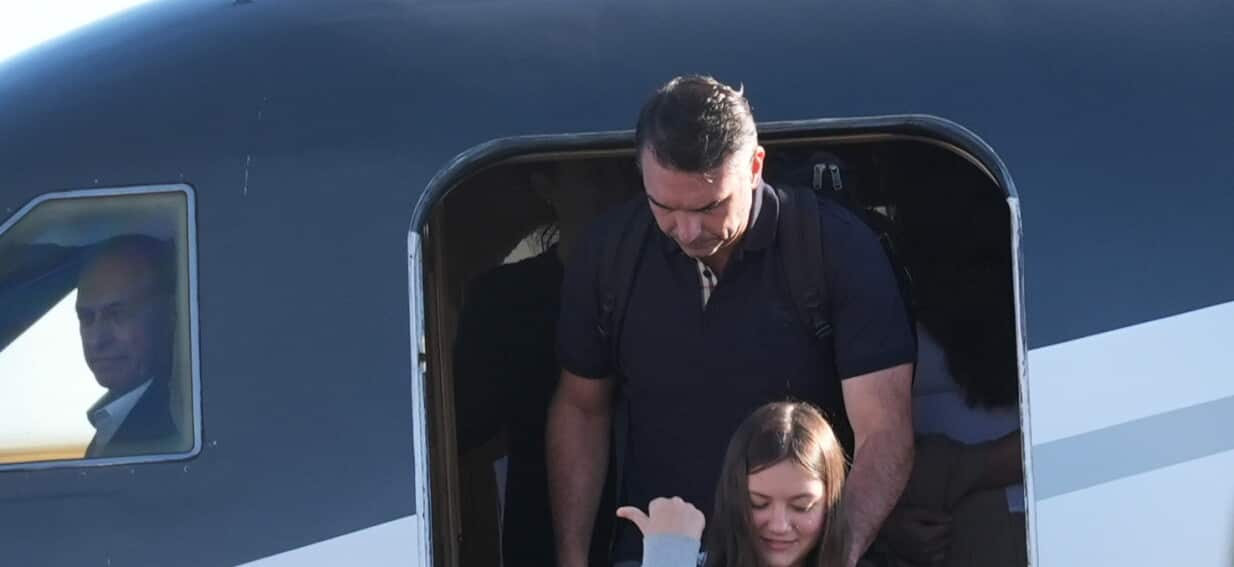
When Brazilian Senator Flávio Bolsonaro abruptly departed Brazil, crossing borders through Argentina before heading toward the United States, the move triggered an immediate diplomatic firestorm across the Americas. Questions immediately zeroed in on Washington and Buenos Aires regarding what their governments knew, whether official channels facilitated the transit, and how border authorities processed a high-profile political figure facing mounting legal scrutiny at home. At the center of the controversy lies a sensitive intersection of Mercosur travel protocols, hemispheric political alliances, and the limits of judicial reach when prominent lawmakers cross international lines.
Standard reporting has largely treated the episode as a straightforward political scandal or a routine border-crossing anomaly. That framing misses the real mechanics of how high-profile political exits actually function in South America. Moving a sitting senator—especially the eldest son of former President Jair Bolsonaro—across two international jurisdictions without immediate interception requires navigating a complex web of diplomatic courtesies, regional immigration agreements, and quiet bureaucratic discretion.
The Architecture of a Regional Exit
To understand how Flávio Bolsonaro moved through Argentina on his way to the United States, you have to look at the legal infrastructure governing South American travel. Under Mercosur residency and transit agreements, citizens of member states—including Brazil and Argentina—can cross borders using national identity cards rather than passports. This system was designed to promote regional integration and commercial ease, not to track politically exposed persons.
Border checkpoints between Brazil and Argentina process thousands of travelers daily. Unless a specific, active judicial order or an Interpol Red Notice is registered directly into the shared immigration databases at the exact moment of transit, border agents have neither the legal mandate nor the operational mechanism to detain a sitting legislator.
Diplomatic passports complicate the picture further. Sitting members of the Brazilian National Congress hold official diplomatic travel documents. While a diplomatic passport does not grant blanket immunity from foreign criminal jurisdiction outside of accredited posts, it routinely routes the holder through expedited consular lanes. At busy international hubs like Buenos Aires’ Ezeiza International Airport, protocol officers and airline liaisons routinely process diplomatic credentials with minimal friction.
Buenos Aires and the Milei Factor
Argentina’s role in this transit cannot be separated from the political realignment in Buenos Aires. Since taking office, President Javier Milei has positioned his administration as a vocal ideological ally of the Bolsonaro movement. Throughout his campaign and presidency, Milei maintained open channels with the Bolsonaro family, framing their legal battles in Brazil as ideological persecution by the judiciary and the administration of Luiz Inácio Lula da Silva.
Critics in Brasília immediately questioned whether Argentine authorities offered more than standard border courtesy. Did Buenos Aires receive advance notice of Flávio Bolsonaro’s arrival? Did Argentine security or migration officials provide logistical assistance to ensure a smooth connection out of the region?
Even without overt executive intervention, political signaling shapes bureaucratic behavior. When an administration openly expresses sympathy for a foreign political faction, mid-level officials at border crossings and airport protocol offices rarely go out of their way to create administrative hurdles for figures aligned with that faction. In South American diplomacy, passive facilitation—simply declining to raise red flags or delay processing while checking with foreign counterparts—is often far more effective than formal asylum or official protection.
Argentina’s Ministry of Security and migration authorities face intense scrutiny over the exact timeline of the senator's entry and exit. Under bilateral cooperation agreements, intelligence and border agencies between Brazil and Argentina routinely share passenger manifests for high-interest individuals. If that information sharing stalled or occurred after the plane had already left Argentine airspace, it points to either a deliberate breakdown in bilateral protocol or a calculated decision to let the situation become Washington’s problem.
Washington’s Legal and Political Tightrope
Once Flávio Bolsonaro boarded a flight bound for the United States, the diplomatic burden shifted squarely to Washington. The U.S. government finds itself caught between strict statutory immigration rules and the volatile realities of Brazilian domestic politics.
Entering the United States requires clearing multiple layers of security vetting, starting with Advance Passenger Information System (APIS) data transmitted by airlines prior to takeoff. U.S. Customs and Border Protection (CBP) and the Department of State have clear visibility into who is flying into American ports of entry hours before wheels touch the tarmac.
This raises three critical questions for U.S. officials:
- Visa Status and Classification: Did Flávio Bolsonaro enter the United States on a diplomatic A-1 or A-2 visa, which requires formal notification of official government business, or on a standard B-1/B-2 tourist and business visa? Using a diplomatic visa for personal or legally evasive travel violates State Department guidelines, while using a standard tourist visa when holding active legislative office draws scrutiny over the true intent of the visit.
- Judicial Notification: Had Brazilian judicial authorities, specifically the Supreme Federal Court (STF), formally communicated any travel restrictions or pending investigative holds to the U.S. Department of Justice under the Mutual Legal Assistance Treaty (MLAT) prior to his arrival?
- Discretionary Parole and Entry: If U.S. border officials were aware of active investigations in Brazil, on what legal basis was entry granted? Under U.S. immigration law, mere investigation—absent a formal conviction or an active international arrest warrant—rarely triggers automatic inadmissibility.
Washington has spent years trying to insulate its institutional relationship with Brazil from partisan swings. The Biden administration and subsequent U.S. diplomatic teams have worked to support Brazil’s democratic institutions and judicial independence while avoiding the appearance of meddling in domestic prosecutions. Yet South Florida and Washington have simultaneously become hubs for conservative Brazilian politicians, commentators, and business figures who claim they cannot receive a fair hearing before Brazil's Supreme Court.
Allowing a high-profile figure like Flávio Bolsonaro to enter the country smoothly invites accusations from Brasília that the United States is serving as a safe harbor for individuals evading judicial accountability. Conversely, denying entry to a sitting Brazilian senator without an active extradition request or Interpol warrant would constitute an unprecedented diplomatic escalation, effectively taking a side in Brazil’s internal constitutional disputes.
The Mechanics of Extradition and Asylum
The public debate surrounding Flávio Bolsonaro’s departure frequently conflates routine international travel with formal exile or extradition. In reality, the legal mechanisms governing both are slow, rigid, and heavily politicized.
Brazil and the United States operate under a bilateral extradition treaty signed in 1961, supplemented by additional protocols. For an extradition request to gain traction in a U.S. federal court, the requesting country must clear several high bars:
- Dual Criminality: The alleged offense must be recognized as a felony in both Brazil and the United States.
- Formal Charges: Extradition cannot be triggered by a preliminary investigation or a subpoena for questioning. There must be a formal indictment and an active arrest warrant issued by a competent court.
- The Political Offense Exception: U.S. extradition treaties explicitly bar the surrender of individuals sought for offenses of a political character.
Defense attorneys for Bolsonaro allies have spent years laying the groundwork to invoke the political offense exception in foreign jurisdictions. By framing inquiries by Brazil’s Supreme Federal Court—particularly those overseen by Justice Alexandre de Moraes—as overbroad, politically motivated crackdowns on free speech and legislative immunity, they aim to complicate any future cross-border enforcement.
Even if Brazilian prosecutors were to issue a formal warrant tomorrow, litigating an extradition case through U.S. District Courts and the Department of State typically takes years. During that window, the individual remains on U.S. soil, often able to travel domestically, raise funds, and conduct media appearances while legal motions grind forward.
Precedent in the Hemisphere
This episode follows a well-worn script in Latin American politics. Across the region, politicians facing intense judicial pressure routinely test the boundaries of international mobility before formal travel bans are locked into place.
Consider the trajectory of other high-profile figures in recent years. Former Peruvian President Alejandro Toledo spent years fighting extradition from California while academic and political networks debated the merits of the corruption charges against him in Lima. Similarly, several Venezuelan opposition figures and former officials have utilized third-country transit routes through Colombia or Panama to reach Miami or Madrid before border alerts could be synchronized across regional databases.
What distinguishes the Bolsonaro case is the sheer institutional weight involved. Jair Bolsonaro himself spent months in Florida following the 2022 presidential election, establishing a blueprint for how the family operates outside Brazil’s borders. During that period, U.S. lawmakers debated his visa status publicly, highlighting the exact ambiguity that surrounds Flávio Bolsonaro’s transit today. When a former head of state or a sitting senator travels abroad, every movement carries the weight of statecraft, turning routine immigration inspections into high-stakes diplomatic calculations.
The Intelligence Blind Spot
Behind the public statements from foreign ministries lies a more uncomfortable reality for regional security agencies. Cross-border tracking between Brazil, Argentina, and the United States relies heavily on real-time communication between judicial authorities and executive border agencies.
In Brazil, the Supreme Federal Court operates with vast investigative authority, often issuing sealed orders directly to the Federal Police. However, sealed judicial orders do not automatically populate international border systems. For a travel restriction to stop a passenger in Buenos Aires or Miami, the court must explicitly order the confiscation of passports, notify the Ministry of Justice, and trigger alerts through diplomatic channels or Interpol.
If a subject departs before those administrative steps are completed—or if the judicial order leaves room for ambiguity regarding diplomatic travel documents—border agents in neighboring countries have no legal basis to intervene. Holding a sitting foreign senator at an airport gate without an active, verifiable international warrant exposes the detaining government to severe diplomatic retaliation and legal liability.
As a result, both Buenos Aires and Washington can plausibly claim they followed the letter of existing immigration protocols. Argentina processed a Mercosur citizen transiting through an international hub; the United States admitted a traveler holding valid entry documentation with no active Interpol red notice attached to his file.
The Cost to Regional Trust
While strict adherence to technical rules provides diplomatic cover, it does little to repair the friction left in its wake. In Brasília, officials within the Lula administration and the judiciary view the episode as evidence that ideological sympathies are eroding regional law enforcement cooperation.
When diplomatic channels appear sluggish at critical moments, governments respond by tightening internal controls. Brazil’s judiciary has increasingly turned to preemptive measures—such as early passport seizures, electronic ankle monitoring, and strict bans on foreign contact—precisely because once a high-profile target clears Brazilian airspace, recovering them becomes a multi-year diplomatic marathon.
For Washington and Buenos Aires, the lingering questions are less about whether a specific border agent broke a rule and more about institutional transparency. Neither capital wants to be seen as a transit lounge or a sanctuary for politicians outrunning domestic courts, yet neither is willing to overhaul established immigration standards to solve Brazil's internal political crises. Until judicial authorities across the hemisphere synchronize how sealed investigations translate into border alerts, high-profile figures will continue to find open corridors between jurisdictions—leaving diplomats to explain how everyone followed the rules while the target slipped away.