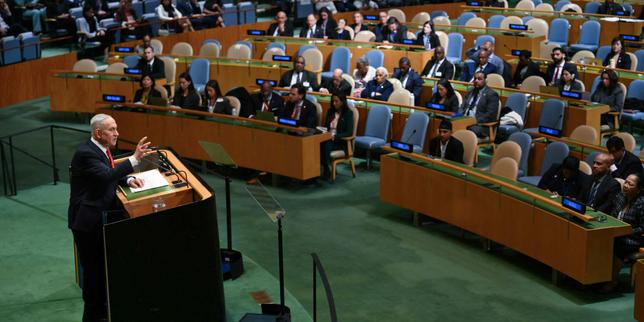
When Israeli Prime Minister Benjamin Netanyahu stepped up to the United Nations General Assembly podium, the chamber wore a familiar hollow look. Rows of seats sat vacant, abandoned by diplomats who preferred the hallways to a speech they intended to boycott.
At the core of his address stood a fierce rejection of international legal accusations, labeling charges of genocide against Israel as the inversion of reality itself. To understand the weight of that moment requires looking past the rhetoric and examining how international bodies and sovereign states weaponize legal terminology for global leverage. If you enjoyed this piece, you should check out: this related article.
The Mechanics of Diplomatic Polarization
For decades, the United Nations has functioned as both a humanitarian forum and a theater for ideological combat. When leaders exchange accusations of reversing the roles of victim and aggressor, they are speaking to entirely different domestic and international constituencies.
Take a hypothetical diplomatic dispute between two rival states contesting a disputed border. State A launches a pre-emptive strike, citing imminent existential threat. State B appeals to international courts, citing unlawful territorial aggression. Each side marshals legal experts, historical grievances, and selective casualty figures. The absolute truth gets buried beneath competing narratives designed to secure UN resolutions or economic sanctions. For another look on this development, check out the latest coverage from The New York Times.
Netanyahu’s address relied heavily on this historical grievance framework. By invoking past persecutions of the Jewish people and positioning modern military campaigns as defensive survival mechanisms, the argument bypasses standard operational critique. It reframes any external investigation into military conduct not as a measure of accountability, but as a continuation of historical bias.
The Real Cost of Rhetorical Escalation
When heads of state use terms like "genocide" or "colonialism" from the UN rostrum, the friction rarely stays contained within New York conference rooms.
- Erosion of International Law: Every time legal definitions are stretched for political impact, the authority of international tribunals weakens. Treaties drafted to prevent mass atrocities turn into partisan footballs.
- Global Social Friction: Diplomatic rhetoric travels instantly across digital networks, translating into localized security threats, protests, and civil tension in major metropolitan centers thousands of miles away from the conflict zone.
- Loss of Diplomatic Middle Ground: Polarization makes compromise nearly impossible. Moderate voices find themselves squeezed out by hardline positions that demand total alignment.
The international community faces a structural stalemate. Traditional multilateral diplomacy relies on shared definitions of war crimes, humanitarian access, and state sovereignty. When those definitions break down under the pressure of multi-front conflicts—ranging from the Middle East to Eastern Europe—the institution designed to prevent war becomes the primary venue for justifying its continuation.
The walkouts inside the General Assembly hall do nothing to alter the facts on the ground. They merely signal that the international architecture built in the wake of the twentieth century's worst horrors is struggling to contain the conflicts of the present one.
Inside the UN General Assembly Hall
This video captures the immediate visual atmosphere and reactions surrounding Benjamin Netanyahu's address at the United Nations General Assembly.