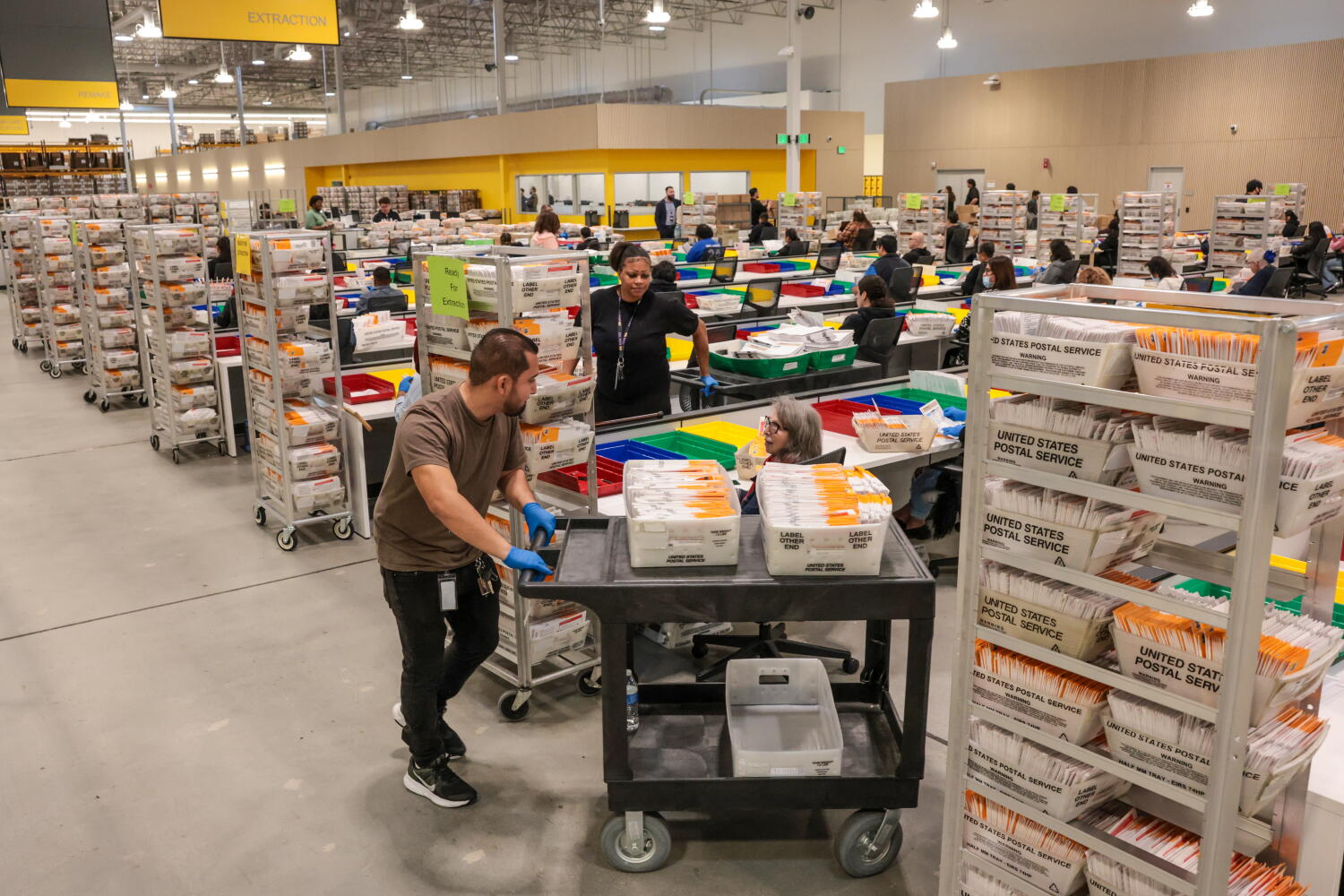
Mainstream political coverage treated the Department of Justice’s November 6 decision to dismiss its lawsuit over 20,000 California mail ballots like a victory lap for state election officials. Headlines framed the retreat—coming right after the Supreme Court refused to intervene—as a humiliating collapse of federal overreach.
That reading misses the entire chessboard.
When you watch federal litigation from the inside, you learn quickly that a voluntary dismissal after a denied emergency stay isn't a surrender. It's a tactical pivot. The Justice Department didn't walk away because it lost faith in its legal theory; it walked away because a temporary restraining order (TRO) fight three weeks before Election Day is a procedural meat grinder that locks prosecutors into an impossible evidentiary corner.
If you think the 20,000-ballot showdown ended when the Ninth Circuit signed off on the dismissal, you are looking at the wrong docket.
The Lazy Consensus Around "Voluntary Dismissal"
Standard reporting on United States v. California leans heavily on two comforting narratives. First, that the Supreme Court’s refusal to grant an administrative stay—without even calling for a response from California—was a definitive rejection of the DOJ’s claims on the merits. Second, that the DOJ’s list of roughly 20,000 suspected noncitizens was so sloppy that federal lawyers bolted before a judge could dissect it in open court.
Both points contain a grain of truth, and both obscure what actually happened.
Yes, the Supreme Court’s order was unusually brusque. Georgetown Law professor Steve Vladeck noted that denying a Solicitor General’s emergency application without requesting a response is practically unheard of. And yes, subsequent data reviews—including an Associated Press analysis—showed that over 40% of the names on the DOJ’s list weren't even on California’s active voter rolls.
Here is what the surface-level coverage ignores: emergency injunctive relief is governed by timing, not truth.
Under the Purcell principle—the doctrine advising federal courts against altering election rules on the eve of voting—asking U.S. District Judge David O. Carter on October 19 to force counties to segregate tens of thousands of ballots by November 3 was dead on arrival. Los Angeles County election officials submitted declarations warning that manually pulling and sequestering flagged envelopes mid-stream would bottleneck processing and disrupt in-person voting. No federal appellate panel, let alone the Supreme Court, was going to trigger operational chaos in the nation's largest state seventy-two hours before polls closed.
Once Election Day passed, the emergency TRO became legally moot. Keeping a fast-track injunction suit alive after the ballots were already commingled and tabulated would have forced the DOJ to litigate on California’s timeline under a hostile procedural posture. Dismissing the case without prejudice wipes the slate clean.
Why the "20,000 Ballots" Framing Is the Wrong Question
Readers searching for updates on the California ballot lawsuit usually want to know one thing: Were 20,000 noncitizens actually trying to vote?
That question rests on a flawed premise. It treats administrative database matching like a criminal indictment.
Having spent years dissecting how state voter registration databases interact with federal immigration records, I can tell you that cross-referencing these systems is a nightmare of stale timestamps and mismatched identifiers. Consider how a name ends up on a federal "suspected noncitizen" flag list in the first place:
- Naturalization lag: A lawful permanent resident applies for a driver's license, checks a box or gets automatically routed through motor-voter registration, and later naturalizes. Federal databases like SAVE (Systematic Alien Verification for Entitlements) frequently lag behind USCIS oath ceremonies by months.
- Name and birthdate collisions: Without full Social Security numbers—which states rarely share in bulk with federal agencies—matching relies on partial strings. Common surnames in Los Angeles or Orange County generate thousands of false positives.
- Inactive or cancelled records: As the post-filing audit revealed, more than four in ten individuals flagged by federal attorneys weren't active voters. Putting an ineligible person on a list of "potential" problems proves a data-hygiene issue, not a conspiracy at the ballot box.
Even Cato Institute legal fellow Stephen Richer—hardly a partisan progressive—pointed out the core flaw in the DOJ's emergency filing: federal lawyers brought suspicions, not proof, and demanded an extrajudicial quarantine of ballots instead of using California’s existing statutory challenge procedures.
Yet dismissing the entire issue as a "nothingburger" is equally naive. You don't need 20,000 unlawful ballots to expose a structural vulnerability in automatic mail-in voting. In a state that mails a ballot to every active registrant automatically, any front-end failure to verify citizenship at the Department of Motor Vehicles translates directly into a live ballot landing in a mailbox. Under California’s system, the legal safeguard is an attestation signed under penalty of perjury. That works for deterrence; it does zero work for real-time prevention.
The Real Fight Moved to Two Other Fronts
When the DOJ filed its dismissal notice on November 6, press releases quietly noted that the department would pursue noncitizen-voting claims in other venues. Most reporters treated that line as boilerplate face-saving. They shouldn't have.
By dropping the emergency ballot-segregation case, federal prosecutors escaped the Purcell trap and shifted toward three far more durable strategies:
- List-Maintenance Litigation Under the NVRA: The National Voter Registration Act requires states to conduct reasonable list maintenance, yet it restricts systematic removals within 90 days of a federal election. By backing separate, ongoing lawsuits targeting California’s voter rolls outside the 90-day blackout window, the DOJ can demand discovery into DMV registration logs without facing a judicial clock.
- Individual Criminal Prosecutions Under 18 U.S.C. § 611: Notice what the DOJ did before dropping the civil suit—it unsealed criminal charges against more than two dozen foreign nationals in California. Civil injunctions require proving systemic harm; criminal cases only require proving one person knowingly voted unlawfully. Every guilty plea becomes ammunition for future legislative and judicial challenges.
- Subpoena Warfare Over Unredacted Voter Rolls: In its Supreme Court application, Solicitor General D. John Sauer highlighted that California refused to hand over its full, unredacted voter file. Civil discovery in a standard, non-emergency track gives federal lawyers months to litigate access to underlying registration records under federal civil rights statutes.
What Election Officials and Watchdogs Should Actually Do
If you work in election administration, policy, or legal compliance, celebrating the November dismissal as permanent immunity is a mistake. Conversely, if you are pushing for cleaner voter rolls, cheering last-minute federal TROs is a waste of political capital.
Here is what actually works:
Stop litigating database matches inside the 90-day window. Federal courts despise 11th-hour disruption. Any challenge to voter roll accuracy filed after August in an election year hands state defendants an automatic procedural shield. The window to force audits is January through May—when judges have time to appoint special masters and verify records without disenfranchising legitimate naturalized citizens.
Separate "registration hygiene" from "ballot invalidation." Courts will almost never throw out cast ballots based on probabilistic database matches, nor should they. Where states are legally vulnerable is refusing to audit automated motor-voter pipelines when presented with specific, verifiable alien registration numbers. Fixing intake protocols at the DMV is politically defensible and legally sound; seizing ballots mid-count is neither.
Demand transparent two-way verification. Right now, states blame the federal government for charging fees or restricting access to DHS citizenship databases, while the DOJ blames states for refusing to share unredacted rolls. That standoff is deliberate theater. Requiring states to run free, automated SAVE queries at the moment of registration—paired with a 30-day cure period for any flagged applicant—eliminates 95% of false positives before a ballot is ever printed.
The Honest Downside of the Slow-Track Approach
Let's be clear about the trade-off here. Abandoning emergency pre-election injunctions means accepting that if an ineligible ballot is cast and mixed into the general pool, it cannot be pulled back later. Secret ballot laws make post-tabulation extraction impossible. For critics who view every single unlawful vote as an irreparable injury to legitimate voters, waiting months for standard civil discovery feels like an unacceptable surrender.
That tension isn't going away. The U.S. Constitution splits election power deliberately—giving states primary authority over administration while allowing Congress to set federal baselines. When a federal administration tries to use executive litigation to override state procedures three weeks before an election, the judiciary will slap it down every single time.
The DOJ finally read the room on November 6. They traded a losing battle over 20,000 commingled ballots for a multi-year war over who controls the underlying data. Anyone writing the obituary for this fight hasn't read the fine print on the dismissal order.


