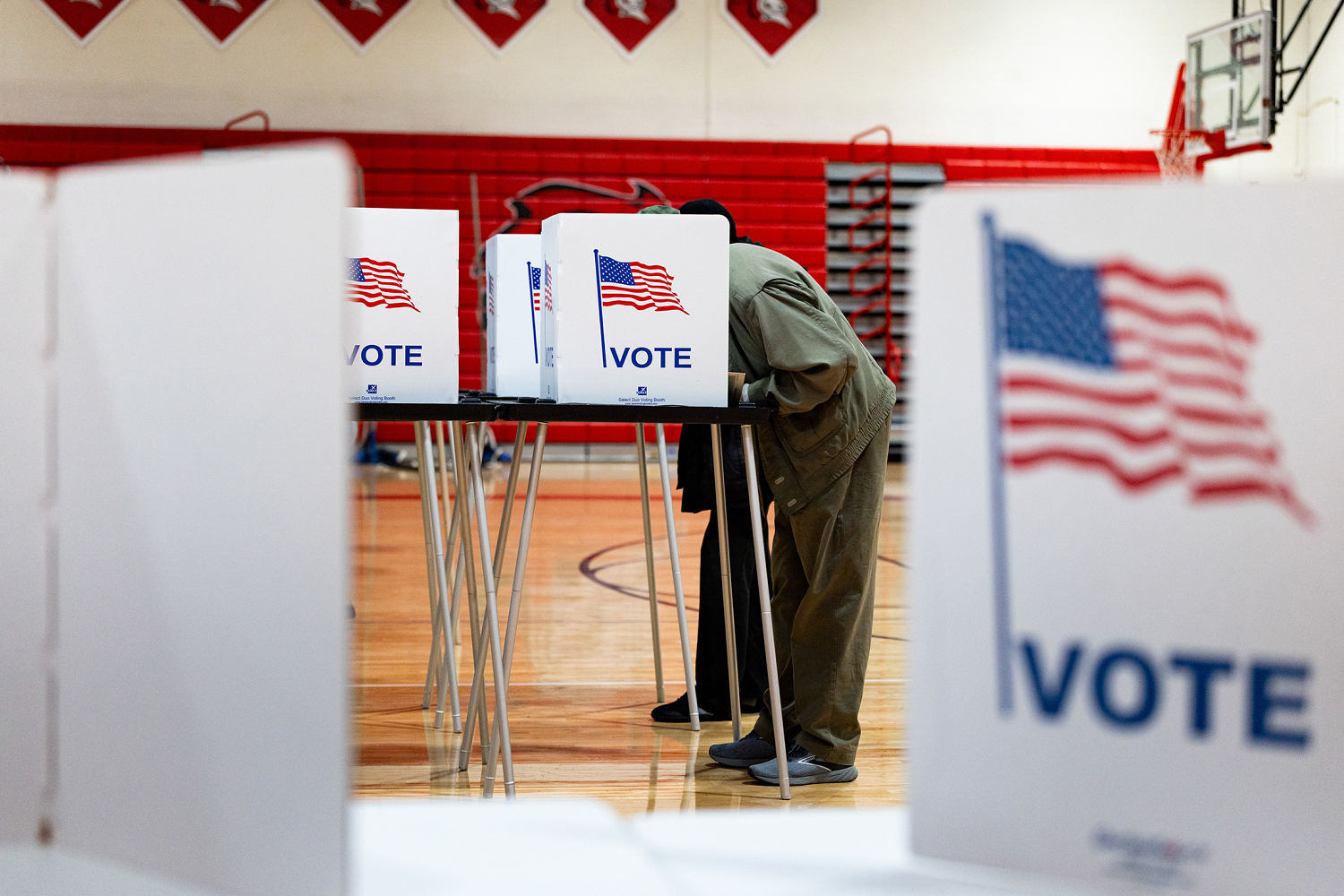
Every major news outlet ran the exact same headline this week, treating a Department of Justice press release like a constitutional earthquake. They framed sending federal election monitors to all 50 states as an unprecedented, muscular defense of the ballot box.
They fell for the oldest trick in the Washington communications playbook.
When the DOJ announces a nationwide deployment of Civil Rights Division attorneys, the mainstream press immediately splits into two predictable camps. Legacy media hails it as a historic shield for voting rights. Partisan media screams about federal overreach and ballot-box intimidation. Both sides are entirely wrong because both sides are reacting to the press release rather than the actual statutory mechanics of federal election law.
I have spent over fifteen years dissecting federal administrative enforcement and election litigation from the inside. I have watched state attorneys general burn millions of taxpayer dollars fighting subpoenas that had zero teeth, and I have watched federal civil rights lawyers sit in municipal parking lots for twelve hours because local clerks refused to let them past the lobby.
Sending monitors to all 50 states does not mean federal agents are seizing control of your local precinct. It does not mean ballot fraud is instantly eradicated, nor does it mean civil rights violations are stopped in real time. In reality, spreading a finite pool of federal attorneys across every single state in the union dilutes enforcement power to homeopathic levels. It is administrative theater designed to project omnipotence while masking severe legal constraints.
The Statutory Reality Behind Federal Election Monitors
To understand why this 50-state headline is largely smoke and mirrors, you have to understand the massive legal gulf between a federal observer and a DOJ monitor. The mainstream coverage uses these terms interchangeably. In the courtroom, they are worlds apart.
Under the Voting Rights Act of 1965, specifically Section 8, the Attorney General used to have broad authority to certify jurisdictions for federal observers. These personnel, typically deployed through the Office of Personnel Management, had the statutory right to enter polling places, watch ballots being cast, and observe the tabulation process inside restricted areas.
Then came the 2013 Supreme Court decision in Shelby County v. Holder.
When the Court struck down the coverage formula in Section 4(b) of the Voting Rights Act, it effectively gutted the DOJ’s automatic power to send certified federal observers inside polling places without a specific, active federal court order. Today, unless a jurisdiction is under an active consent decree or a specific judicial mandate under Section 3(a) of the Voting Rights Act, the federal government cannot simply force its way inside a local precinct.
What the DOJ is actually sending to most of these 50 states are Civil Rights Division monitors.
These are DOJ attorneys and staffers who have zero statutory right to enter a polling place if state or local officials tell them to stay out. They cannot touch a ballot. They cannot inspect a tabulator. They cannot issue on-the-spot injunctions to stop a rogue poll worker. They stand outside the building, observe the parking lot, check for ADA compliance on the sidewalk, and rely entirely on the voluntary cooperation of local election boards.
Think about what happens when you announce a 50-state deployment under these rules. Instead of concentrating your heavy litigation hitters in the handful of counties with documented histories of disenfranchisement or administrative collapse, you scatter your personnel across safe, quiet jurisdictions just to say you covered the map.
Why Washington Loves the 50-State Illusion
Why would an agency deliberately thin out its own enforcement footprint? Optics.
In modern Washington politics, public perception of action outweighs the actual mechanics of enforcement. By issuing a blanket announcement covering all 50 states, the Department of Justice achieves two political objectives simultaneously without changing a single statute:
- It neutralizes accusations of partisan targeting. If the DOJ only sends monitors to battleground states or specific red and blue counties, the agency immediately gets dragged into congressional hearings over political bias. Covering all 50 states lets leadership claim pure, blind neutrality.
- It creates a psychological deterrent. The mere announcement that "the feds are watching" forces local election administrators to double-check their compliance checklists. Bureaucrats hate paperwork, and nobody wants to be the county clerk who triggers a formal Civil Rights Division inquiry.
Deterrence is useful, but deterrence is not enforcement. When you stretch a few hundred attorneys across fifty states—covering thousands of counties and over a hundred thousand precincts—the mathematical probability of a DOJ monitor actually witnessing a real-time statutory violation drops to near zero.
What Happens When Local Officials Simply Say No
If you want to see how fragile this nationwide deployment really is, look at what happens when a state pushes back.
Under the U.S. Constitution, Article I, Section 4—the Elections Clause—explicitly grants state legislatures the primary authority to prescribe the times, places, and manner of holding elections. Elections in America are radically decentralized. They are run by county clerks, municipal boards, and local volunteers, not by Washington.
In recent election cycles, multiple states, including Florida, Texas, and Missouri, have explicitly barred DOJ monitors from entering polling locations, citing state laws that strictly limit who is allowed inside voting rooms. When state troopers or county sheriffs tell a DOJ attorney that they are not permitted past the front door, the federal monitor does not pull out a badge and force entry. They step back to the public sidewalk, take notes on a clipboard, and call headquarters in Washington.
Imagine a scenario where a county clerk in a rural district decides to arbitrarily change polling hours or turn away voters with valid IDs. If a DOJ monitor is outside that specific building—which is already a statistical miracle given the 50-state dilution—that monitor cannot arrest the clerk. They cannot open the doors. Their only recourse is to draft a complaint, route it through senior leadership in Washington, file an emergency motion in federal district court, and hope a judge hears the argument before the polls close at 7:00 PM.
By the time a federal judge issues a temporary restraining order, the election is over.
Dismantling the Myths Around Election Monitoring
When headlines like this drop, search engines flood with panicked questions from voters on both sides of the aisle. Most of these questions are built on fundamentally broken premises about how American elections work.
Are DOJ monitors taking over state elections?
No. The federal government has neither the legal authority nor the operational manpower to run a single precinct, let alone a state election. Even if the DOJ deployed every single attorney in its entire department, they could not staff the polling places of a single mid-sized state. Local officials still print the ballots, test the machines, verify signatures, and certify the counts.
Do federal monitors stop ballot fraud or voter intimidation on the spot?
They do not have law enforcement powers at the polls. Civil Rights Division monitors are lawyers, not armed U.S. Marshals. In fact, federal law (18 U.S.C. § 592) strictly prohibits the deployment of armed federal troops or officers at polling places unless necessary to repel armed enemies of the United States. If a voter is being intimidated at a precinct, local police handle the immediate physical threat. The DOJ's role is post-election litigation under statutes like the Voting Rights Act, the National Voter Registration Act, or the Help America Vote Act.
Does a monitor in a state mean that state is under investigation?
Not necessarily. A 50-state sweep includes states with zero pending litigation alongside states currently locked in bitter federal court battles. The presence of a monitor in a given city often reflects routine compliance checks—such as verifying that ballots are properly translated under Section 203 of the Voting Rights Act or checking wheelchair ramp angles under the Americans with Disabilities Act—rather than an active fraud or suppression probe.
The Real Threat Nobody Is Watching
While cable news debates the optics of federal lawyers standing outside elementary school gyms, the actual vulnerabilities in American election administration go completely ignored.
Elections rarely fail because of dramatic, cinematic conspiracies at the precinct door. They fail because of mundane, systemic competence deficits inside county back offices.
I have reviewed dozens of post-election audits where results were delayed or distorted not by malice, but by underfunded local boards misconfiguring ballot-on-demand printers, failing to run logic and accuracy tests on high-speed central scanners, or misunderstanding state cure laws for mismatched absentee signatures. A DOJ attorney standing on a sidewalk checking ADA ramp slopes will never catch a miscalibrated optical scanner in a central counting warehouse three miles away.
Furthermore, there is a legitimate downside to this 50-state strategy that even civil rights advocates quietly admit behind closed doors: it burns political capital and triggers defensive stonewalling.
When federal officials show up unannounced in jurisdictions with zero history of civil rights violations, local clerks—many of whom are overworked civil servants making modest salaries—feel ambushed. Instead of cooperating transparently with federal inquiries, they immediately lawyer up through their county counsel and shut down informal communication channels. By treating all 50 states like potential crime scenes, Washington hardens local resistance and makes actual compliance harder to verify.
How to Actually Protect Election Integrity
If you want real accountability at the ballot box, stop looking to Washington press releases to save you. Federal oversight is a blunt, slow-moving instrument designed for multi-year litigation, not real-time election administration.
Real transparency happens at the hyper-local level, and it requires citizens to engage with the actual machinery of their county boards rather than cheering or jeering federal deployments.
- Become a credentialed local poll watcher. Unlike DOJ monitors, partisan and non-partisan poll watchers credentialed under state law have explicit statutory rights to stand inside the polling place, observe the opening of the machines, watch the zero-tape printouts, and monitor the chain-of-custody seals at the end of the night.
- Attend pre-election Logic and Accuracy (L&A) testing. Every state requires election boards to publicly test their tabulation equipment before voting begins. Almost nobody shows up. Watching a county board run test decks through the scanners tells you infinitely more about election integrity than a federal press release ever will.
- Demand granular chain-of-custody logs. Under state public records laws, citizens can request ballot transfer logs, seal verification sheets, and precinct reconciliation forms. If the numbers do not match, that paper trail is what wins court cases—not a federal lawyer's sidewalk notes.
The Department of Justice sending monitors to all 50 states is a masterclass in political stagecraft. It gives journalists a dramatic headline, gives politicians a talking point, and gives the public the comforting illusion that a centralized referee is watching every single vote.
Do not confuse the presence of federal clipboards with actual institutional security. Democracy is not protected from a sidewalk in Washington; it is protected inside local county offices by citizens who actually know how the rules work. Stop watching the press releases and start watching the precincts.