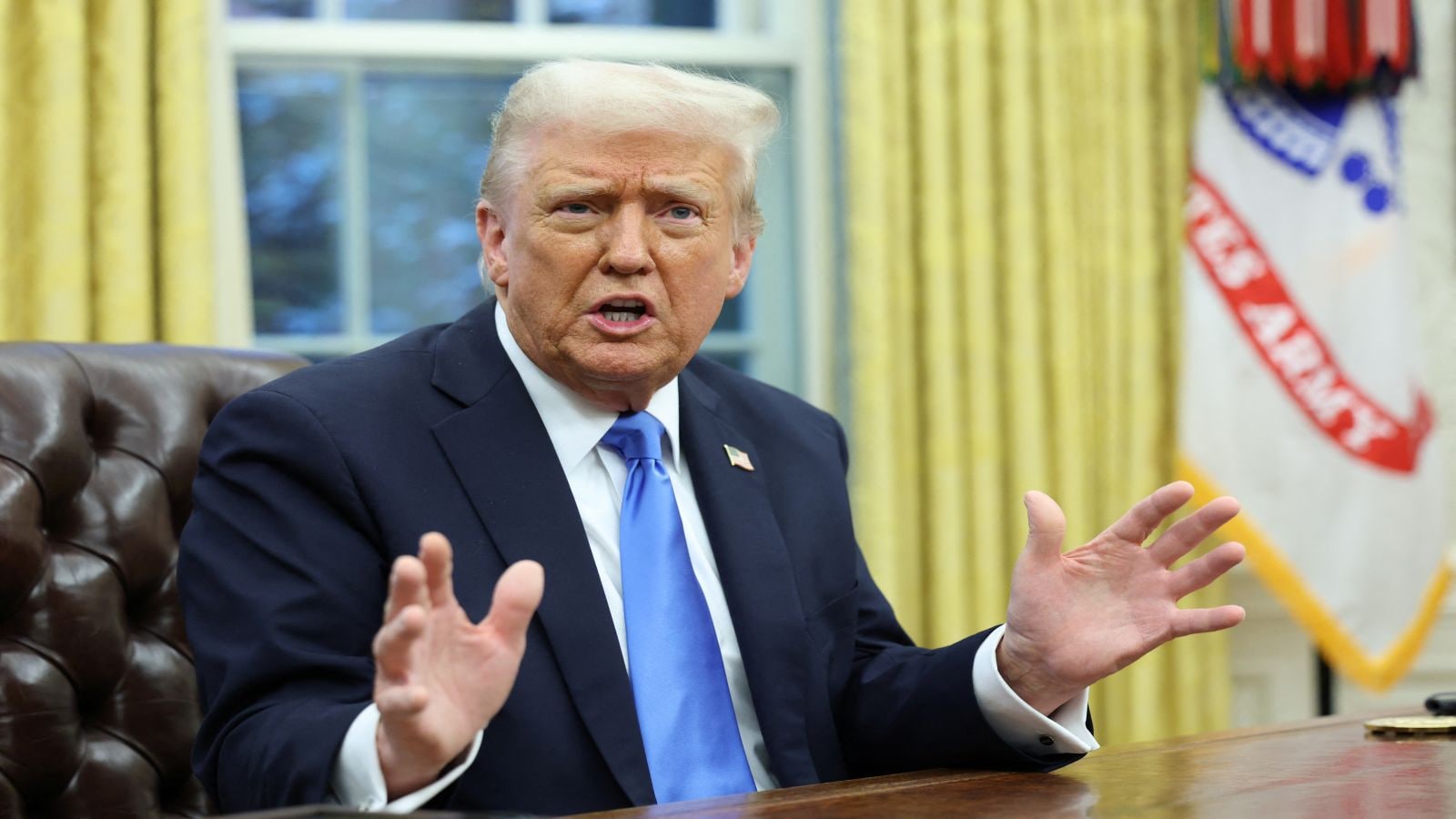
Donald Trump has canceled a slate of scheduled weekend campaign rallies, opting instead to call in remotely to midterm campaign events across key battleground states. While surface-level reporting frames the move as a routine scheduling adjustment, campaign operatives and political strategists recognize a far more calculated shift driven by resource allocation, media efficiency, and voter fatigue.
For nearly a decade, the massive, open-air airport hangar rally served as the unmistakable signature of Trump’s political operation. Tens of thousands of supporters waited in line for hours, merchandise vendors lined the access roads, and cable news networks carried the speeches live from gavel to gavel. That model built an unmatched grassroots movement, yet it carries an astronomical financial and logistical price tag. By trading physical tarmac appearances for targeted telephone town halls and amplified speakerphone addresses at local Republican gatherings, the campaign is rewriting its midterm playbook in real time.
The Economics of the Modern Tarmac Rally
Running a single large-scale presidential-style rally is an enterprise-level logistical feat that burns through campaign cash at an alarming rate. Unlike a standard Senate or House campaign stop at a local VFW hall, a Trump rally requires specialized infrastructure before a single supporter arrives.
Security, Venues, and Municipal Bills
Secret Service protocols demand sweeping perimeter lockdowns, magnetometer checkpoints, counter-sniper teams, and temporary airspace restrictions. Local municipalities frequently pass along tens of thousands of dollars in overtime police and emergency medical costs directly to the campaign committee. Add in private charter flights, staging, concert-grade audio-visual rigs, and weeks of advance team travel, and a single weekend double-header can easily exceed half a million dollars in direct expenses.
Diminishing Marginal Returns in Midterm Cycles
In a presidential general election, massive rallies function as data-harvesting machines. Attendees must register online with a mobile phone number and email address to claim free tickets, allowing the campaign's digital team to identify, segment, and turn out low-propensity voters.
Midterm elections operate under entirely different mechanics. Turnout drops significantly compared to presidential years, and the electorate skews older, wealthier, and more politically engaged. A 15,000-person rally in a solid-red congressional district generates tremendous visual energy, yet it often preaches to the converted while failing to move the needle in adjacent suburban swing districts where margins are decided by a few thousand votes.
How Phone-In Events Change the Tactical Calculus
Swapping one giant physical event for multiple remote phone-ins allows a single principal to touch five or six distinct congressional races in a single afternoon without leaving home. From a purely operational standpoint, the math is compelling.
Consider a hypothetical Saturday schedule under the old model versus the new approach. Under the traditional rally structure, flying into one mid-sized airport in Pennsylvania or Ohio consumes an entire day, captures local television news in a single media market, and boosts one or two statewide candidates. By contrast, dialing into six separate county-level fundraisers, candidate watch parties, and telephone town halls across Pennsylvania, Georgia, Arizona, and Nevada in four hours hits multiple media markets simultaneously.
Micro-Targeting Over Mass Spectacle
When Trump calls into a specific House candidate's local event, the message shifts from broad national grievance to hyper-local endorsement. Local reporters in smaller media markets—who rarely get credentialed for massive national rallies—treat a direct phone call from the former president as front-page news.
Furthermore, telephone town halls allow campaigns to dial directly into the landlines and cell phones of tens of thousands of targeted high-propensity voters in a specific district. Listeners stay on the line for an average of fifteen to twenty minutes, hearing the endorsement directly without the filter of national political correspondents or edited news clips.
The Media Ecosystem Has Changed
The cancellation of weekend rallies also reflects a sober assessment of how television networks cover political events during midterm cycles.
During the 2016 and 2020 cycles, major cable news networks routinely aired Trump speeches in their entirety, providing hundreds of millions of dollars in free earned media. Today, that dynamic has fractured. Mainstream cable networks rarely take full rallies live, opting instead to dip in for two-minute segments or ignore the events altogether unless controversy erupts. Conservative outlets still provide coverage, but preaching exclusively to an already-committed cable audience yields limited expansion during a midterm push.
By pivoting to phone-ins, the campaign stops paying stadium-level production costs for television coverage it no longer receives. Instead, it relies on local press coverage, social media clips distributed directly by the endorsed candidates, and grassroots word-of-mouth inside targeted districts.
The Risks of Going Remote
Campaigns never abandon their signature weapon without accepting serious trade-offs. Stepping back from physical rallies introduces vulnerabilities that seasoned Republican operatives watch closely.
The Enthusiasm Gap Problem
Trump's political brand relies heavily on physical dominance and crowd size. Critics and rivals immediately seize on canceled rallies as evidence of low energy, physical exhaustion, or waning grassroots enthusiasm. In politics, perception quickly hardens into narrative. If Democratic operatives successfully frame the shift to phone-ins as a sign of retreat, it can dampen the very grassroots intensity Republicans need to overcome traditional midterm headwinds.
Losing the Data Vacuum
Every physical rally acts as a magnet that pulls unregistered or disengaged voters into the campaign's digital ecosystem. A phone call into an existing county GOP dinner reaches people who are already on the party's mailing list. It reinforces the base, yet it rarely expands the electorate. Without the constant infusion of new contact data generated by rally ticket registrations, down-ballot candidates must rely more heavily on traditional paid advertising and door-to-door canvassing, both of which are expensive and labor-intensive.
Historical Precedent and Strategic Discipline
History shows that high-profile political figures frequently struggle to translate their personal popularity to down-ballot candidates during midterms. Barack Obama faced this exact dilemma in 2010 and 2014, when massive stadium speeches failed to prevent historic Democratic losses in the House and Senate. In response, late-stage midterm strategies almost always shift away from massive spectacles toward surgical, district-by-district voter contact.
Canceling weekend rallies is not an admission of defeat, nor is it an abandonment of the campaign trail. It is a cold-eyed recognition that time and money are finite resources in the final stretch of an election cycle. Spectacular crowds look impressive on camera, but midterms are won in quiet living rooms, local VFW halls, and targeted phone banks where a five-minute personal phone call carries more weight than a two-hour speech three hundred miles away.