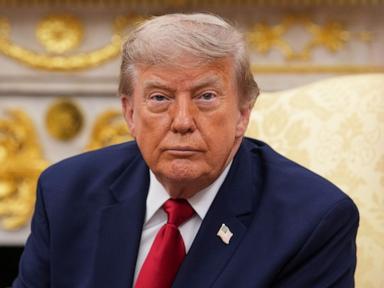
Tonight, Donald Trump will stand before a national television audience to deliver a primetime address centered on the mechanics of American voting systems and newly declassified intelligence files. By reclaiming the 9:00 PM Eastern slot, he is executing a multi-pronged political maneuver. The White House plans to argue that newly reviewed government records reveal critical vulnerabilities in election infrastructure and previously undisclosed foreign meddling in the 2020 presidential race.
The underlying reality is far more transactional.
Faced with a stalling military conflict with Iran, rising domestic pressures, and highly competitive midterm elections that will decide the balance of power in Washington, Trump is returning to his most reliable political weapon. He is leveraging the unique authority of the presidential bully pulpit to elevate a long-settled grievance into an active national security emergency. By doing so, he seeks to establish a preemptive defense for any potential Republican losses in the fall while simultaneously shifting the national conversation away from policy vulnerabilities.
The Intelligence Dispute Reopened
At the heart of tonight’s address is a highly selective presentation of declassified files. According to administration insiders, the president intends to point to raw FBI records and intelligence memos that suggest foreign adversaries, specifically China and Venezuela, gained access to American voter registration data in 2020.
This is not entirely new territory, but the framing has been heavily reconstructed.
In early 2021, the National Intelligence Council issued a comprehensive assessment concluding with high confidence that neither China nor any other foreign power altered vote totals or manipulated machines during the 2020 cycle. However, that same report contained a documented "minority view" from the National Intelligence Officer for Cyber, who argued with moderate confidence that Beijing had taken steps to influence the outcome. It is this minority view, once a footnote in a broader consensus, that the White House has spent months amplifying.
The operation to exhume these files has been led by a tight circle of loyalists installed during Trump’s second term. Chief among them are Bill Pulte, the acting director of national intelligence, and John Solomon, a conservative media figure who briefly took an official advisory role inside the administration to oversee the systematic review of archived government records. For months, these officials have combed through old FBI files looking for discrepancies, bypassing traditional intelligence channels to deliver raw, unvetted data directly to the Oval Office.
What the public will hear tonight is a carefully curated narrative. By focusing on the hypothetical vulnerability of voting machines rather than documented instances of vote manipulation, the administration can present a technically true statement—that electronic systems are never entirely unhackable—and use it to imply that the 2020 election results were compromised. It is a sophisticated rhetorical pivot that replaces hard evidence of fraud with a generalized climate of suspicion.
The Midterm Strategy and the Iran Distraction
The timing of this address is anything but accidental. Primetime presidential speeches have historically been reserved for moments of acute national crisis—the declaration of war, a sudden economic collapse, or a major natural disaster. Trump’s last major evening address occurred in April, when he spoke to the nation regarding the outbreak of hostilities with Iran.
Since then, that conflict has deteriorated.
A naval blockade in the Persian Gulf and escalating retaliatory strikes have failed to yield the swift victory the White House promised. At home, Americans are feeling the immediate economic consequences of the confrontation through highly volatile energy prices and inflation. With the midterms rapidly approaching, congressional Republicans are increasingly anxious that voters will punish them at the ballot box for a prolonged foreign intervention and an unstable economy.
A national address focused entirely on election security acts as a massive domestic circuit breaker.
By shifting the focus of the national press corps back to voting machines, Democratic-run jurisdictions, and foreign espionage, the president effectively forces his opposition to debate on his preferred terms. Democratic lawmakers are immediately put on the defensive, forced to defend the absolute security of systems they do not directly control. Meanwhile, the complex, painful realities of the foreign policy situation in the Middle East are pushed below the fold.
This is a classic defensive hedge. If Republicans perform poorly in the midterms, the administration has already spent months building the narrative that the voting systems themselves are unreliable and vulnerable to outside interference. If they win, the president can claim his warnings successfully forced local authorities to tighten their procedures.
Repurposing Federal Power for Local Audits
The rhetoric of tonight's speech is backed by a highly unusual application of federal law enforcement power. Over the past year, the Justice Department and the FBI have taken steps that have deeply alarmed nonpartisan election administrators.
Federal agents have executed search warrants and seized voting records in metropolitan areas that proved decisive in the 2020 election, most notably Fulton County, Georgia, and Maricopa County, Arizona.
The legal architect behind this campaign is Kurt Olsen, an attorney who was previously sanctioned by the Arizona Supreme Court for making unsupported claims in post-election lawsuits. Olsen, now advising the White House, has helped direct federal resources to re-examine machines and paper ballots that have already undergone multiple state-level audits, hand recounts, and judicial reviews.
The sheer scale of the federal reinvestigation is unprecedented.
+------------------+-----------------------------+------------------------------------+
| Jurisdiction     | Official 2020 Audits Done   | Recent Federal Actions (2025-2026) |
+------------------+-----------------------------+------------------------------------+
| Fulton County,   | Three hand recounts, state  | FBI seizure of physical ballots    |
| Georgia          | monitor, judicial dismissal | and machine configuration logs     |
+------------------+-----------------------------+------------------------------------+
| Maricopa County, | Hand count, independent     | Subpoenas issued for database     |
| Arizona          | forensic machine audits     | access and security keys           |
+------------------+-----------------------------+------------------------------------+
According to career Department of Justice officials who have spoken on the condition of anonymity, hundreds of federal analysts have been reassigned from counterterrorism and organized crime units to review years-old state voting data. The move has created significant internal friction, with many senior prosecutors arguing that the department is being weaponized to search for anomalies that have already been thoroughly investigated and debunked by state-level Republican and Democratic officials alike.
The Network Conundrum and the Norms of Broadcast
For decades, there was an unwritten agreement between the White House and the major television networks. If a president requested primetime airtime to address the nation, the networks granted it under the assumption that the message was of vital, non-partisan national importance.
That agreement has completely collapsed.
As of Thursday morning, executives at the major broadcast networks—ABC, CBS, NBC, and Fox—remained locked in intense internal discussions over whether to carry the 9:00 PM speech live. The dilemma is acute. To deny a sitting president live airtime during a period of foreign military engagement is a drastic step that risks immediate political retaliation, including threats to broadcast licenses or restricted access. To carry the speech, however, means providing an unfiltered, hour-long platform for highly partisan, unverified claims about the domestic electoral process.
Some cable news networks have already decided to carry the feed with real-time, on-screen fact-checking. Others plan to delay the broadcast by several minutes to allow their editorial teams to provide immediate context. The White House has anticipated this resistance, heavily promoting alternative digital streaming platforms and conservative media networks to ensure the address reaches its core supporters regardless of what the traditional networks decide.
This tension highlight a broader shift in how presidential communication is handled. What was once a tool for national unity in moments of crisis has been converted into an aggressive tool of campaign messaging.
The Actual Security of American Elections
To understand the gap between the administration's rhetoric and the reality on the ground, one must look at how American elections are actually run. The United States does not have a single, centralized voting system. Instead, elections are highly decentralized, managed by thousands of individual county clerks, registrars, and state officials operating under different state laws and technical standards.
This decentralization is the system's greatest security asset.
There is no central server to hack, no single database that can be compromised to alter the national outcome. To change the result of a presidential election via cyberattack, an adversary would have to simultaneously infiltrate dozens of completely different, air-gapped systems across multiple states, all while evading detection by local officials.
         [Local Precinct Tabulators] -> Air-gapped, no internet connection
                      |
         [County Election Central]   -> Hardened database, restricted access
                      |
         [State Election Division]   -> Aggregated public reporting portals
State election directors utilize what security professionals call layered defenses. Voting machines are not connected to the internet during the voting process. Paper trails exist for the vast majority of votes cast in the country, allowing for physical audits that can verify the accuracy of the digital count.
The warning from nonpartisan election experts is clear. The primary threat to American election integrity is not a sophisticated foreign cyberattack that changes votes, but rather the systematic erosion of public trust in the mechanics of the vote itself. When a president uses the maximum authority of his office to declare that the system is fundamentally broken, he creates a self-fulfilling prophecy. The resulting public cynicism makes the normal, peaceful transfer of power increasingly difficult to sustain, regardless of what the actual paper ballots show.


