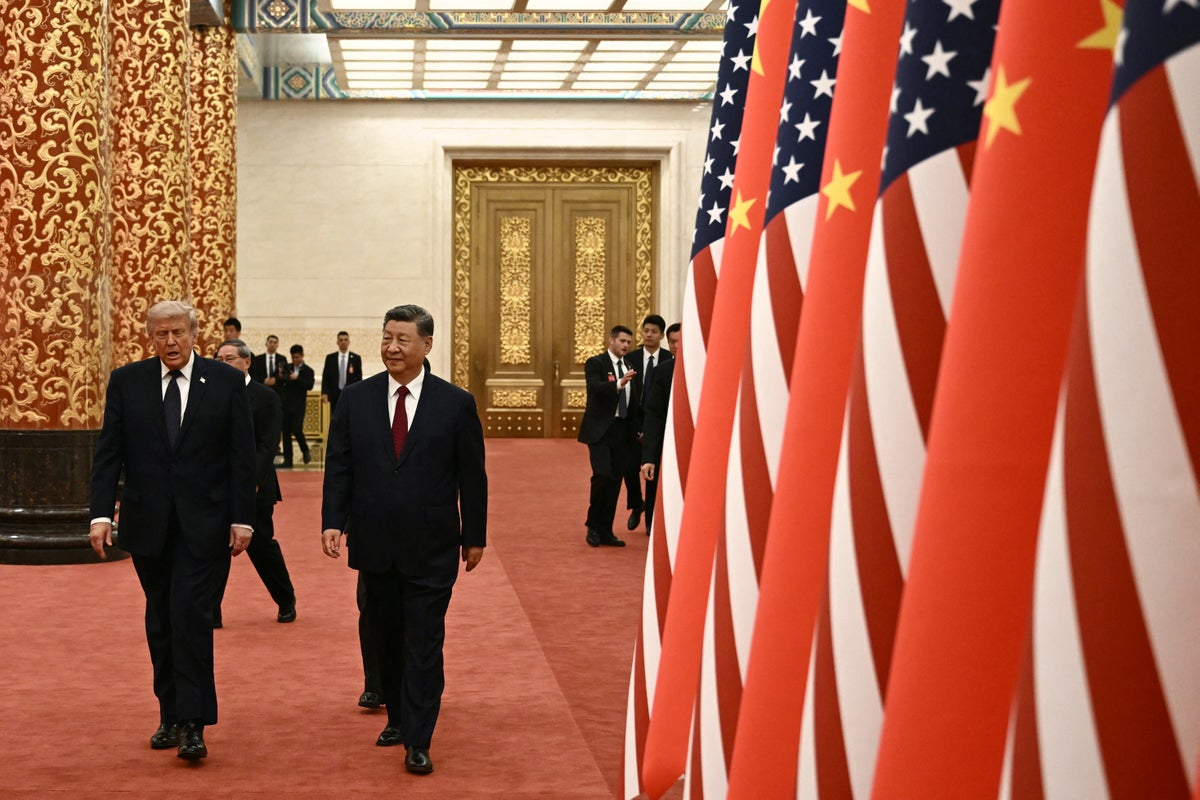
Donald Trump wants a new ballroom at the White House, and he is not being quiet about it. Sending late-night updates from mid-air, the former president made a direct demand. He wants a $400 million reception space built in Washington. His main point of comparison? China.
While flying on Air Force One, Trump took to Truth Social to vent his frustration over the current state of state dinners. He argued that the United States looks small on the global stage because it lacks a massive, permanent venue for grand events. He claimed China has a magnificent ballroom, while the US relies on temporary tents set up on the South Lawn.
This is not just a random rant about architecture. It reveals how Trump views diplomacy, national image, and the literal staging of American power.
The Truth Social Tirade From Air Force One
The post dropped with the classic Trump cadence. It focused heavily on how foreign leaders view America during official visits. He described the current setup for state dinners as an embarrassment.
When a foreign head of state visits Washington, the White House staff usually erects a massive pavilion on the lawn. These structures are high-tech, climate-controlled, and beautiful. But to Trump, they are just tents. He hates the idea of using temporary structures for the world's most important meetings.
His post specifically pointed to Beijing. He noted that when American leaders visit China, they are hosted in massive, opulent halls designed to project wealth and permanence. Trump wants that exact same energy in Washington. He threw out the $400 million figure as the price tag for a structure that would match or exceed what geopolitical rivals offer.
The Reality of White House State Dinners
To understand why Trump is fixated on this, you have to look at how the White House actually functions during a state visit. The executive mansion is old. It is historic. It is also surprisingly small.
The State Dining Room inside the White House can only hold about 130 guests comfortably. That is tiny for a major international event. When a president wants to invite hundreds of lawmakers, business leaders, celebrities, and foreign officials, the indoor space fails.
Historically, administrations handled this in a few ways:
- The Kennedys famously held a state dinner at Mount Vernon.
- The Clintons utilized large tents on the South Lawn for bigger crowds.
- The Obama administration regularly used massive pavilion structures for high-profile visits, including dinners for leaders from India and China.
Trump used these pavilion setups during his first term too. But he clearly despised them. He views a tent as a symbol of weakness, suggesting the US cannot afford or build a permanent monument to its own greatness.
Why China Matters in the Ballroom Debate
Trump’s fixation on China’s facilities points directly to the Great Hall of the People in Beijing. Located on the western edge of Tiananmen Square, this building is massive. It covers over 170,000 square meters of floor space.
Inside, the Great Hall features the State Banquet Hall. This single room can seat 5,000 guests for dinner. It is designed specifically to overwhelm visitors with its sheer scale. It projects total state control and immense national wealth.
When Trump visited Beijing during his presidency, the Chinese government rolled out the red carpet with extreme luxury. That experience stuck with him. In his mind, diplomacy is a game of visual dominance. If China has a massive hall and America uses a tent, he feels America is losing the branding war.
The Logistics and Politics of a Four Hundred Million Dollar Build
Building anything on the White House grounds is a logistical nightmare. It is a National Historic Landmark. You cannot just bring in bulldozers and start pouring concrete.
First, the National Capital Planning Commission and the Commission of Fine Arts would have to weigh in. They protect the historic footprint of the grounds. A massive modern ballroom would radically alter the classic look of the White House south facade.
Second, there is the money. Congress controls the purse strings. Getting lawmakers to approve $400 million for a luxury party space during tight economic times is nearly impossible. Critics would immediately label it a vanity project.
Trump’s supporters see it differently. They view the proposal as a long-term investment in American prestige. They argue that the US should have world-class facilities to host global leaders, matching the scale of our economic and military power.
The Power of Architectural Diplomacy
Diplomacy is theater. Every detail matters, from the seating chart to the menu. Trump understands this better than most. His background in luxury real estate shapes how he views political influence. To him, big buildings equal big power.
He has long criticized US infrastructure. He frequently complains about dirty airports, potholed roads, and aging public buildings. This ballroom demand fits right into that worldview. He sees the White House as the ultimate American brand asset. If the asset looks dated or restricted by space, he thinks it hurts America’s negotiating position.
Whether this ballroom ever gets built is highly doubtful. The bureaucratic hurdles are too high, and the political pushback would be fierce. But by raising the issue from Air Force One, Trump has reframed a simple logistical problem—the White House is too small for big parties—into a competitive battle against China. It is about who can put on the best show on the world stage.