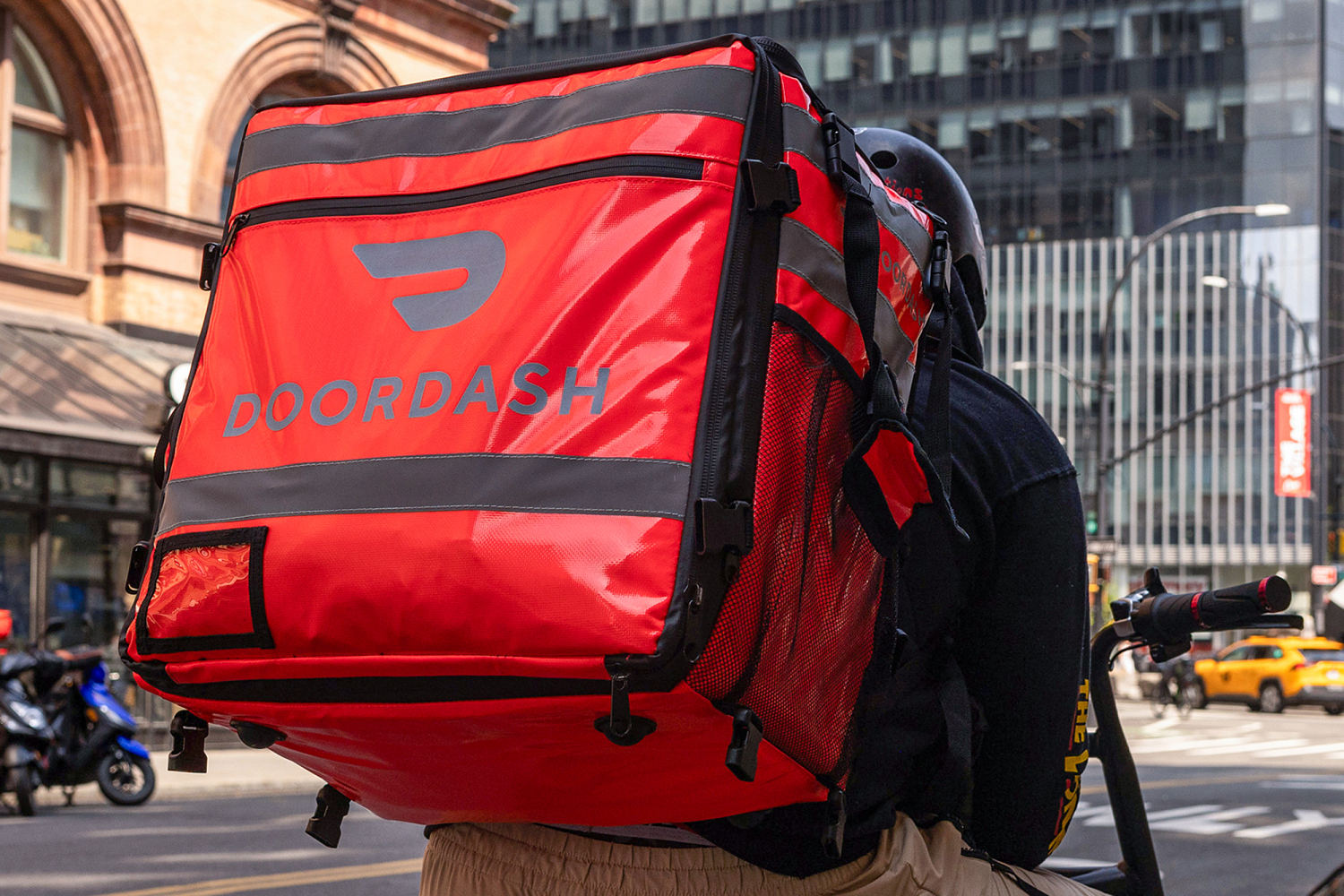
DoorDash is moving to acquire Instacart in a $17 billion deal that would combine the dominant American restaurant delivery network with the largest independent online grocery platform. On paper, it looks like a victory lap. In reality, it is a defensive consolidation born out of brutal unit economics, shrinking organic growth, and an existential threat from retailers who no longer need middlemen.
If regulators allow this merger to close, the combined company will control the vast majority of third-party local delivery across North America. For consumers, restaurants, and regional supermarkets, the terms of the digital storefront are about to change permanently. Also making headlines in this space: The $17 Billion Logistics Consolidation Behind DoorDash and Instacart.
The Math That Forced the Marriage
To understand why two Silicon Valley heavyweights would combine at a $17 billion valuation—a steep discount from Instacart’s $39 billion peak during the pandemic—you have to look at the mechanics of last-mile logistics. Delivering a $30 burrito and delivering a $150 weekly grocery haul are fundamentally different businesses, yet neither works cleanly on its own.
Restaurant delivery has high frequency. People order lunch on a Tuesday and dinner on a Friday without thinking twice. The problem is basket size. After paying a courier, covering customer support, and absorbing payment processing fees, the margin on a single meal is razor-thin. DoorDash solved this by building massive density, stacking orders, and expanding into convenience stores, alcohol, and retail goods to raise the average order value. Additional insights on this are covered by Harvard Business Review.
Grocery delivery has the opposite problem. The basket sizes are large, often exceeding $100, which provides enough gross dollars to pay a shopper for an hour of labor. However, grocery orders are complex, prone to out-of-stock substitutions, and ordered far less frequently than takeout. Instacart spent a decade perfecting the software that maps grocery store aisles and manages complex inventory, yet it struggled to escape the perception of being a high-fee luxury for suburban households.
By merging, the two companies are attempting to stitch together a single logistics engine. DoorDash gets Instacart’s deep integrations with national and regional grocers, along with its high-margin advertising business. Instacart gets DoorDash’s massive consumer base, its DashPass subscription army, and an unmatched fleet of couriers already on the road at every hour of the day.
The Real Prize Is Advertising, Not Delivery Fees
Anyone analyzing this deal through the lens of delivery fees is missing the actual business model. Neither DoorDash nor Instacart can survive long-term on commissions charged to merchants and service fees charged to consumers. Those fees have already hit a psychological ceiling. Push them any higher, and customers abandon their carts.
The real prize is retail media.
Instacart built one of the most lucrative advertising networks in the consumer internet sector. When a shopper searches for "sparkling water" or "pasta sauce" on Instacart, consumer packaged goods companies pay billions of dollars for sponsored placement at the top of the search results. Advertising revenue carries gross margins north of 70 percent, compared to the single-digit or negative margins of moving physical bags of food from a store to a porch.
DoorDash has been aggressively building its own ad business, charging restaurants and convenience brands for prime real estate inside its app. Combining DoorDash’s daily active user traffic with Instacart’s ad-tech stack creates an immediate challenger to Amazon and Walmart in the digital grocery ad market. Brands will no longer be able to treat them as optional experiments; a combined entity commands too much consumer attention to ignore.
Why Grocers Are Quietly Panicking
For years, regional supermarket chains viewed Instacart as a necessary evil. Chains like Kroger, Albertsons, and hundreds of smaller regional grocers lacked the capital and engineering talent to build their own e-commerce apps during the digital shift. Instacart offered a turnkey solution, putting their inventory online overnight.
The catch was data and customer ownership. When a shopper orders through a third-party marketplace, the platform owns the customer relationship, the behavioral data, and the checkout screen. Grocers become mere fulfillment warehouses, squeezed on margins while the tech platform collects the ad dollars.
A combined DoorDash and Instacart shifts the balance of power dramatically. Previously, grocers could play DoorDash, Uber Eats, and Instacart against one another to negotiate lower commission rates. DoorDash had been aggressively courting grocers over the past three years, signing deals with major chains that once belonged exclusively to Instacart. That competition kept fees in check.
Eliminating Instacart as an independent competitor removes that leverage overnight. Regional grocers will face a single dominant gatekeeper for third-party digital demand. While giants like Walmart and Target have built their own massive fulfillment infrastructures and rely less on third-party marketplaces, mid-sized chains have nowhere else to turn. Expect grocers to accelerate partnerships with Uber Eats, or pour capital into their own white-label delivery operations, to avoid being trapped inside a single ecosystem.
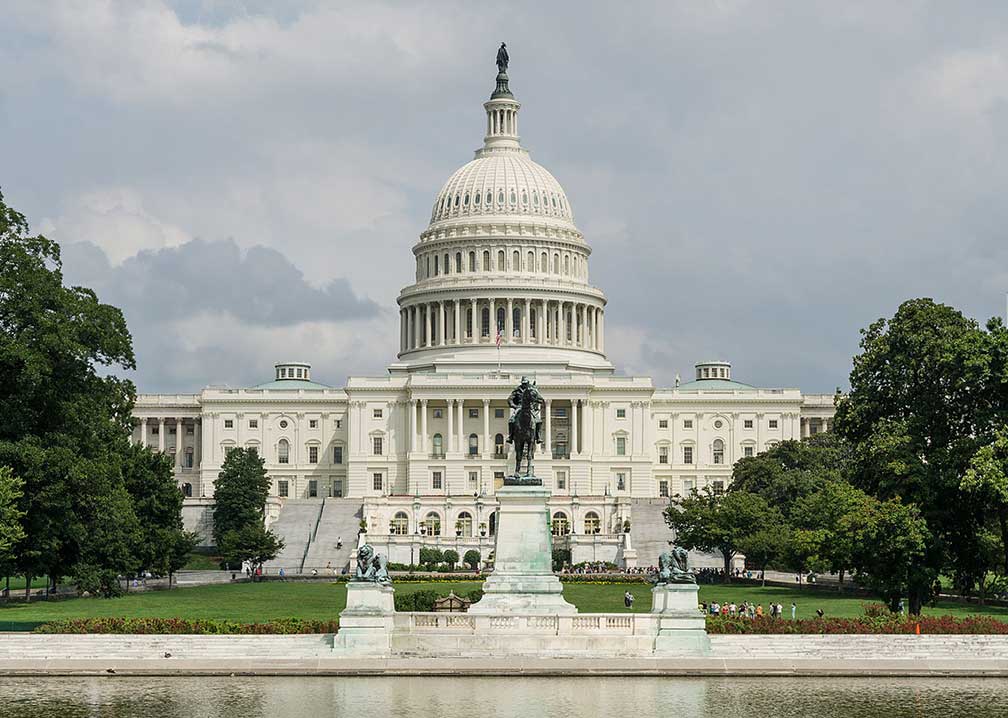
The Antitrust Gauntlet in Washington
Announcing a $17 billion merger is easy. Getting it past federal antitrust regulators is another matter entirely.
The Federal Trade Commission and the Department of Justice have spent the last several years aggressively challenging horizontal mergers—deals where two direct competitors combine to reduce market competition. Even as political winds shift, the structural arguments against a DoorDash-Instacart combination are glaringly obvious and hard to dismiss.
Regulators will look closely at how the market is defined.
If DoorDash and Instacart define the market broadly as "all food and retail commerce," their combined market share looks relatively small next to Walmart, Amazon, and brick-and-mortar supermarkets. That is the exact argument their lawyers will make in court.
Regulators, however, rarely accept broad market definitions when narrow ones reveal clear dominance. If the government defines the market as "third-party online grocery delivery" or "convenience and local retail delivery," the combined company holds a near-monopoly in dozens of major metropolitan areas.
There is also the labor side of the equation. Both companies rely on independent contractors to pick, pack, and deliver orders. Combining the two largest platforms reduces the number of apps gig workers can toggle between to maximize their hourly earnings. When platforms consolidate, algorithmic wage-setting power increases, a dynamic that labor economists and federal regulators have placed under intense scrutiny.
What Happens to Gig Workers and Restaurants
In every major tech consolidation, executives promise efficiency. In the gig economy, efficiency usually translates to lower base pay for couriers and tighter batching of orders.
Consider a hypothetical scenario for a courier working a Saturday afternoon shift. Today, that driver might run a DoorDash restaurant order, turn off the app, and accept an Instacart grocery batch if the payout looks better. That friction forces both companies to offer competitive base pay and peak-hour bonuses to keep drivers logged in. Under one corporate roof, a single dispatch algorithm can route one driver to pick up a grocery order and drop off a restaurant meal on the same trip, paying a single blended base rate that is lower than the two separate payouts would have been.
Restaurants face a subtler threat. DoorDash has long used its restaurant dominance to cross-sell consumers into other categories. Every time a user opens the app to order pizza, they are bombarded with prompts to add a bottle of wine, a bag of ice, or a carton of milk from a nearby store. Integrating Instacart’s massive catalog turns the restaurant app into an everything-store. Independent restaurants, already paying commissions between 15 and 30 percent, will find themselves competing for screen space not just against other eateries, but against supermarket chains and national retail brands with massive ad budgets.
The Uber Eats Factor
The loudest applause for this deal might actually be coming from Uber’s headquarters.
Uber Eats has spent years fighting a two-front war against DoorDash in restaurants and Instacart in groceries. If DoorDash absorbs Instacart, it will spend the next 18 to 24 months mired in regulatory reviews, litigation, and the notoriously messy technical work of merging two massive software platforms.
Integrating two different dispatch systems, two different merchant portals, and two different consumer apps is a massive engineering distraction. Every hour DoorDash’s top engineers spend untangling Instacart’s legacy codebase is an hour they are not spending building new features or undercutting Uber on merchant contracts.
Uber will use that window to pitch itself to anxious grocers and retailers as the only viable counterweight to a DoorDash monopoly. Supermarket executives who were hesitant to sign with Uber Eats will suddenly pick up the phone, desperate to keep a second major player alive in the market.
The End of the Subsidy Era
The $17 billion price tag tells the final story of the pandemic delivery boom. At the height of lockdowns in 2020 and 2021, investors valued these companies as if people would never step foot inside a grocery store or a restaurant dining room again. Capital was cheap, growth was rewarded at any cost, and losses were ignored.
That world is gone. Consumers have returned to physical stores, inflation has made buyers far more sensitive to marked-up menu prices and service fees, and Wall Street demands real, sustainable cash flow rather than adjusted metrics.
DoorDash buying Instacart is not a sign that on-demand delivery has conquered retail. It is an admission that the standalone delivery app model cannot survive fragmented competition. By merging, they are building a fortress high enough to survive the slow grind of mature retail economics—assuming the courts let them lay the bricks.