Ontario Premier Doug Ford just handed the keys to Canada’s economic survival over to the exact corporate boards that spent three decades hollowing out the province’s industrial base.
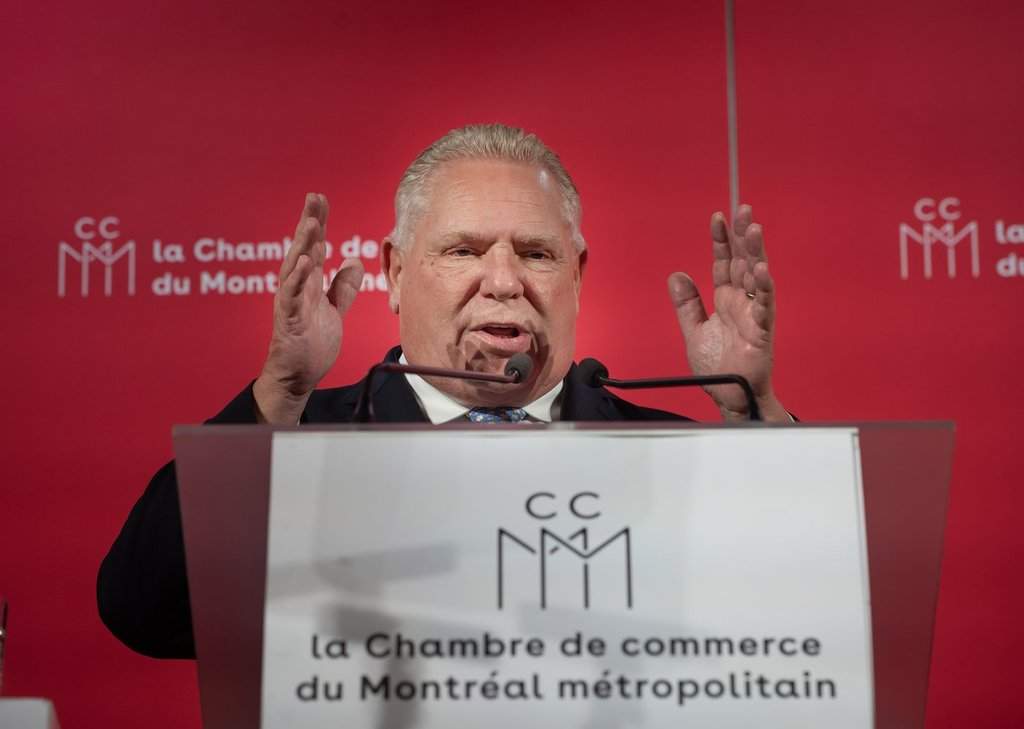
Mainstream coverage of Ford’s November 23 declaration—that he will refuse to back an interim Canada-U.S. trade agreement unless Ontario’s auto, steel, and manufacturing sectors personally sign off—treats the announcement like a heroic stand for the working class. Pundits frame it as tough-guy federalism. A premier drawing a hard line in the sand to protect factory towns in Hamilton, Windsor, and Sault Ste. Marie from Washington’s tariff barrage.
That narrative is pure political theater, and buying into it will cost Canadian workers dearly.
Giving concentrated, heavily subsidized legacy industries an informal veto over national trade policy is not a defense of Canadian sovereignty. It is regulatory capture dressed up in a hard hat. When a premier tells Prime Minister Mark Carney that Ottawa cannot close a tariff-relief deal with the White House until Big Auto and Big Steel rubber-stamp the fine print, he is not protecting Ontario’s economy. He is holding the entire country’s export engine hostage to satisfy a tiny fraction of incumbent balance sheets.
The Math Behind the Veto Does Not Add Up
Let’s look at the actual numbers instead of the press releases.
According to Statistics Canada, exports to the United States account for roughly 15.9% of Canada’s entire gross domestic product and sustain over 2.5 million jobs nationwide. Every single day that an interim trade agreement stalls, uncertainty bleeds capital out of Canadian agriculture, energy, logistics, technology, forestry, and financial services.
Now compare that macro reality to the specific lobbies Ford just elevated to supreme arbiters of national trade.
Automotive manufacturing and primary metal production represent a vital slice of southern Ontario’s regional identity, yet they account for a single-digit fraction of Ontario's total employment. More importantly, these sectors are no longer operating as pure market actors. Just weeks ago, in October 2026, Ottawa and Queen’s Park unveiled an $8.7-billion to $9-billion joint taxpayer bailout package—earmarking over $5 billion for steel producers and $2.5 billion for auto and critical minerals—on top of $760 million in direct auto supports announced in November.
Think about the perverse incentive structure Ford just created:
- Taxpayers fund the life support. Federal and provincial treasuries pour billions of public dollars into keeping assembly lines and blast furnaces solvent during a trade war.
- Executives get veto power over the cure. Those same subsidized executives are handed the authority to reject an interim U.S. trade deal if the terms pinch their quarterly margins or force structural adjustments.
- The rest of the economy pays the tariff tax. While steel and auto lobbyists haggle over rules-of-origin clauses and procurement carve-outs, every unsubsidized Canadian exporter continues absorbing punitive cross-border friction.
I have watched provincial governments blow billions chasing this exact illusion for twenty years. Politicians confuse protecting specific corporate incumbents with protecting economic capacity. When you hand an incumbent industry a veto, they will never vote for an agreement that exposes them to real competition—even if that agreement unlocks massive growth for the broader economy.
Why "Sector Sign-Off" Destroys Negotiating Power
Trade negotiations do not fail because politicians lack spine. They fail when negotiators telecast their internal divisions to the counterparty before sitting down at the table.
Under Section 91(2) of the Constitution Act, 1867, the regulation of trade and commerce belongs exclusively to the federal Parliament. Doug Ford possesses zero legal authority to ratify or nullify an international treaty signed by Ottawa. His leverage is purely political: withholding provincial cooperation on procurement rules, cross-border energy coordination, and public messaging in Canada’s most populous province.
By publicly announcing that Ontario’s support hinges on approval from three specific industrial lobbies, Ford handed Washington a roadmap to stall Ottawa indefinitely.
Consider how U.S. trade negotiators operate. Their primary objective is reshoring high-value manufacturing and extraction back inside American borders. They know that Canada’s automotive and steel sectors are deeply integrated into cross-border supply chains—meaning American automakers own the intellectual property, control the capital allocation, and dictate where the next plant gets built.
When Ford demands that the auto sector approve the deal, he is effectively asking Detroit-headquartered multinationals—who are simultaneously lobbying the White House for American tax credits—to sign off on Canada’s negotiating position.
It is an absurd contradiction. A multinational automaker with plants in Michigan, Ohio, and Ontario does not care about Ontario’s GDP. It cares about global return on invested capital. If dragging out talks allows that automaker to extract another $760 million in Canadian subsidies while keeping Washington happy, why on earth would its executives rush to endorse an interim compromise?
Dismantling the Common Myths About Ontario's Trade Stance
Public debate around this standoff is choked with lazy assumptions. If you want to understand what is actually happening between Queen’s Park, Ottawa, and Washington, you have to strip away the talking points.
Doesn't Ottawa always sell out Ontario manufacturing to protect Western energy and Quebec dairy?
This is the classic regional grievance myth, and it reverses reality. For decades, Canadian trade policy has bent over backward to shield central Canadian manufacturing and supply-managed agriculture, often at the direct expense of Western resource exporters and service-sector competitiveness. In the current 2026 trade standoff, Ottawa and Queen’s Park have already committed nearly $9 billion in targeted industrial subsidies specifically to cushion Ontario’s steel and auto corridors. Pretending Ontario is an ignored stepchild in federal trade talks ignores the largest regional industrial intervention in modern Canadian history.
Won't a quick interim deal permanently cripple Canadian steel and auto plants?
No. By definition, an interim agreement is a tactical ceasefire designed to stop acute tariff bleeding ahead of broader continental trade reviews. Refusing an interim deal because it fails to solve every structural friction in North American steel production guarantees that tariffs stay active longer. High tariffs do not preserve domestic factories; they accelerate capital flight. When U.S. customers face ongoing tariff risk on Canadian steel or auto parts, they do not wait patiently for Doug Ford to declare victory. They quietly requalify suppliers in Indiana, Alabama, or Monterrey and never come back.
Isn't Ford's hardline stance giving Mark Carney extra muscle against Donald Trump?
Only if the threat is credible—and a threat to shoot your own exporters in the foot is never credible to a seasoned dealmaker. Trump’s trade team operates on transactional asymmetry: the U.S. market is ten times the size of Canada’s. When a Canadian premier announces he will block a deal unless narrow sectoral demands are met, Washington simply waits. Time favors the larger market. Every month of delay damages Canadian capital investment far more than it hurts American consumers.
The Structural Trap Nobody Wants to Admit
The deeper problem with Ford’s ultimatum has nothing to do with tariffs and everything to do with productivity.
Canada is trapped in a severe, multi-year productivity crisis. Business investment per worker has lagged behind the United States for over a decade. Instead of fixing the root causes—punitive tax structures, endless permitting delays, interprovincial trade barriers that still choke internal commerce, and weak competition laws—politicians reach for the easiest drug available: targeted corporate welfare paired with protectionist rhetoric.
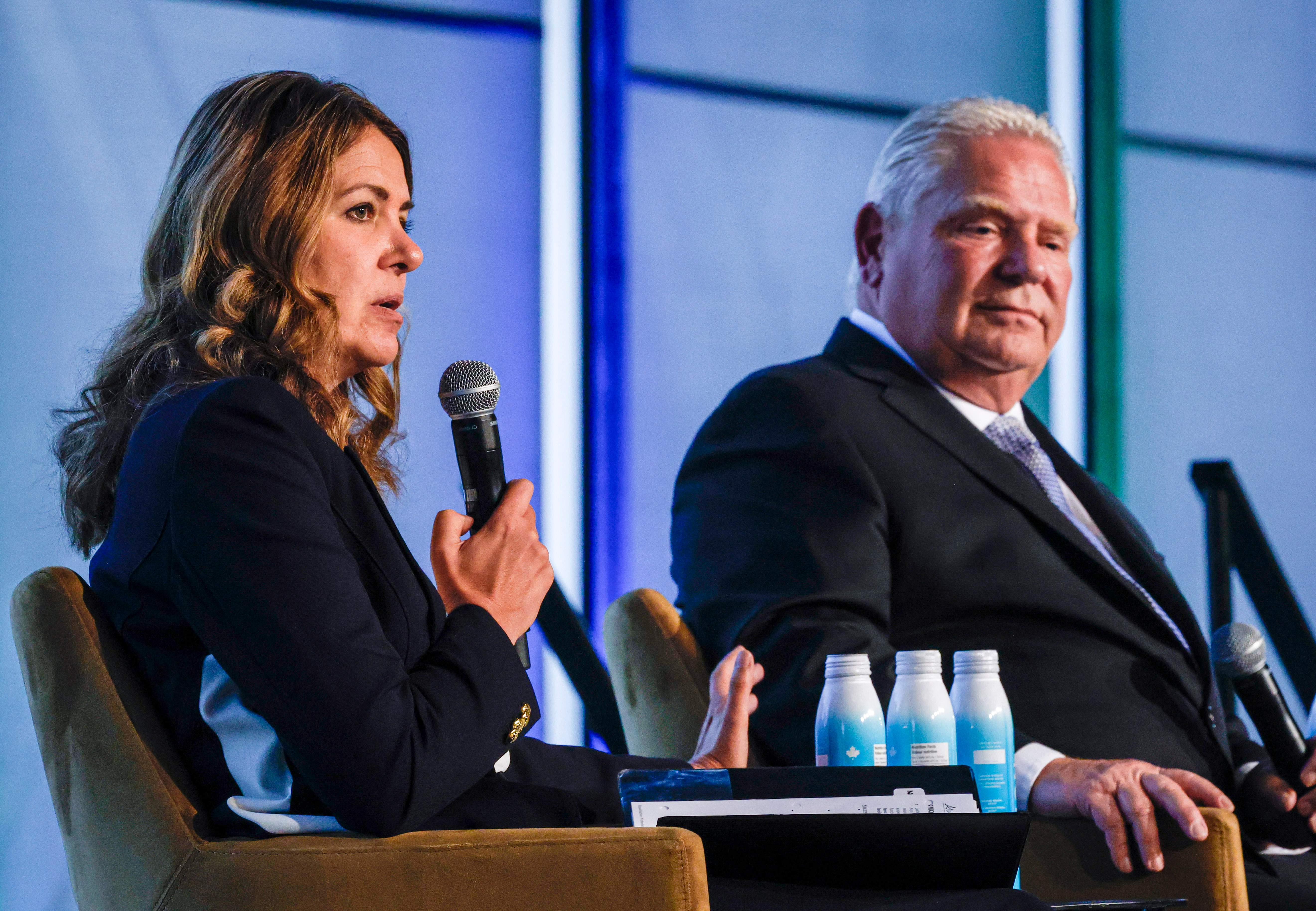
Look at the hypocrisy sitting right in front of voters. On the exact same day Ford demanded veto power over a U.S. trade deal to protect Ontario manufacturers, he and Alberta Premier Danielle Smith were forced to admit that internal trade barriers between Canadian provinces remain stubbornly broken. Canadian companies still face absurd regulatory friction trying to sell goods across provincial lines inside their own country, yet the Premier wants to micromanage the fine print of an international tariff truce.
Let’s be brutally honest about the trade-offs here. Walking away from sectoral veto politics carries real, painful downside risks.
If Ottawa signs an interim agreement without unanimous applause from Hamilton steel mills or Windsor assembly plants, there will be casualties. Marginal plants with outdated equipment will lose orders. Some tier-two and tier-three parts suppliers will consolidate or shut down. Politicians will face brutal headlines, angry union halls, and immediate electoral blowback across Ontario’s industrial belt.
Pretending those costs do not exist is dishonest. Trade adjustments always create concentrated losers and diffuse winners.
The difference between serious economic leadership and populist pandering is deciding whether you govern for the diffuse majority or the concentrated lobby.
How Canada Should Actually Play This Hand
If Ottawa and Queen’s Park want Ontario’s industrial base to survive the next decade rather than limp from bailout to bailout, they need to invert their entire negotiating playbook immediately.
- Strip industry associations of informal veto rights. Consult executives on technical tariff schedules, rules of origin, and customs bottlenecks, then lock them out of the room when final trade-offs are made. National trade policy must be weighed against aggregate GDP, consumer purchasing power, and cross-sector export growth—not the stock price of three steelmakers.
- Tie every dollar of the $9-billion support package to hard productivity metrics. Stop handing out unconditional stabilization grants. Any steel or auto firm receiving public funds must hit strict benchmarks for automation, export diversification outside North America, and private capital matching—or forfeit the cash.
- Use procurement reciprocity as a scalpel, not a sledgehammer. Ford correctly identified provincial government procurement restrictions as a potent bargaining chip with Washington. Ottawa should deploy access to Canadian public infrastructure contracts selectively in exchange for immediate U.S. tariff exemptions on high-value finished goods, rather than burning that currency to protect low-margin commodity inputs.
- Demolish interprovincial trade walls within 90 days. If Ontario manufacturers are losing U.S. market share, give them frictionless access to a unified domestic market of 41 million consumers first. Mutual recognition of provincial standards costs taxpayers zero dollars and permanently lowers compliance overhead.
Stop Letting Yesterday’s Economy Veto Tomorrow’s Growth
History is unforgiving to countries that let legacy industries dictate national strategy. Great Britain spent the 1970s letting coal, steel, and auto lobbies veto economic modernization, turning the workshop of the world into the sick man of Europe before painful structural reform finally broke the stalemate.
Ontario is standing at that exact fork in the road.
Doug Ford thinks he is defending Ontario’s industrial heartland by handing auto and steel executives a veto over Canada’s next trade deal. In reality, he is teaching them that lobbying Queen’s Park is far more profitable than competing in global markets.
Ottawa should thank the Premier for his input, ignore his ultimatum, and sign the best deal for all 41 million Canadians—before the industries Ford is trying to save finish hollowing out the country that is paying to keep them alive.