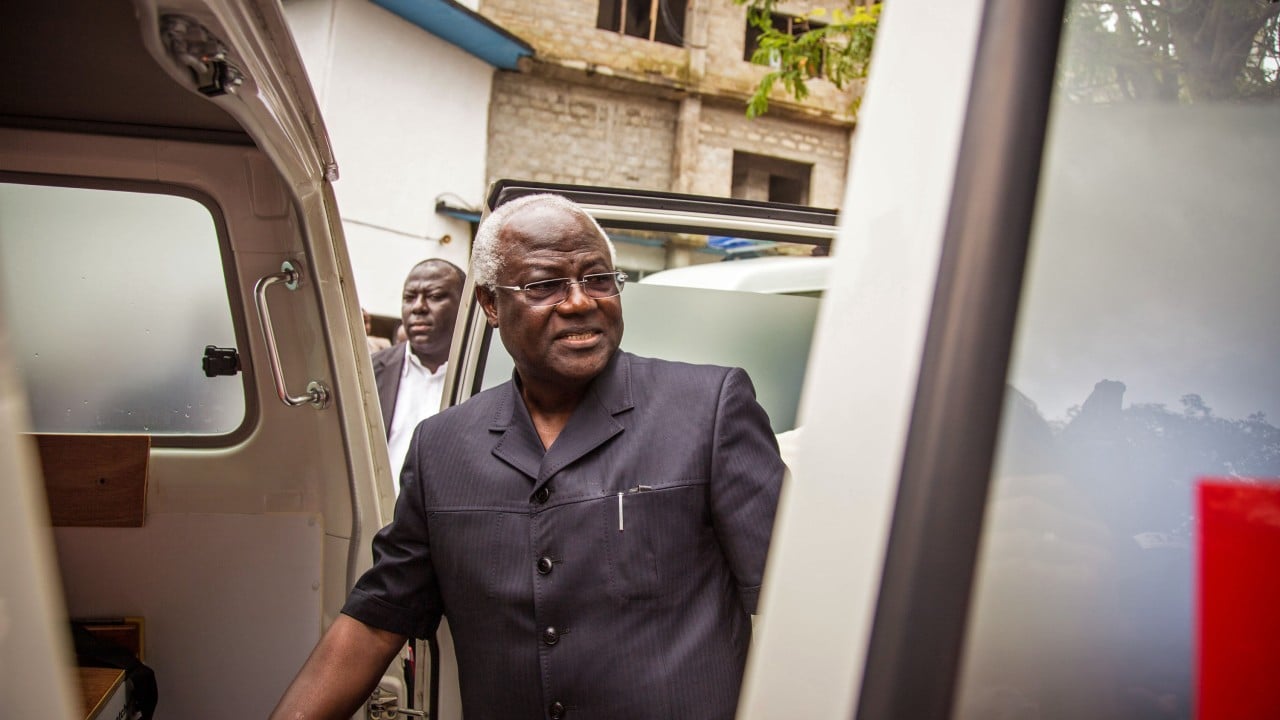
The headlines wept for joy. The international press framed the return of Sierra Leone's former president after his treason case dropped as a monumental victory for reconciliation. Diplomats clapped themselves on the back. Human rights groups popped cheap champagne. They called it peace. They called it progress.
They are dangerously, catastrophically wrong.
When high-stakes treason charges evaporate overnight because of political expediency rather than judicial vindication, you do not witness the triumph of democracy. You watch its execution. I have watched political transitions across the continent unravel from the inside, and let me be entirely clear: trading accountability for temporary calm is not peace. It is a time bomb wrapped in a diplomatic bow.
The Dangerous Myth of Convenient Forgiveness
The lazy consensus dominating international commentary right now says that dropping charges against ousted leaders lowers the political temperature. The logic goes like this: if you remove the immediate threat of prison or execution for a fallen head of state, future leaders will step down more peacefully. It lowers the stakes of losing an election.
This is a seductive fairy tale told by people who have never had to live under the wreckage of impunity.
Imagine a scenario where a corporate CEO embezzles millions, crashes the company into bankruptcy, and holds the board hostage, only for the new executive board to hand them a golden parachute and welcome them back to the boardroom just to stop the noise. Would you call that smart management? No. You would call it a surrender of fiduciary duty.
Yet when nations do it, we call it statecraft.
Let us look at the mechanics of what actually happens when treason charges vanish without a trial. Treason is not a parking ticket. It is the ultimate betrayal of a social contract, an attempt to subvert the constitutional order by force. When a state formally accuses someone of this magnitude and then quietly drops the case behind closed doors, it sends a chilling message to every ambitious actor in the military and political elite: rules are suggestions, power is absolute, and if you play your cards right, you will never face a reckoning.
Why Legal Gymnastics Destroy Institutional Trust
Every time a political elite escapes prosecution through backroom deals, the domestic judicial system suffers a blow it may never recover from.
Courts are meant to be the great equalizers. They are the friction that prevents raw power from turning into absolute tyranny. When prosecutors drop high-profile treason cases under political pressure, they signal to the ordinary citizen that the law has two speeds. One speed for the powerless, who rot in overcrowded jails for stealing a bag of rice. Another speed for the powerful, who negotiate their freedom over late-night whiskey with foreign envoys.
This creates a pervasive cynicism. Citizens stop believing in elections because elections stop having consequences for the losers. If the winner can overthrow the system, or try to, and simply bounce back after a regime change or a negotiated settlement, politics ceases to be a competition of ideas. It becomes a cartel war.
Critics will argue that holding a former president accountable risks sparking fresh civil unrest. They claim the country is too fragile, too fractured, to withstand the turbulence of a real treason trial.
This argument relies on a false dichotomy. It assumes that stability and justice are mutually exclusive. In reality, short-term stability bought by sacrificing justice is just a long-term guarantee of the next coup. You cannot build a stable house on a foundation of quicksand. Every time you bypass the courts to appease a strongman, you invite the next one to test your resolve.
The Real Cost of Foreign Interference
Foreign actors love a tidy narrative. Western embassies and regional blocs like ECOWAS want quick wins they can slap onto an annual report to justify their budgets. A dropped treason case lets them issue a press release praising "dialogue" and "national unity."
They do not have to live with the poisoned political culture that leaves behind.
I have seen international pressure force local judiciaries to drop legitimate cases in the name of regional harmony. It is a grotesque form of neo-colonial paternalism. It treats African democracies like fragile kindergarten classrooms that cannot handle the messy, necessary work of institutional accountability. Real democracy is loud. It is confrontational. It drags dark deeds into the open courtroom so everyone can see the evidence.
When you sweep treason under the rug, you do not clean the house. You just hide the rotting floorboards under a cheap rug and hope nobody steps too hard in the corner.
Breaking the Cycle
If Sierra Leone and the wider region want to break this generational cycle of instability, the playbook needs to change entirely.
First, stop treating immunity as a retirement benefit for politicians. If an executive takes the oath of office, they must know that the transition of power is absolute and the laws apply equally on day one after they leave office.
Second, insulate the judiciary from executive meddling. A prosecutor should not have the political clearance to drop a treason case because the political wind shifted. If there is no case, let the court acquit them publicly with all evidence laid bare. If there is a case, let the trial run its course until a verdict is reached. Transparency is the only disinfectant against conspiracy theories and martyrdom.
Right now, the return of this ex-president is being celebrated as a diplomatic triumph. It is not. It is a symptom of a political class that values its own survival far more than the health of the republic it swore to protect. Until nations find the spine to let justice function without political interference, every homecoming parade for a fallen strongman will simply be a rehearsal for the next crisis.
Stop confusing cowardice with diplomacy.