The floor does not simply move during a great convulsion; it uncurls. Like a heavy canvas pulled swiftly from beneath a table, the solid crust turns liquid for a terrifying, impossible fraction of a second.
Hours before the ground tore open again, forty-seven lives had already been extinguished by the first fury. Families in Indonesia were still gathering ash and counting missing names when the second blow arrived—a 6.9-magnitude shockwave that reminded a trembling archipelago that the planet is never truly finished speaking.
We write about these events in cold integers. We call them magnitudes, focal depths, epicenter coordinates. We read the wire reports on glowing screens while drinking morning coffee, measuring disaster by the width of a decimal point. But numbers do not capture the weight of a falling beam. They do not hold the sound of tiles sliding off a roof like dry leaves, nor do they reflect the particular, sickening vertigo of standing on a street where the horizon refuses to stay still.
Consider what it is like to live on the Pacific Ring of Fire.
It is an ancient bargain. You farm the richest volcanic soil on earth; you breathe the salt air of turquoise straits; you build your homes of timber and stone under the benevolent shade of palms. And in exchange, you accept the sleeping dragon beneath your floorboards. You know the beast stirs. You just pray it will wait until your children are grown.
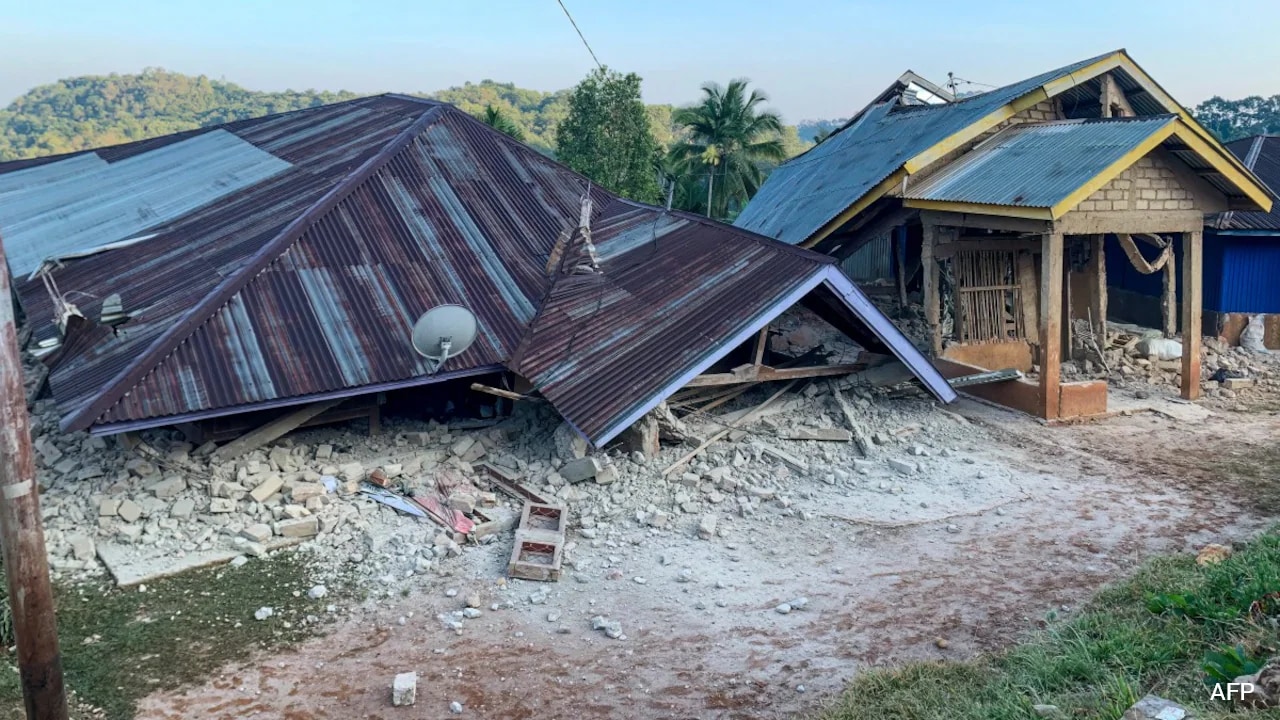
When the first tremor struck, it came without warning, as earthquakes always do. There is no siren for the underworld. There is only the sudden, violent drop in the stomach, the deep subsonic growl that sounds less like noise and more like a physical pressure against the eardrum. In seconds, mud-brick walls crumpled, concrete slabs pancaked, and neighborhoods became dusty mazes of rubble. First responders moved through the gray dust with bare hands and short shovels, scratching at the ruins because heavy machinery could not reach the narrow mountain lanes. Forty-seven people did not survive that initial violence.
And then, while the weeping was still raw, while bodies were still being wrapped in simple cloths, the earth took a deep breath and convulsed again.
A 6.9 magnitude is not merely a stronger version of a smaller quake; it is an entirely different category of physical reality. The energy released scales exponentially. At that scale, the ground does not just shake—it rolls in visible waves. Trees whip back and forth like grass in a hurricane. Power lines snap, sparking blue fire against an ash-choked sky.
In the immediate aftermath of the second strike, panic broke the thin veneer of order. People streamed into narrow streets, clutching infants, pets, and whatever hastily grabbed heirlooms they could snatch in three frantic seconds. They camped on football pitches, in muddy rice paddies, on any patch of open ground far enough from concrete facades that might reach out and crush them. The night air grew heavy with smoke from cooking fires and the acrid smell of shattered gas lines.
Rescue operations, already stretched to a breaking point by the first disaster, faced an impossible landscape. Bridges were down. Roads were blocked by massive landslides that had sloughed off saturated hillsides like wet skin. Hospitals, themselves damaged or overwhelmed, treated patients on lawn stretchers under flickering emergency lights.
It is easy from a distance to view these distant catastrophes as abstract tragedies of geography—something that happens "over there" to "other people." But the human heart breaks identically in every language. A mother screaming for her son in a Javanese village feels the exact same terror as a mother anywhere else on this fragile globe. The shock of sudden loss does not care about national borders, GDP, or emergency preparedness ratings.
Geologists and seismologists will spend months analyzing the fault mechanics of these twin strikes. They will map the slip planes, measure the seismic moment, and publish dense papers in academic journals. That work matters. It helps us understand the tectonic machinery that drives our restless planet.
Yet the truest measure of such a day is found in the quiet spaces between the statistics. It lives in the exhausted face of a nurse who has not slept in thirty-six hours. It lives in the silence of a courtyard where neighbors search through the remains of a kitchen for a single unbroken teacup. It lives in the fierce, stubborn resilience of communities that, even as the aftershocks continue to rattle their teacups and fray their nerves, begin immediately to clear the paths, set up communal kitchens, and look for survivors.
The earth is indifferent to our plans. It heaves because it must, obeying laws older than humanity. But how we respond in the hours after the dust settles—how we carry the wounded, how we share our meager rations, how we refuse to let despair have the final word—that belongs entirely to us.
The ground will settle eventually. The aftershocks will fade from hourly occurrences to daily anomalies, then to weekly whispers. But the memory of those who fell, and the quiet dignity of those who survived to dig through the ruins, remains etched into the landscape of the human story long after the dust has blown away.