Western governments are panicking over energy prices again, and as usual, their response is both late and entirely misdirected.
The mainstream press is currently flooded with hand-wringing analysis over Britain’s decision to relax certain insurance and shipping restrictions on Russian oil. The narrative is neat, predictable, and wrong. The consensus states that with conflict in the Middle East threatening crude supplies and driving up prices at the pump, loosening the screws on Moscow is a necessary evil to stabilize Western economies.
This view assumes that sanctions were actually functioning as a tight vice, and that altering legal text in London instantly changes the flow of global energy. Both assumptions are fundamentally flawed.
The relaxation of these measures isn't a strategic release valve. It is an acknowledgment of a reality that commodity traders have recognized for years: the global oil market routes around political obstacles far quicker than bureaucrats can invent them. Adjusting policy now to curb inflation is like trying to steer a supertanker with a canoe paddle.
The Illusion of the Sanctions Vice
To understand why the current policy shift won't achieve what Downing Street hopes, you have to look at how Russian crude actually moves. I have watched compliance departments and logistics desks navigate these exact frameworks. When the G7 initially implemented the price cap and shipping bans, the goal was to restrict Russian revenues while keeping global markets supplied.
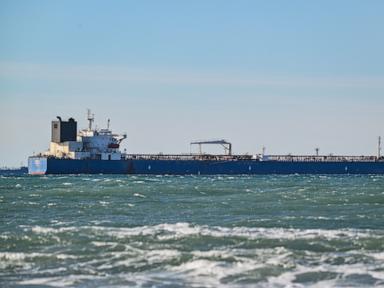
Instead of halting the trade, it simply altered the mechanics. A massive shadow fleet of un-insured, aging tankers emerged almost overnight. Ownership structures were obfuscated through shell companies in jurisdictions outside Western legal reach.
Consider the mechanics of the trade. When a Western government bans its domestic insurers from covering a vessel carrying Russian crude priced above $60 a barrel, the trade does not vanish. Russian exporters simply swap Western maritime services for domestic alternatives or providers based in non-aligned nations.
The Western legal framework only holds jurisdiction over Western companies. By forcing the trade into the shadows, the policy merely created a parallel, less regulated maritime economy. Relaxing the rules now does not suddenly bring this volume back into the light, nor does it magically lower prices. The infrastructure for the workaround is already paid for and operational.
The Flawed Logic of the Fuel Pump Connection
The immediate justification for easing restrictions is the surge in fuel prices driven by geopolitical tensions in the Middle East. The logic presented to the public is simple: more Russian oil in the market equals lower prices at the gas station.
This completely ignores the structural reality of refining margins and product distribution.
- Crude Chemistry Matters: You cannot dump Urals crude into any refinery and expect high-quality gasoline or diesel immediately. Refineries are finely tuned machines optimized for specific slates of crude—either sweet or sour, heavy or light.
- The Refining Bottleneck: Global refining capacity, not the availability of raw crude, is frequently the true bottleneck for consumer fuel prices. Even if raw crude supplies increase, if refining capacity is maxed out or undergoing maintenance, prices at the pump remain high.
- Logistical Friction: Oil currently moving via the shadow fleet to refiners in Asia doesn't instantly re-route to Europe just because a compliance rule changed. Supply chains have shifted permanently. India and China have established long-term processing agreements that cannot be undone by a policy tweak in London.
The belief that tinkering with maritime insurance rules will immediately lower the cost of filling up a car in Birmingham or Chicago is a fundamental misunderstanding of commodity economics. It treats a highly complex, physical supply chain as a simple mathematical equation.
The Hidden Cost of Policy Whiplash
Every time a government enacts, amends, or relaxes a sanctions regime, it introduces regulatory risk. For international banks, shipping lines, and compliance officers, this constant shifting of the goalposts creates a chilling effect that achieves the exact opposite of the intended policy goal.
When rules are relaxed during a price surge, compliance teams do not instantly greenlight new transactions. They hesitate. They request legal opinions. They evaluate the risk of the policy reversing in six months if geopolitical dynamics shift again.
This hesitation creates friction. Friction costs money. That cost is passed directly down the line to the end consumer. The very act of easing sanctions to lower prices can introduce enough market uncertainty to keep compliance costs high, neutralizing any theoretical benefit.
Dismantling the Consensus
Let us address the standard questions dominating the public discourse around this shift, using the harsh reality of the trading floor rather than the idealistic theories of political advisors.
Will easing these restrictions significantly reduce Russia's oil revenue?
The premise here is that Western rules dictate Russia's revenue. They do not. Russia's oil revenue is determined by global demand and its ability to physically move product. Because Moscow successfully established alternative logistics networks through non-G7 intermediaries, its volume of exports remained remarkably resilient even under strict rules. Easing the rules merely changes the legal venue of the trade; it does not fundamentally alter the volume or the discount Russia has to offer to clear its market.
Is the Middle East conflict the sole driver of current price volatility?
No. The conflict is a catalyst, but the underlying vulnerability stems from underinvestment in traditional energy infrastructure over the past decade. Spare production capacity globally is tight. When spare capacity is low, any geopolitical event triggers outsized price spikes. Blaming the current price environment entirely on recent geopolitical flare-ups covers up years of poor domestic energy policy in Western capitals.
Can Western nations control global commodity prices through financial regulation?
This is the ultimate delusion of the modern political class. Financial regulations, banking bans, and insurance restrictions work exceptionally well against localized, isolated economic actors. They fail when applied to a systemic, globally essential commodity like crude oil. The global market is too vast, the buyers are too diverse, and the financial incentives to bypass restrictions are too high.
The Reality of the New Energy Order
The hard truth is that the global energy market has permanently fractured. The assumption that the West can dial the flow of global oil up or down to manage domestic inflation while simultaneously punishing geopolitical rivals is a fantasy.
By relaxing these rules now, governments are showing their hand. They are signaling that domestic economic pain will always override long-term geopolitical strategies. Market participants know this. Traders know exactly how to play this cyclical panic to their own advantage.
The current policy shift will not result in cheap fuel. It will not fundamentally alter the course of foreign conflicts. It simply exposes the weakness of using financial regulations to control physical realities. The shadow fleet will keep sailing, the refiners in Asia will keep processing, and the consumer will continue to pay the price for a political class that prefers the illusion of control over the reality of the market.