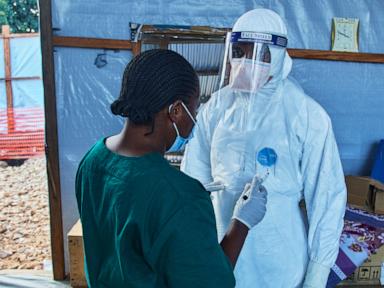
Epidemiological models lose their predictive power the moment the link between cases is severed. When contact tracing networks collapse, containment ceases to be a controlled medical intervention and becomes a reactive crisis management exercise. The current outbreak of the rare Bundibugyo ebolavirus species in the Democratic Republic of the Congo (DRC) has crossed this exact threshold.
With 1,926 infections and 702 recorded deaths across five provinces, this is the third-largest Ebola outbreak on record and the fastest-growing in history. Yet the most critical metric is not the death toll itself, but the transmission tracking failure rate: 80% of all newly confirmed cases are emerging completely outside of established contact lists. When four out of five new infections originate from unknown chains of transmission, conventional containment strategies are structurally broken.
Analyzing this crisis requires looking past the standard reporting of case counts and examining the systemic bottlenecks, structural failures, and operational mechanics that have allowed the virus to outpace the global response.
The Anatomy of the Transmission Blindspot
To understand why the response is failing, we must analyze the mechanics of contact tracing. In an ideal epidemiological model, containment relies on a simple, linear progression:
[Index Case] ──> [Identify Contacts] ──> [Monitor/Isolate] ──> [Break Chain]
This model assumes that the path of the virus can be traced retroactively from every newly diagnosed patient. When this chain is broken, it creates a transmission blindspot.
The current 80% tracking failure rate points to three specific failure modes in the containment architecture:
- Undetected Community Mortality: A high proportion of infected individuals are dying in their local communities without ever interacting with health facilities. Because these deaths occur outside the medical system, their immediate contacts are never logged, leaving subsequent generations of transmission completely invisible to epidemiologists.
- The Late-Detection Bottleneck: The DRC government officially declared the outbreak on May 15, weeks after the virus had already begun spreading silently through local populations. This delayed starting line meant the response apparatus was inherited with built-in, unmapped multi-generational transmission chains.
- Geographic Dispersal: The virus has breached its initial epicenter in Ituri Province, spreading to Haut-Uele and Tshopo provinces, as well as across the border into neighboring Uganda. This physical expansion compounds the tracking error rate exponentially as contact tracers must coordinate across vast, disconnected regions with distinct local languages and administrative structures.
The Bundibugyo Variable: Treatment and Vaccine Deficits
The severity of the current outbreak is heavily compounded by the specific viral species at play. Unlike the more common Zaire ebolavirus, which has been the focus of previous major outbreaks, this crisis is driven by the Bundibugyo species.
This taxonomic distinction is not merely academic; it fundamentally alters the clinical and operational parameters of the response.
First, there is no approved vaccine for the Bundibugyo species. During recent Zaire ebolavirus outbreaks, response teams relied heavily on "ring vaccination"—vaccinating every contact of a confirmed case, plus the contacts of those contacts. This created a protective immunological buffer around known chains. Without a Bundibugyo vaccine, this entire defensive layer is removed, leaving responders dependent solely on physical isolation and behavioral interventions.
Second, there is a total absence of approved therapeutic treatments for this species. While clinical trials have recently commenced, there is currently no standardized medical protocol to lower the mortality rate among the infected. This clinical deficit directly fuels community mistrust. When local populations observe that admission to a treatment facility carries a high probability of death without guaranteed therapeutic benefit, the rational incentive to seek early care or report symptoms vanishes.
The Structural Drivers of Response Lag
The World Health Organization reported that despite scaling up treatment capacity to 800 beds in Bunia and expanding laboratory facilities from a single site to 14, the response still cannot catch up to the rate of viral spread. This lag is driven by a combination of security, financial, and sociological barriers.
The eastern DRC remains a highly active conflict zone. Ongoing clashes between armed groups and government forces make physical access to remote villages highly hazardous. Health facilities and response teams have faced direct, violent attacks, forcing temporary halts to tracking operations. When security concerns freeze contact tracing for even 48 hours, the virus gains a massive head start that cannot easily be recovered.
This structural volatility is worsened by acute financial instability. Response efforts are restricted by a persistent global funding gap. The real-world cost of this shortfall is felt directly on the front lines: dozens of workers at a major Ebola treatment center in northeastern Congo recently went on strike over unpaid salaries and hazardous-duty bonuses. A striking workforce immediately halts patient intake, laboratory processing, and local contact tracing, causing a rapid spike in unmapped community transmission.
Finally, deep-seated systemic mistrust continues to alienate local populations. Decades of political instability and extractive medical interventions have created a environment where foreign-led health initiatives are viewed with suspicion. This manifests in families hiding sick relatives, conducting secret, unsafe traditional burials (which are highly infectious), and refusing to cooperate with contact tracing teams.
Operational Redesign: Transitioning from Reactive to Predictive Modeling
Continuing to deploy standard contact tracing protocols in an environment where 80% of cases are untraceable is an inefficient use of limited resources. To gain ground on the outbreak, the operational strategy must pivot from reactive tracing to a predictive, risk-mapped approach.
Responders must map local trade networks, river transport systems, and road corridors to identify high-probability transit hubs. Instead of waiting for a symptomatic individual to appear, mobile diagnostic teams must be pre-positioned at these key transit choke points.
Additionally, community engagement must be structurally incentivized. Centers can no longer operate merely as isolation units. They must be redesigned to provide visible community value, such as offering guaranteed food distribution, clean water infrastructure, and open visitation access for families. Aligning the survival and social needs of the community with the containment goals of the response is the only way to rebuild the trust required to bring patients out of hiding and back into the traceable medical system.