Fear sells. It’s the oldest commodity in the newsroom. When a headline screams about five recoveries in Africa and two "suspected" cases in Brazil, the media isn't reporting on public health. They are farming anxiety. The "lazy consensus" here is that every suspected case of a high-mortality viral hemorrhagic fever is a ticking time bomb for a global apocalypse. It isn't.
The fixation on Ebola’s raw mortality rate—which can hit $90%$ in resource-poor settings—blinds us to the actual mechanics of how this virus operates. We treat a biological entity like a supernatural curse. In reality, Ebola is a remarkably poor candidate for a global pandemic. It is too loud, too lethal, and too difficult to transmit compared to the quiet, respiratory killers that actually shut down the world.
If you want to understand why Brazil "investigating cases" is usually a non-story, and why focusing on Ebola is a distraction from real systemic failures, we need to look at the math and the sociology of the outbreak.
The Brazil "Suspected Case" Theater
Every few months, a traveler from a high-risk region develops a fever in a major transit hub like São Paulo or Rio de Janeiro. The protocols kick in. Isolation wards are prepped. Headlines go live. Then, forty-eight hours later, the tests come back negative for Ebola and positive for Malaria or Dengue.
Why does this happen? Because "suspected case" is a clinical definition, not a diagnosis.
In epidemiology, the "Case Definition" for Ebola is intentionally broad to ensure zero leakage. If you have a fever over 38°C and have been to a specific geographic region, you are a suspected case. This is a massive net designed to catch a single fish.
The media reports the net, not the fish. By the time the negative result arrives, the news cycle has moved on to the next scare. This creates a permanent state of "background radiation" anxiety. It makes the public believe the virus is constantly at the gates. It’s not. Brazil’s public health infrastructure, like the Fiocruz Institute, is actually quite adept at this screening. The system is working, but the reporting makes it look like the system is failing.
[Image of Ebola virus structure]
The Lethality Paradox
We are taught to fear Ebola because of its virulence. That is exactly why it stays contained.
In virology, there is a trade-off between virulence and transmission. A "successful" virus in evolutionary terms is one that doesn't kill its host quickly. It needs the host to walk, talk, and sneeze in a crowded subway. Ebola does the opposite. It liquefies the host’s internal structures and renders them incapacitated within days.
Ebola is not airborne. Let’s say that again: it is not airborne. It requires direct contact with infected bodily fluids. This means that in a modern urban environment with basic sanitation, the $R_0$ (basic reproduction number) of Ebola struggles to stay above $1$.
$$R_0 = \tau \cdot \bar{c} \cdot d$$
Where:
- $\tau$ is the transmissibility (probability of infection given contact).
- $\bar{c}$ is the average rate of contact between susceptible and infected individuals.
- $d$ is the duration of infectiousness.
In the case of Ebola, while $\tau$ is high if you touch blood, $\bar{c}$ is extremely low because the patient is usually too sick to be in public, and $d$ is short because the virus kills or is cleared relatively quickly. Compare this to a respiratory virus where $\bar{c}$ is off the charts because you breathe the same air as everyone in a grocery store.
Focusing on Ebola as a "global threat" is like worrying about a shark in your swimming pool while you’re currently drowning in a bathtub.
The Recovery Narrative Is a Red Herring
The competitor article touts "Five Recover" as a win. While it is great for those five individuals, it masks the grim reality of "Post-Ebola Syndrome."
We celebrate the survival, but we ignore the survivors' sequestered lives. Survivors often face uveitis (eye inflammation that can lead to blindness), severe joint pain, and neurological issues. More importantly, the virus can persist in "immunologically privileged" sites like the testes or the central nervous system for months.
By focusing on the binary of "Lived vs. Died," the media misses the true industrial challenge: the long-term healthcare burden of survivors and the persistent risk of sexual transmission months after a "recovery."
If we actually cared about the science, we’d stop reporting on the number of people who walked out of the tent and start reporting on the lack of follow-up care and the stigma that prevents these people from reintegrating into society.
The Real Crisis: Diagnostic Lag and Logistics
The "status quo" response to Ebola is to throw money at vaccines once the fire has already started. This is reactionary and inefficient.
The Merck vaccine (Ervebo) is a miracle of modern science, but it requires an ultra-cold chain. We are talking -60°C to -80°C. Shipping that to a remote village in the Democratic Republic of Congo is a logistical nightmare that no headline captures.
The real breakthrough isn't "five people recovered." The real breakthrough is the deployment of GeneXpert machines that can provide a molecular diagnosis in under two hours in the field.
Without rapid diagnostics, health workers are flying blind. They treat every fever as Ebola, which leads to "nosocomial" (hospital-acquired) transmission. People go to the clinic with a cold, get sat next to a real Ebola patient because the tests take three days, and then they actually get Ebola.
The tragedy isn't the virus; it's the lack of electricity to run a centrifuge.
Stop Treating Africa Like a Monolith
The competitor’s piece links Brazil to "Ebola" as if the virus is a singular cloud hovering over a continent. It fails to mention that the outbreaks are localized, often separated by thousands of miles of jungle and different strains (Zaire vs. Sudan).
When we treat the entire continent of Africa as a "hot zone," we destroy local economies. During the 2014-2016 West Africa outbreak, countries with zero cases saw their tourism and trade collapse because of the "Africa is Ebola" narrative pushed by lazy journalism.
The "status quo" reporting is economically violent. It’s not just "news"; it's a trade barrier.
The Uncomfortable Truth About "Global Health Security"
We only care about Ebola when it might reach Brazil, Europe, or the United States.
If Ebola stayed in rural villages and didn't threaten international flight paths, the funding for vaccines would vanish. This "security" mindset treats the Global South as a buffer zone. We don't want to "cure" Ebola; we want to "contain" it.
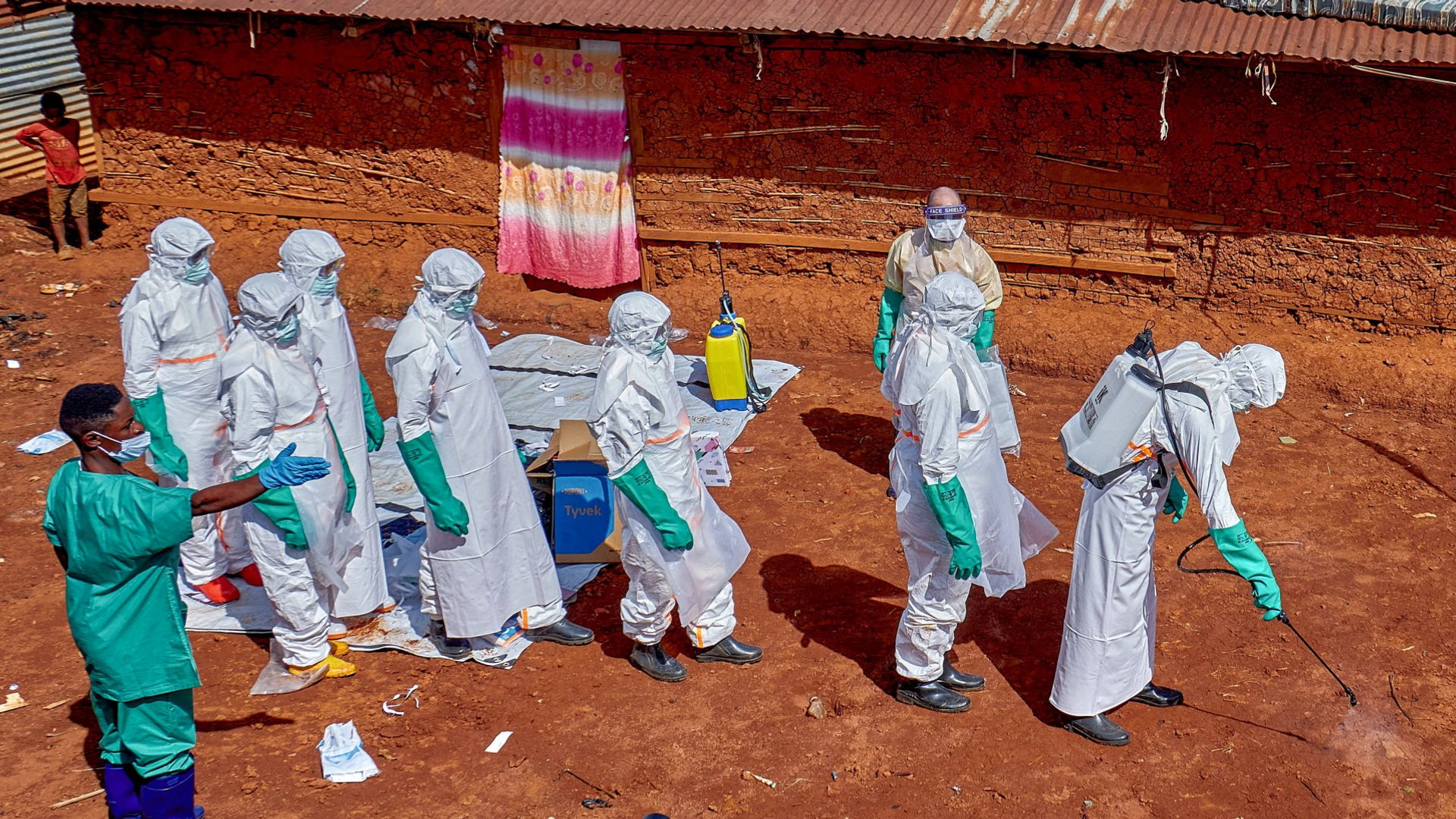
I have seen NGOs spend millions on "awareness" campaigns—billboards in villages where people can't read—while the local clinic doesn't even have nitrile gloves. We are obsessed with the "spectacle" of the hazmat suit. We love the imagery of the "brave" western doctor. We ignore the local burial teams who do $90%$ of the work and take $100%$ of the risk.
Your Risk Profile Is Effectively Zero
Unless you are a healthcare worker in a frontline "red zone" or a family member of an infected individual in a high-transmission area, your risk of contracting Ebola is mathematically negligible.
The energy spent worrying about "two suspected cases in Brazil" would be better spent getting a flu shot or advocating for better antibiotic stewardship. Those are the things that will actually kill you.
Ebola is a tragedy for the families it hits. For the rest of the world, it is a Rorschach test for our own biases and our misunderstanding of risk.
Stop falling for the "suspected case" bait. Stop waiting for the apocalypse. The virus isn't the problem; the way we talk about it is.
Wash your hands. Mind your own business. Let the scientists work in peace without the roar of a thousand panicked, misinformed tweets.