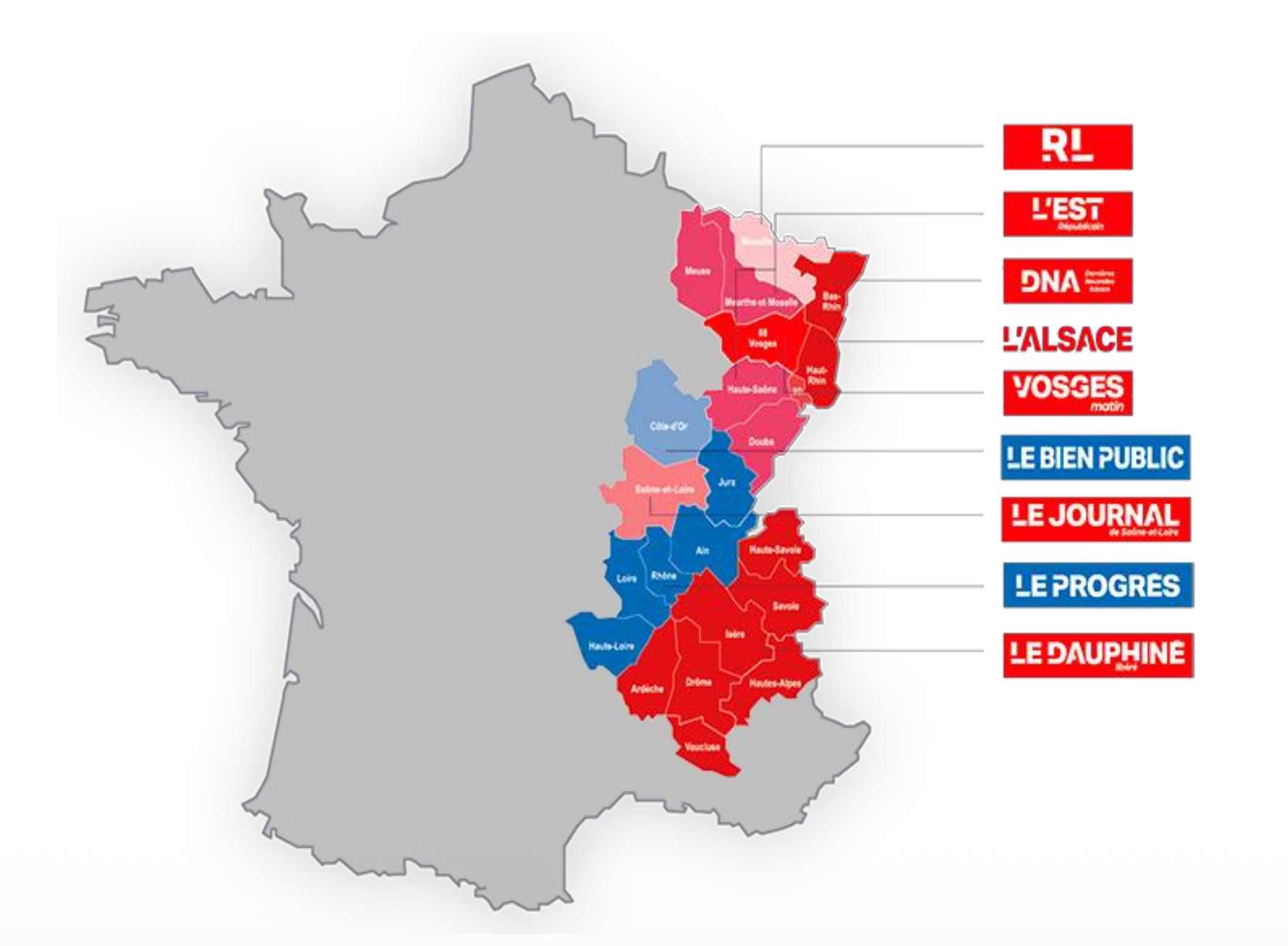
The High Stakes of Local News Restructuring
France’s largest regional press publisher, EBRA Group, is executing a high-stakes operational pivot to secure its survival in an era where print revenue continues to shrink. By attempting to anchor its publications deeply within regional communities while redirecting capital toward workforce development and digital transformation, the media giant is testing whether traditional news organizations can achieve profitability without sacrificing their local presence.
The strategy addresses a core crisis facing modern regional journalism. Years of centralizing editorial desks and slashing local reporting budgets have systematically weakened the value proposition of local newspapers. Readers stopped paying because the hyper-local coverage that once made these papers essential vanished. EBRA’s operational plan attempts to reverse that decay by refocusing resources directly on the ground.
Rebuilding the Local Infrastructure
For decades, the standard playbook for regional media conglomerates was straightforward and brutal. Cut staff, consolidate newsrooms, print content centrally, and hope subscribers didn't notice the loss of local depth.
That approach failed. It created news deserts and accelerated digital churn.
EBRA's current strategy shifts away from pure cost-cutting toward a selective reallocation of resources. To understand how this mechanism operates in practice, consider a typical regional news ecosystem.
Hypothetical Operational Scenario
- Old Model: A central desk in a major metropolitan hub edits and distributes standardized regional news to twelve outlying towns, resulting in generic coverage that misses local nuance.
- Restructured Model: Sub-regional hubs are re-established with dedicated local reporters who focus exclusively on municipal governance, local business developments, and community issues, while administrative functions remain centralized to reduce overhead.
By pulling journalists out of back-office administrative tasks and placing them back on the beat, the goal is to increase the volume of exclusive, local reporting that cannot be easily replicated by national aggregators or social media platforms.
The Human Capital Investment Formula
Upgrading digital infrastructure is useless if the workforce lacks the skills to utilize modern publishing tools. A central pillar of the restructuring effort involves direct investment in newsroom personnel through targeted training initiatives.
+-------------------------------------------------------------------+
|                  EBRA MODERNIZATION FRAMEWORK                    |
+-------------------------------------------------------------------+
|  TRADITIONAL NEWSROOM             MODERN DIGITAL WORKFLOW         |
|  • Print-first deadlines          • Real-time digital publishing  |
|  • Generalist reporting           • Data-informed local beats     |
|  • Static media formats           • Multi-platform storytelling   |
+-------------------------------------------------------------------+
Training print-accustomed journalists to operate in a digital-first environment requires more than software tutorials. It demands a total shift in how newsrooms structure their working days, schedule stories, and measure reader engagement.
The Economic Realities of Regional Media
The fundamental problem with local news isn't a lack of audience interest. It is a monetization mismatch. Digital advertising yields a fraction of the revenue that print advertising once generated, meaning subscriber acquisition and retention are the primary drivers of financial viability.
| Metric / Focus | Traditional Print Operations | Modernized Digital Model |
|---|---|---|
| Primary Revenue | Print subscriptions & display ads | Digital subscriptions & targeted local ads |
| Audience Reach | Geographical print distribution | Multi-device, localized digital footprint |
| Cost Allocation | High physical distribution costs | Higher content creation & tech infrastructure costs |
| Engagement | Daily reading habits | Real-time, feature-driven interaction |
If a news organization fails to convert local print readers into paying digital subscribers, no amount of internal restructuring will bridge the financial gap.
Overcoming Editorial Centralization Pressures
There is an inherent tension between centralized corporate efficiency and localized editorial independence. Corporate management naturally favors standardized processes across all regional titles to keep overhead manageable. Local readers, however, demand reporting tailored strictly to their specific geography and interests.
Managing this balance requires clear boundaries:
- Centralized Operations: Technical infrastructure, subscription management, national advertising sales, and back-office administrative support.
- Localized Operations: Story selection, beat reporting, community engagement, and regional investigative work.
When corporate centers overreach and dictate local editorial direction, audience trust erodes rapidly. Keeping those functions distinct is critical.
Key Friction Points in Implementation
Transforming an legacy publishing group comes with severe risks. Success depends heavily on executing the strategy without alienating the existing, highly reliable print subscriber base, which still generates the bulk of cash flow needed to fund the transition.
First, staff resistance remains a significant factor. Newsroom cultures are historically resistant to top-down operational mandates, particularly when previous management initiatives focused primarily on downsizing. Building trust with staff requires tangible support, clear performance metrics, and realistic workloads.
Second, the digital transition timeline is unforgiving. Print ad revenues are declining faster than digital subscription revenues are growing across almost all legacy news markets. The transition must generate positive cash flow before legacy revenue streams drop below the threshold required to sustain operations.
The success of EBRA's model ultimately hinges on a simple truth. Local journalism only works when it remains undeniably local. If the reinvestment in personnel leads to rigorous, high-value local reporting that readers cannot find anywhere else, the financial returns will follow. If it degenerates into corporate PR and surface-level efficiency updates, it will merely delay the inevitable decline that has claimed so many regional titles over the past two decades.