The screen in the corner of the small kitchen flickers with blue light. Outside, a heavy German fog presses against the windowpanes, blurring the silhouettes of the quiet street into charcoal smudges. Inside, the radio murmurs in German, but the images flashing across the evening news belong to a different world entirely. Sun-bleached concrete. Desperate figures scrambling over jagged breakwaters. The searing Mediterranean heat of Ceuta.
Thousands of miles away from the North African enclave, a voter in Saxony stirs a cup of evening tea, watching the distant chaos unfold. To anyone sitting in Madrid or Berlin, the events at a Spanish border fence might feel like a localized geopolitical tremor. But in political headquarters across Germany, strategists know a different truth. Fear travels faster than geography.
Humanity has always possessed an acute sensitivity to the spectacle of movement. When borders seem porous, an anxious tremor runs through quiet towns where change arrives slowly, if at all. Politics feeds on this tremor.
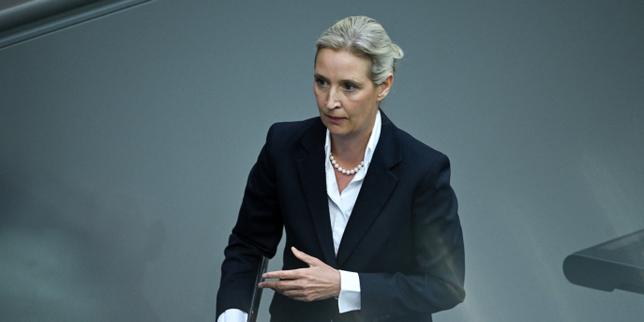
Consider what happens next: the footage loops. It cuts to a podium under harsh white studio lights.
The Mechanics of Distance
Distance is a strange filter. It turns real human suffering into abstract pixels, and abstract pixels into potent political fuel.
When thousands of migrants pressed toward the Spanish border fences in Ceuta, the event was rapidly packaged, compressed, and exported. By the time those images landed on social media feeds in eastern Germany, they had been stripped of their complex socio-economic context. They became pure, unadulterated sensation.
Politicians of the Alternative for Germany party did not invent this machinery, but they have learned to operate its controls with surgical precision. They look at the footage from the Spanish coast not with humanitarian alarm, but with strategic clarity. To them, Ceuta is a staging ground for a domestic narrative. It is proof, they argue to packed assembly halls, that the walls are failing everywhere.
Listen closely to the speeches delivered in regional campaign stops. The language shifts effortlessly from a fence in North Africa to the local schoolyard, the municipal housing list, the local clinic. It is a deliberate telescoping of scale. By connecting a distant border crisis to the immediate, tangible anxieties of local voters, the party transforms a foreign policy event into an urgent neighborhood crisis.
This is not a new playbook. History is littered with political movements that used distant turbulence to manufacture local certainty. When people feel the ground shifting beneath their feet, they crave absolute barriers. They want someone to point to the chaos, name an enemy, and promise a lock and key.
The Regional Stakes
Saxony and Thuringia do not share a border with Spain, nor do they share a coastline with the Mediterranean. Yet, the political gravity of regional elections pulls every global crisis directly into local council chambers.
Walk through the cobbled market square of a provincial German town ahead of an upcoming regional vote. The posters are already up. They do not talk about tax codes or infrastructure spending. They talk about security, identity, and control.
The strategy relies on a potent emotional cocktail: a mixture of empathy fatigue, economic uncertainty, and cultural anxiety. Post-pandemic inflation has left many working families feeling precarious. Municipal budgets are stretched thin. When local authorities struggle to find housing for new arrivals, the friction is real. It is messy. It is difficult.
Instead of offering structural, administrative solutions to municipal strain, opportunistic political operators offer a simple, visceral narrative. They point south. They say, Look at what is coming. They weaponize the image of the border breach to validate every domestic grievance.
The danger lies in how effectively this connects. A voter worried about the rising cost of groceries suddenly sees a connection between their shrinking wallet and a distant shoreline in Ceuta. The connection is entirely illogical, constructed through fear rather than fact, but emotionally, it holds immense power.
The Weight of the Fact
To understand why this strategy works, we must separate the political exploitation from the human reality on the ground.
The crisis in Ceuta is real. People are fleeing poverty, violence, and climate shocks. Spain struggles with the immense humanitarian and logistical burden of its geographical position as Europe's southern gateway. These are complex human stories involving real flesh, blood, and suffering.
Yet, in the ecosystem of right-wing populism, these human stories are flattened into weapons. The complexity is stripped away. The structural failures of international migration systems are ignored in favor of a stark, binary theater: us versus them, order versus chaos, security versus invasion.
When the AfD incorporates the Ceuta crisis into regional campaign materials, they are engaging in a deliberate rhetorical alchemy. They take real anxiety—the kind felt by local citizens watching their communities transform—and fuse it with xenophobic panic.
The statistics tell a story of regional divergence, of aging populations, of labor shortages that desperately require foreign workers, juxtaposed against a political discourse that treats every newcomer as an existential threat. The cognitive dissonance is staggering. Germany needs hands to build, care, and produce, yet its political arenas echo with calls for total exclusion.
The Sound of the Echo
Back in the kitchen, the news report ends. The screen cuts to a commercial for household cleaner. The quiet returns, save for the rhythmic ticking of the wall clock.
The political campaign will rage on through the bitter winter weeks, across snowy fields and drafty community halls. Algorithms will continue to feed distant crises directly into local pockets. The footage from Ceuta will fade from the headlines, replaced by new images, new fires, new borders breached.
The underlying anxiety, however, will remain. It settles into the floorboards of society like fine dust, waiting for the next gust of wind to stir it into motion.
A border is never just a line on a map. It is an idea. In the minds of those who seek to divide, it is a scar that must be kept open, bleeding, and visible, so that no one ever forgets who holds the thread.

.png?itok=1mb05mKJ)

