Seasonal decor forecasting usually relies on subjective mood boards and arbitrary color palettes, leaving retailers and consumers with depreciating inventory by January 2. In 2026, the Christmas ornament market is bifurcating along strict economic and psychological lines, driven by prolonged household inflation, fatigue with disposable plastic goods, and a measurable shift toward tactile permanence. To optimize purchasing decisions or merchandising allocations for the 2026 fourth quarter, you must abandon vague trend-chasing and evaluate holiday decor through three operational filters: material longevity, chromatic utility, and spatial density.
Most lifestyle publications treat holiday trends as isolated aesthetic whims. They observe a rise in velvet ribbons or hand-blown glass and label it a movement without identifying the underlying market mechanics. In reality, consumer behavior during the 2026 holiday cycle is governed by The Heirloom Substitution Effect. When discretionary budgets tighten over multiple consecutive years, buyers reject mid-tier, mass-produced ornaments that carry zero resale or sentimental value. Instead, capital concentrates at the two extremes of the price curve: ultra-low-cost natural forage (dried citrus, paper, raw wood) and high-ticket artisanal pieces (mouth-blown glass, cast brass, hand-painted ceramics). The middle market—characterized by injection-molded plastics with synthetic glitter—suffers severe margin compression because it offers neither the zero-waste appeal of DIY organic materials nor the multi-generational durability of true craft.
The Three Pillars of 2026 Ornament Allocation
To structure a cohesive visual system or retail assortment for 2026, every unit must justify its physical footprint on the tree. Merchandisers and designers should categorize inventory into three distinct functional tiers rather than grouping by arbitrary themes like "Winter Wonderland" or "Vintage Charm."
Structural Anchors (20% of total unit volume)
These are high-mass, low-detail pieces designed to absorb light and establish visual weight deep within the tree's interior branches. In 2026, the dominant materials for anchors are oxidized metals, matte ceramic spheres, and oversized velvet-flocked forms. Their function is architectural; they eliminate the hollow, transparent appearance of modern artificial trees by blocking direct sightlines to the central trunk.Reflective Catalysts (50% of total unit volume)
Light management determines the perceived value of a holiday display. Rather than relying on high-gloss mirror finishes that create harsh glare under modern LED string lights, the 2026 shift favors mercury glass, fluted borosilicate, and hammered brass. These surfaces fracture light into diffused, warm spectrums. When selecting reflective catalysts, prioritize irregular surface geometry over uniform smoothness. A fluted glass teardrop scatters warm-white LED output across adjacent needles, multiplying the perceived lumen output without adding electrical load or wiring complexity.Narrative Signifiers (30% of total unit volume)
This tier houses the hyper-specific, culturally resonant shapes—miniature culinary items, bespoke architectural replicas, and hand-stitched textiles. In 2026, narrative signifiers are moving away from generic festive icons (snowmen, standard Santas) toward hyper-personalization and nostalgic surrealism. Consumers are purchasing ornaments that function as three-dimensional autobiographical markers: specific regional foods, vintage analog technology, or botanical species native to their geography.
Chromatic Calibration and the Rejection of Primary Saturation
Standard retail color forecasting often defaults to high-saturation crimson and kelly green, which clash violently with contemporary residential interior design. Modern interiors rely heavily on warm neutrals, limewash walls, unlacquered brass, and natural oak. Introducing high-chroma primary colors creates visual friction, forcing the eye to register the tree as an intrusive foreign object rather than an integrated room element.
The 2026 chromatic framework resolves this friction by lowering saturation and shifting temperature toward earth-anchored undertones:
- Oxblood and Terracotta Replacing True Red: By introducing brown and black undertones into red pigments, ornaments harmonize with wood furniture and leather upholstery. This shift reduces visual fatigue over a six-week display cycle.
- Chartreuse and Moss Replacing Emerald: Yellow-based greens mimic natural foliage variations, creating a tonal gradient against dark pine or fir needles rather than a flat, monochromatic block.
- Champagne and Pewter Replacing Chrome: Cool, blue-tinted silver finishes accentuate the harsh blue spikes common in inexpensive LED bulbs. Champagne gold, raw pewter, and antique bronze warm the color temperature of the light source, replicating the optical warmth of traditional incandescent bulbs or open candlelight.
This chromatic strategy carries a distinct operational limitation: low-saturation palettes require higher lighting density to prevent the tree from appearing dark or muddy at night. If you deploy oxblood, moss, and antique bronze ornaments, you must increase light string density by roughly 25% compared to a traditional bright-red and silver layout. Without adequate internal illumination, dark matte finishes disappear entirely after sunset.
The Mechanics of Material Tactility and Scale Variance
A common failure in both residential decorating and commercial visual merchandising is Scale Homogeneity—hanging fifty ornaments that all measure between three and four inches in diameter. When every object shares the same visual weight, the human eye fails to establish a focal hierarchy, resulting in visual clutter regardless of how expensive the individual pieces are.
In 2026, high-level styling relies on extreme scale variance paired with contrasting surface textures. You achieve this by pairing oversized, lightweight forms—such as six-inch pleated paper honeycomb globes or long, slender glass icicles—with dense, miniature metal charms. The pleated paper introduces matte, fibrous texture and massive volume at a negligible weight cost, ensuring outer branches do not droop. Conversely, heavy cast-brass bells or solid glass finials must be hung closer to the trunk where branch gauge is thicker, utilizing the tree's natural load-bearing mechanics.
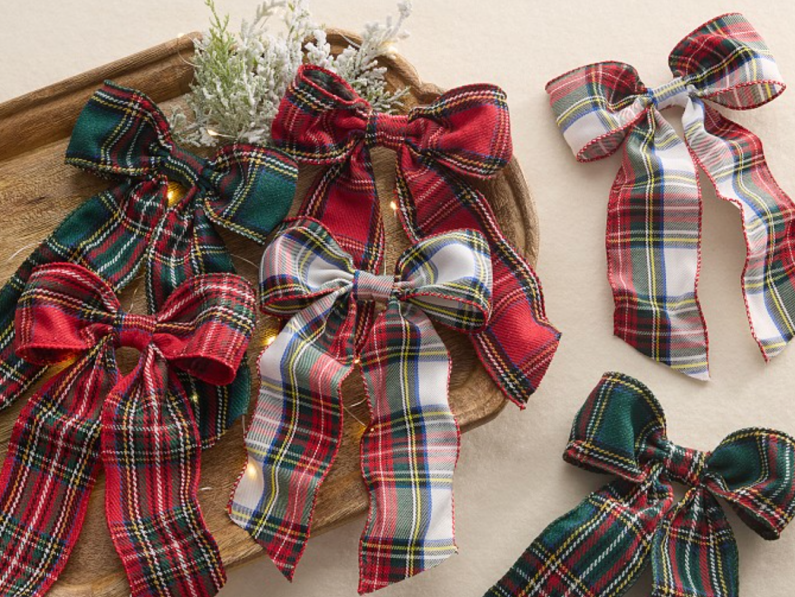
Textural contrast operates on a similar binary. Smooth, non-porous surfaces (lacquered wood, blown glass) require immediate adjacency to light-absorbing, fibrous materials (raw linen ribbons, needle-felted wool, dried botanicals). Placing two high-gloss glass ornaments next to each other diminishes the visual impact of both through redundant reflection. Separating them with a matte wool sphere or a velvet bow resets the viewer's visual palate, allowing each reflective piece to register distinctly.
Supply Chain Friction and Unit Economics for Buyers
Understanding why certain designs dominate 2026 shelves requires examining manufacturing constraints in the global decor supply chain. Hand-blown glass production in Eastern Europe and specialized workshops in Asia faces rising energy costs and skilled labor shortages. As a result, wholesale unit costs for complex, multi-mold glass ornaments have climbed steadily, forcing importers to make calculated bets on shape complexity.
To protect margins without passing prohibitive retail prices onto the consumer, manufacturers are utilizing two specific production pivots in 2026:
- Mold Simplification with Finish Complexity: Instead of commissioning expensive new sculptural molds, factories are reusing classic geometric forms (spheres, onions, finials) and differentiating them through multi-stage exterior treatments—such as hand-applied patina, crushed glass frit, or reactive glazes. For buyers, this means you are paying for surface artistry rather than sculptural novelty.
- Lightweight Composite Substitutions: Large-scale ornaments that would be prohibitively heavy and fragile in solid glass are increasingly executed in papier-mache, pressed tin, or resin-infused natural fibers. These materials reduce shipping weight—a critical factor in ocean freight economics—while delivering the oversized silhouettes demanded by current spatial trends.
Consumers navigating this market must watch for Finish Degradation Risks. Inexpensive metallic coatings applied over plastic substrates frequently oxidize or flake within two storage cycles, particularly when exposed to temperature fluctuations in attics or garages. Inspect the hanging cap and suspension loop before purchasing; a pressed-tin crown with a wire spring mechanism indicates traditional glass construction, whereas a molded plastic cap fused directly to the body signals a disposable unit with a finite lifespan.
Spatial Density and the Negative Space Mandate
The historical approach to holiday tree dressing followed a maximalist coverage model: filling every visible gap between branches until the underlying greenery became a mere structural frame. In 2026, driven by the broader architectural preference for organic minimalism and Japanese-Scandinavian hybrid aesthetics, Negative Space is treated as an active design component.
Leaving 30% to 40% of the tree's branch tips completely bare serves two strategic functions. First, it showcases the natural silhouette and needle texture of the tree itself, which is particularly vital if you are investing in high-grade live firs (such as Noble or Nordmann varieties) or premium molded-PE artificial trees. Second, negative space creates depth perception. By recessing ornaments deep into the interior pockets of the branches while leaving the outer tips unencumbered, you transform the tree from a flat, conical surface into a three-dimensional diorama.
Implementing this spatial model requires strict discipline during installation:
- Install Lighting from the Trunk Outward: Wrap lights tightly around the central trunk and work outward along the primary branches, stopping two inches short of the tips. This backlights the foliage and illuminates interior ornaments from behind.
- Place Structural Anchors Deep: Hang your largest, darkest matte spheres inside the interior cavities, resting them near the main stem.
- Suspend Reflective Catalysts Mid-Branch: Position fluted glass and metallic pieces halfway along the branches where they catch both the interior trunk lights and ambient room light.
- Reserve Outer Tips for Lightweight Drop Forms: Use the outermost branch tips exclusively for vertical drop ornaments (icicles, thin tassels, small bells) that hang freely in open air without weighing down the bough.
- Eliminate Tinsel and Thick Garlands: Heavy garlands bridge the gaps between branches, destroying the negative space architecture and obscuring the interior depth you just built. If linear movement is required, use narrow, 3/8-inch velvet or silk ribbons tied in loose, vertical cascades rather than horizontal wraps.
Tactical Execution for the 2026 Season
Whether you are procuring inventory for a boutique retail operation or curating a private residential collection, execute your 2026 acquisition strategy by auditing existing stock before purchasing a single new unit. Discard or donate degraded synthetic plastics that compromise the visual integrity of your display. Allocate 60% of your 2026 budget toward high-durability Reflective Catalysts in champagne, pewter, and fluted clear glass, as these provide the highest optical return per dollar spent. Dedicate 25% to Structural Anchors in matte ceramic or flocked earth tones to establish interior depth, and restrict Narrative Signifiers to the remaining 15%, selecting only pieces with genuine material integrity—cast metal, blown glass, or natural textiles—that will retain aesthetic and structural value through the next decade.