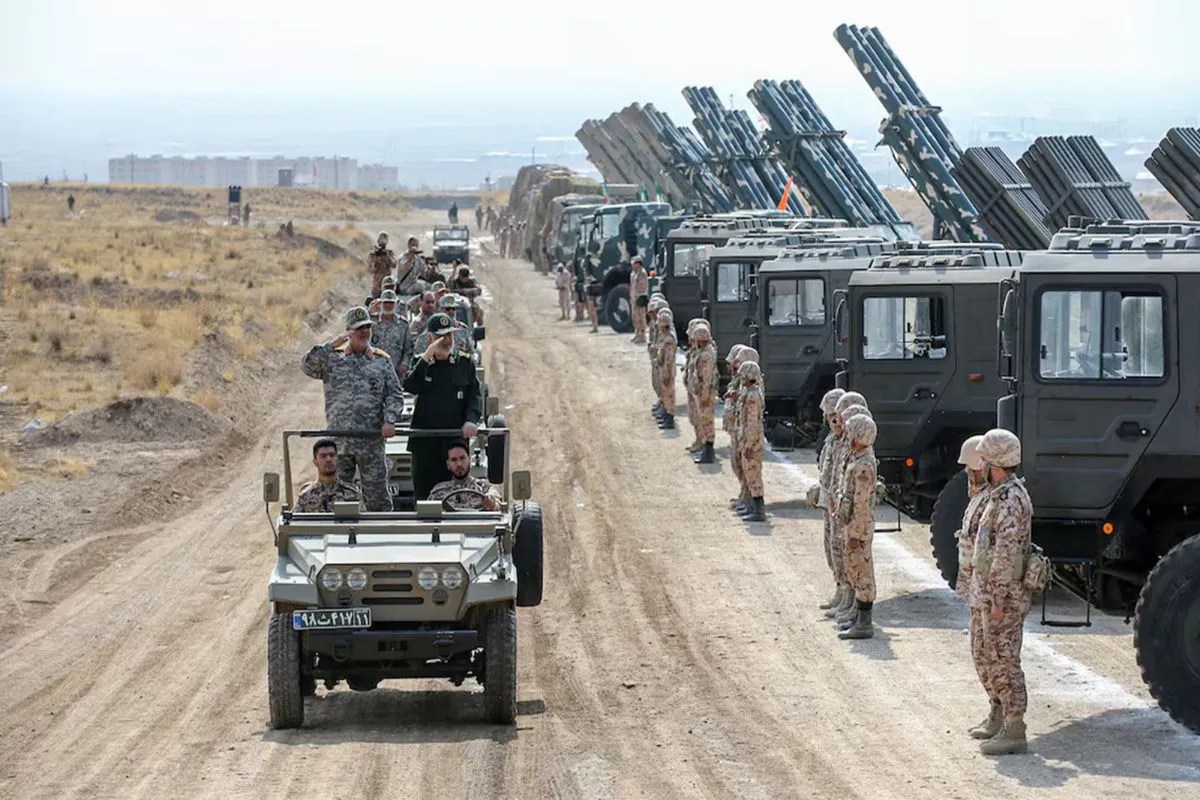
The recent conflict cycle involving Iran has yielded a data point that contradicts conventional Western assessments of industrial attrition: the rapid normalization of defense manufacturing output post-kinetic engagement. While external observers often model military recovery through the lens of centralized facility restoration, the reality of the Iranian defense apparatus suggests a shift toward a decentralized, high-velocity production architecture. Understanding this requires moving beyond political rhetoric to analyze the logistical mechanisms of a state-sponsored defense industrial base that prioritizes modularity and cost-arbitrage over consolidated mass production.
The Mechanics of Decentralized Resurgence
Western industrial doctrine is historically tethered to centralized, high-visibility manufacturing hubs. When these are targeted, the immediate tactical assumption is a significant disruption to output. Iran’s recovery trajectory illustrates a different operational philosophy. By integrating over 9,000 private and knowledge-based firms into the defense supply chain, the state has effectively transformed its defense industry from a single vertical into a distributed network.
This creates an operational advantage: target redundancy. If a primary facility is neutralized, the production function does not terminate; it migrates across a wider, less visible network of academic and industrial partners. This is not merely a strategy of hiding assets in subterranean facilities, but a structural shift that minimizes the reliance on "chokepoint" infrastructure. When individual nodes are disconnected via kinetic action, the network protocol reroutes manufacturing requirements to the remaining, dispersed nodes.
Cost Arbitrage in Military Procurement
A critical variable often overlooked in conventional analysis is the variance in cost structures between Iranian defense systems and their Western equivalents. Iranian officials claim that specific tactical systems are produced at one-tenth to one-twentieth the cost of foreign counterparts. This is not strictly a result of lower labor costs; it is an artifact of design philosophy.
Western defense systems are frequently built for peak performance, high integration, and long-term shelf life, necessitating expensive, specialized components. Conversely, the Iranian model favors high-volume, "disposable-capable" systems. By lowering the cost-per-unit, the state alters the attrition math of the battlefield. If the cost to neutralize a high-value interceptor (such as a THAAD or Patriot variant) is significantly higher than the cost to produce the incoming threat, the economic burden shifts disproportionately toward the defender. This creates a structural deficit in any prolonged conflict, regardless of who maintains technological superiority.
The Feedback Loop of Wartime Production
The most striking observation from the past year is the reported surge in production output following the conclusion of kinetic hostilities. This indicates a "wartime acceleration" feedback loop. Instead of post-conflict reconstruction cycles that mirror peacetime lead times, the existing urgency facilitates a reduction in administrative barriers to production.
- Integrated Supply Chain Fluidity: The shift toward private sector and knowledge-based enterprise collaboration reduces bureaucratic friction, allowing for rapid procurement of dual-use components.
- Modular Engineering: By designing systems that utilize off-the-shelf industrial components, manufacturers avoid the bottleneck of specialized, long-lead-time defense electronics.
- Strategic Reserves and Just-in-Time Hybridization: The operational doctrine now relies on a hybrid model where strategic reserves are maintained to absorb initial shock, while decentralized workshops operate in a state of constant, low-intensity production that can be throttled upward instantly.
Structural Limitations and Risks
The reliance on this decentralized model is not without inherent weaknesses. First, quality control and standardization across a network of 9,000 independent entities likely suffer from significant variance. While high-volume, lower-tech systems (like basic drones) benefit from this network, high-precision ballistic systems require a level of technical coherence that may be difficult to maintain under sustained expansion.
Second, the system is highly sensitive to the availability of dual-use inputs—components that are sourced from the civilian sector or imported. Sanction regimes that target these granular, non-defense-specific supply chains can create long-term structural decay that is not immediately visible in monthly output figures. The strength of the network is its adaptability, but its vulnerability lies in the cumulative scarcity of critical raw materials and micro-components that cannot be locally produced at scale.
The Strategic Trajectory
The current evidence suggests that Western assessment frameworks are currently miscalibrated. By viewing defense recovery as a linear process of "repairing what was broken," analysts miss the iterative process of "replacing what was lost with a decentralized alternative."
The strategic reality is that the threshold for disrupting Iranian defense output has risen significantly. The primary threat to this architecture is not the targeting of fixed facilities, but the effective interdiction of the broader, opaque industrial ecosystem that supports it. Future strategic postures must pivot from targeting the visible "missile cities" to analyzing and disrupting the specific, low-visibility industrial nodes that provide the raw materials and dual-use components for this decentralized network. The race is no longer about production capacity—it is about the integrity of the supply network.