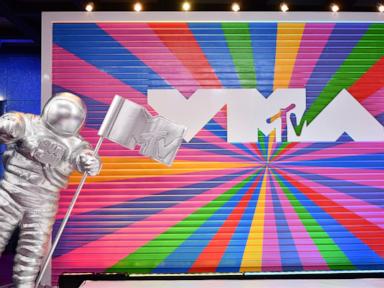
Award ceremonies operate within a mature distribution framework where the primary economic engine depends heavily on live broadcast windows and exclusive licensing agreements. When major properties like the MTV Video Music Awards cycle into production, the accompanying press cycles—anchored by historic achievements from legacy artists like Taylor Swift and career longevity milestones from acts like Madonna—function as predictable demand generators. Understanding the mechanics behind these events requires looking past the red-carpet spectacle to examine the underlying structural incentives governing television networks, streaming platforms, and artist management teams.
The modern music awards broadcast faces a fundamental optimization problem: how to monetize appointment viewing in an era defined by asynchronous, fragmented consumption. Legacy media companies address this through a specific economic model that relies on cross-platform syndication, tiered advertising inventory, and concentrated live viewership windows.
The Production Function of Live Music Television
Live cultural events survive economically because they generate high-intent, real-time advertising revenue that programmatic digital ads cannot easily replicate. Brands pay premium rates for unskippable commercial pods during high-profile moments, such as major category announcements or milestone performances. This monetization relies entirely on capturing collective attention within a tight temporal boundary.
Production expenditures for these broadcasts remain high due to union labor requirements, complex stage engineering, real-time audio-visual synchronization, and talent booking fees. To offset these fixed costs, networks leverage a dual-revenue structure:
- Licensing Fees: Domestic and international broadcast rights sold to cable networks and streaming distributors.
- Ad-Unit Monetization: Tiered sponsorship packages ranging from title sponsorships to contextual product integrations.
When historic figures or legacy pop icons dominate the nomination lists, they stabilize the projected audience baseline. Broadcasters rely on these established names to mitigate the variance in viewer turnout. A familiar headliner reduces the risk profile for corporate sponsors who purchase ad inventory months before the telecast occurs.
The Attention Capture Loop
The promotional ecosystem surrounding a major award show follows a rigorous funnel designed to maximize velocity across digital and linear channels. This loop operates in three distinct phases:
- Nomination Deployment: The initial release of nominee lists triggers algorithmic amplification across social platforms. Media outlets parse the data to identify anomalies, snubs, and historic milestones, driving organic search traffic.
- Speculation and Narrative Construction: Entertainment desks construct predictive frameworks around who will break records, which drives user engagement and fuels social media chatter without requiring direct financial expenditure from the network.
- The Broadcast Window: The live event acts as the conversion point, translating digital curiosity into live television ratings and second-screen social interactions.
This cyclical structure functions as a free-market validation mechanism for commercial success. Artists benefit through immediate surges in streaming volume and catalog consumption, while the hosting platform captures short-term advertising yield and long-term subscriber acquisition lift.
Distribution Architecture and Platform Fragmentation
The shift from cable-exclusive distribution to hybrid streaming models has altered how viewers access these events. Audiences navigating options to watch live broadcasts face a fragmented landscape defined by tiered subscriptions, geo-blocking restrictions, and platform exclusivity rules.
Network operators use live events as leverage to drive sign-ups for their direct-to-consumer streaming applications. However, friction remains high for consumers who do not maintain traditional pay-TV bundles or dedicated streaming service tiers. This friction creates a secondary market of pirated streams, social media clip aggregation, and real-time recap articles that capture the residual value of the broadcast for non-paying audiences.
Distribution strategies must balance reach against monetization. Maximizing raw viewer count requires broad, frictionless access, whereas maximizing near-term revenue requires gatekeeping content behind paywalls and premium subscriptions. The current compromise involves distributing highlights freely on platforms like YouTube and TikTok moments after they air, using short-form clips as top-of-funnel marketing for the main event while keeping the core live stream restricted.
Strategic Outlook
The long-term viability of televised music awards depends on their ability to decouple live production costs from declining linear television subscriber bases. As traditional cable bundles continue to contract, networks will increasingly rely on dynamic pricing models, shoppable video integrations within the stream, and global digital-first partnerships to maintain margins. The underlying asset remains valuable not for its artistic merit, but for its unique capacity to aggregate millions of concurrent viewers in an increasingly fragmented media ecosystem.