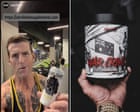
Reputation arbitrage occurs when two controversial entities combine their public profiles to capture attention that neither could monetize efficiently in isolation. The commercial alignment between former Special Air Service Regiment soldier Ben Roberts-Smith and a prominent Australian fitness influencer whose brand previously marketed a "war crimes" pre-workout supplement illustrates this mechanism in real time. Rather than operating as an accidental public relations blunder, this partnership functions as a calculated customer acquisition strategy designed to bypass traditional media gatekeepers and convert polarization into direct-to-consumer revenue.
Conventional public relations theory assumes that negative publicity universally degrades brand equity. That assumption holds only for mass-market enterprises dependent on broad institutional trust, publicly traded stock valuations, and blue-chip corporate sponsorships. For niche, direct-to-consumer fitness brands and polarizing public figures operating outside mainstream corporate ecosystems, traditional reputational risk calculations invert. Outrage generates algorithmic distribution at zero marginal media cost, while institutional condemnation reinforces in-group loyalty among target demographics.
The Structural Mechanics of Reputation Arbitrage
To understand why a gym business and a disgraced military figure find mutual utility in public collaboration, one must separate mainstream media sentiment from unit-level conversion economics. Mainstream news outlets report on such partnerships through a moral and legal lens, focusing on the 2023 Federal Court defamation ruling in which a judge found on the balance of probabilities that Ben Roberts-Smith was complicit in unlawful killings in Afghanistan, alongside the prior controversy surrounding the supplement brand's naming conventions.
Within the commercial ecosystem of hyper-masculine fitness branding, those exact liabilities transform into high-signal brand differentiators.
- Zero-Cost Algorithmic Amplification: Social media recommendation engines optimize for engagement velocity, measured through comments, shares, and watch time rather than sentiment polarity. Collaborations involving figures with high public recognition and intense polarization trigger immediate debate in comment sections. This debate signals relevance to platform algorithms, pushing promotional content to users far beyond the brand's existing follower base without requiring paid ad spend.
- Audience Self-Selection and Filtering: Broad-reach advertising wastes capital on low-intent impressions. Controversial collaborations act as an aggressive top-of-funnel filter. Consumers offended by the association self-select out immediately, while consumers who view mainstream media criticism with skepticism or hostility experience heightened affinity for the brand. The remaining audience exhibits significantly higher conversion rates and lower price sensitivity.
- Asymmetric Risk Profiles: Legacy corporations face existential threats from consumer boycotts and boardroom governance pressures. Founder-led, privately held fitness businesses face neither. When the founder's personal brand is already built on provocation—evidenced by previously naming a high-stimulant supplement after war crimes—adding a polarizing figure introduces negligible incremental downside while unlocking substantial earned media coverage.
Deconstructing the Brand Positioning and Market Fit
The Australian fitness and supplement sector suffers from severe commoditization. Pre-workout formulas, whey protein isolates, and commercial gym memberships rely on virtually identical raw ingredients, contract manufacturers, and equipment suppliers. Because product differentiation is minimal, customer acquisition cost (CAC) becomes the primary determinant of profitability.
Brands compete on identity signaling rather than chemical efficacy. In the sub-sector catering to combat sports enthusiasts, tactical fitness practitioners, and anti-establishment demographics, visual aesthetics and brand narratives draw heavily from military iconography, stoicism, and defiance against perceived institutional overreach.
Ben Roberts-Smith represents a potent symbol within this specific cultural vertical. Despite the civil court findings and the stripping of institutional backing, his status as a Victoria Cross recipient and former elite operator retains currency among segments of the public that distrust legacy media narratives. For a fitness entrepreneur operating a gym facility and supplement line built around shock value and hyper-masculine branding, associating with Roberts-Smith anchors the business in authentic military pedigree rather than purely theatrical toughness.
From Roberts-Smith's perspective, the strategic calculus is equally pragmatic. Following years of protracted defamation litigation in the Federal Court of Australia, legal liabilities and reputational exclusion severely constrained his access to traditional corporate board roles, institutional speaking circuits, and mainstream commercial endorsements. Aligning with an independent, high-cash-flow fitness enterprise provides an immediate platform for public re-entry within a sympathetic environment where his military background is celebrated rather than litigated.
The Economics of Outrage-Driven Customer Acquisition
Standard direct-to-consumer supplement brands spend between 30% and 50% of gross revenue on paid digital acquisition across platforms like Meta and TikTok. Rising cost-per-thousand-impressions (CPM) rates and stricter advertising compliance policies regarding supplement claims continuously compress net margins.
Controversy marketing circumvents this auction dynamic by shifting acquisition from paid media to earned media. When major national newspapers and broadcast networks publish articles highlighting the collaboration between Roberts-Smith and a gym run by the creator of a "war crimes" pre-workout, they inadvertently execute a national awareness campaign for the business.
Conversion Funnel Dynamics in Polarized Campaigns
The financial return on this earned media follows a predictable sequence:
- Stage One — Mainstream Outrage: News publications run critical headlines emphasizing the ethical dissonance of the partnership. This establishes immediate national name recognition for a regional gym or niche supplement brand that could never afford equivalent print or broadcast placement.
- Stage Two — Subcultural Validation: The target demographic encounters the mainstream criticism and interprets it as proof of the brand's authenticity and refusal to capitulate to "cancel culture."
- Stage Three — Direct Traffic Spike: Consumers search for the gym or supplement brand directly, bypassing paid search ads and landing on owned e-commerce channels or membership sign-up pages.
- Stage Four — High-Margin Monetization: Because supplements carry gross margins frequently exceeding 65% to 75%, even a modest conversion percentage from a massive earned-media impression spike yields substantial net cash flow.
This model relies on a fundamental asymmetry in consumer behavior. Outraged readers rarely organize sustained financial boycotts against private companies they were never going to patronize in the first place. Conversely, sympathetic consumers actively purchase merchandise, supplements, or gym memberships specifically to register ideological support.
Historical Precedents in Provocation Branding
The playbook utilized in this collaboration is neither novel nor isolated to Australian fitness. Across consumer sectors, challenger brands routinely deploy transgressive themes to carve out market share against entrenched incumbents.
In the energy drink sector, brands have historically used aggressive, anti-authoritarian messaging and extreme sports sponsorships to displace legacy beverage companies. In apparel, tactical lifestyle brands frequently incorporate controversial political or military themes to build fiercely loyal communities that market the brand organically through word-of-mouth and social media signaling.
What distinguishes the "war crimes" supplement and Roberts-Smith collaboration is the escalation from abstract transgression to specific, legally documented controversy. Naming a pre-workout product after war crimes exploits the fitness industry's vernacular—where terms like "annihilation," "lethal," and "nuclear" are standard descriptors for high-caffeine, beta-alanine-heavy formulas—by pushing the metaphor past accepted boundaries of taste. Collaborating with a figure formally linked to alleged war crimes in a civil court judgment collapses the distance between edgy marketing metaphor and real-world controversy.
Operational Limitations and Strategic Vulnerabilities
While reputation arbitrage generates rapid short-term attention and lowers immediate acquisition costs, the strategy carries severe structural ceilings and operational vulnerabilities that constrain long-term enterprise value.
Platform De-Platforming and Payment Processing Risk
Direct-to-consumer fitness brands depend entirely on third-party digital infrastructure. Social media accounts, e-commerce hosts (such as Shopify), and payment processors (such as Stripe or PayPal) enforce terms of service governing hate speech, violence, and reputational risk. Pushing transgression too far risks sudden account suspension or payment gateway termination. Losing payment processing infrastructure halts cash flow instantaneously, regardless of consumer demand.
Regulatory Scrutiny and Advertising Standards
In Australia, the Therapeutic Goods Administration (TGA) and Ad Standards regulate supplement marketing and public advertising. High-profile media coverage invites immediate complaints from watchdogs and competitors. A brand operating under the radar can often stretch marketing claims without intervention; a brand featured in national news headlines faces continuous regulatory audits, product recalls, or mandatory rebranding orders—as evidenced by the prior backlash surrounding the "war crimes" supplement label.
Enterprise Valuation and Exit Multiples
The most significant limitation of controversy-driven branding is the destruction of exit liquidity. Private equity firms, strategic corporate acquirers, and institutional investors apply steep valuation discounts to businesses whose revenue depends on polarizing founders or controversial associations. A mainstream conglomerate cannot acquire a supplement brand tainted by war crimes associations without risking catastrophic brand contagion across its broader portfolio. Consequently, the founder is locked into an owner-operator model, generating cash flow but forfeiting the multi-million-dollar acquisition multiples available to clean, institutional-grade fitness brands.
Audience Fatigue and Diminishing Returns
Shock value suffers from rapid habituation. The first transgressive stunt generates massive media coverage and viral sharing. Subsequent collaborations require escalating levels of provocation to achieve the same algorithmic response. Over time, both the media and the audience grow desensitized, leaving the business with an alienated mainstream market and a stagnant niche audience.
Assessing the Commercial Reality
The intersection of Ben Roberts-Smith and a provocation-driven Australian fitness enterprise demonstrates how modern media fragmentation allows controversial figures and challenger brands to monetize public disapproval. By treating mainstream outrage as a distribution channel rather than a liability, both parties extract immediate commercial and reputational utility within a self-contained ecosystem.
For operators evaluating similar high-friction growth tactics, the financial trade-off must be modeled explicitly before execution. Reputation arbitrage works exclusively as a short-term cash-flow extraction mechanism for privately held, direct-to-consumer entities with zero reliance on institutional capital, corporate partnerships, or mainstream retail distribution. Any business seeking long-term enterprise valuation, retail shelf space, or institutional exit multiples must systematically eliminate polarizing associations and build defensible brand equity anchored in product efficacy rather than algorithmic outrage.