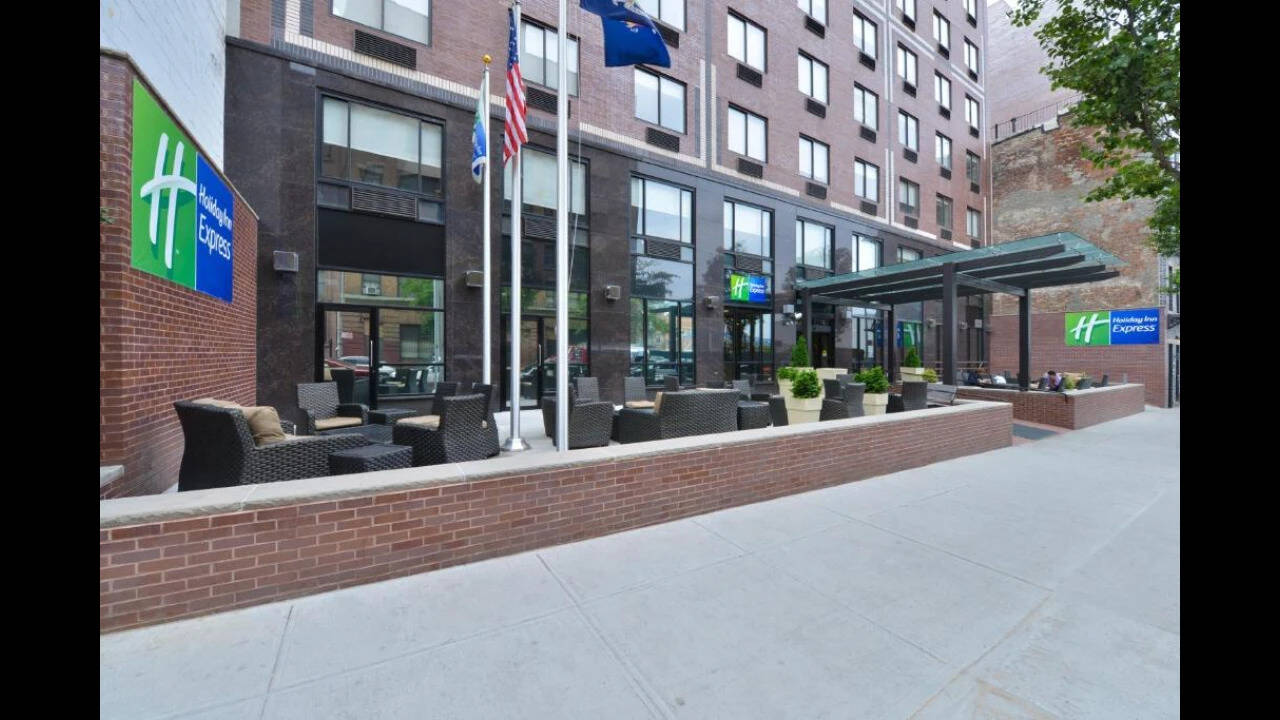
Extreme labor exploitation within branded hospitality assets is rarely an isolated human resources failure; it is the predictable outcome of distressed capital structures meeting insulated franchise governance. In November 2026, New York Attorney General Letitia James filed a comprehensive civil enforcement lawsuit against hotel owner Nayan Patel, his operating entity Horizon Edge Hospitality LLC, renovation contractor Roman Petrik, and global franchisor InterContinental Hotels Group (IHG). The state alleges that dozens of immigrant workers recruited to renovate a downtown Rochester Holiday Inn property—later rebranded as a Wyndham before being shuttered by municipal authorities for 23 fire and building code violations—were subjected to 112-hour workweeks, went up to eight months without pay, and endured severe coercion.
To understand how an operation of this scale persists inside a major metropolitan market under global corporate flags, analysts must look past sensational headlines and dissect the underlying financial distress, labor market asymmetries, and corporate liability shields that enabled the scheme.
The Financial Anatomy of Distressed Hotel Renovations
Hospitality real estate operates on high fixed costs, cyclical cash flows, and strict brand-mandated capital expenditure cycles. When an owner acquires an aging asset—as occurred with the Rochester property in 2020—franchisors typically require a Property Improvement Plan (PIP) to maintain brand standards. When debt service outpaces operating revenue, distressed operators frequently treat variable labor costs as an unauthorized, zero-interest credit facility.
The Rochester enforcement action illustrates the exact mechanics of this liquidity extraction:
- Capital Shortfall and Debt Distress: Public court records surrounding the Rochester asset reveal severe underlying financial insolvency, including a $6.4 million foreclosure action initiated by Cogent Bank over unpaid loans. Rather than injecting equity or defaulting cleanly, the ownership group shifted the capital burden of the 2023 renovation onto an unbanked, undocumented workforce.
- The Subcontracting Buffer: Direct employment creates immediate payroll tax liabilities, workers' compensation premiums, and auditable timecards. By routing labor recruitment through an intermediary contractor, Roman Petrik, the property owner established an operational buffer designed to obscure direct employer-employee privity while still dictating project timelines and site access.
- Quantified Wage Extraction: The unit economics of this model rely on total suppression of marginal labor costs. In one documented instance within the Attorney General's complaint, a worker promised $18 per hour logged approximately 68 hours per week across 29 weeks. Under standard New York labor law—factoring in mandatory time-and-a-half overtime above 40 hours—that individual earned roughly $30,506. The actual disbursement totaled $2,200, representing a 92.8 percent extraction of earned wages. Across dozens of workers logging up to 16 hours a day, seven days a week (112 hours weekly), the illicit capital subsidy runs into the hundreds of thousands of dollars.
The Coercive Control Matrix
Standard economic theory assumes that workers facing non-payment will exit the labor market immediately, raising the employer's cost of labor until equilibrium is restored. That mechanism fails when employers construct an artificial monopsony through legal, physical, and psychological coercion. In the Rochester case, retention of unpaid labor relied on four interlocking control mechanisms:
- Weaponized Immigration Asymmetry: Contractors and ownership allegedly threatened workers with immediate deportation if they ceased work or demanded back pay, claiming direct influence over federal immigration leadership. This fabricated authority transforms a civil wage dispute into an existential threat, effectively paralyzing labor mobility.
- Company-Controlled Housing as Leverage: Workers and their families were housed inside abandoned, unrenovated floors of the hotel itself—environments lacking functional heat, running water, or electricity during winter months. Tying shelter directly to unpaid labor converts housing from a benefit into a hostage mechanism; at least three workers who demanded overdue wages were immediately evicted onto the street.
- Physical and Gender-Based Intimidation: When financial coercion failed to suppress dissent, intimidation escalated to direct personal abuse. The state's complaint details repeated sexual assault of a female worker by the contractor, paired with explicit threats to withhold her earned wages if she resisted.
- Sunk-Cost Entrapment: By withholding pay across an eight-month horizon while offering sporadic, fractional disbursements, operators exploit behavioral sunk-cost fallacies. Workers remain on-site because walking away feels like forfeiting months of accumulated, uncollected equity.
Franchise Governance and the Joint-Employer Blind Spot
The inclusion of InterContinental Hotels Group as a co-defendant elevates this case from a localized criminal prosecution to a structural challenge for the global hospitality sector. Modern hotel conglomerates operate predominantly on an asset-light franchise model. They license trademarks, reservation systems, and loyalty networks to independent third-party franchisees while maintaining strict contractual separation from daily staffing and local vendor management.
This governance structure creates a predictable moral hazard. Franchisors enforce granular operational standards regarding lobby aesthetics, thread counts, and renovation deadlines, yet claim institutional blindness regarding how those renovations are staffed.
According to the New York Attorney General's filing, IHG received direct notice of the workers' exploitation and substandard living conditions inside the Rochester Holiday Inn but failed to investigate or intervene. Even more damaging to the franchisor's defense are allegations that corporate representatives characterized the unpaid renovation workers as "squatters" and offered financial incentives to the hotel owner to evict them from the premises. While IHG publicly denied prior knowledge of human trafficking or labor violations and condemned the alleged conduct, the state's legal theory directly targets the boundary between brand oversight and joint-employer liability.
When a franchisor mandates capital improvements, monitors property compliance, receives complaints of severe labor abuses on-site, and incentivizes the removal of complainants rather than auditing payroll records, the traditional corporate veil weakens substantially.
Regulatory Arbitrage and Municipal Blind Spots
A critical question for risk analysts is how a commercial property operating in a mid-sized American city housed asylum seekers under municipal contracts while simultaneously running an illegal, unheated labor camp on adjacent floors. The answer lies in fragmented regulatory enforcement.
Municipal building inspectors, state labor investigators, immigration authorities, and corporate brand auditors operate in isolated data silos. During 2023, the Rochester property received public funds to house asylum seekers relocated from New York City. That overlapping occupancy created operational cover: high foot traffic, transient residents, and continuous construction noise masked the presence of trapped renovation crews living in unheated zones.
Furthermore, regulatory intervention occurred sequentially rather than holistically:
- Brand Exit Without Remediation: The property transitioned away from the Holiday Inn flag and rebranded as a Wyndham in 2025. Brand deflagging allows a franchisor to sever reputational ties without resolving underlying labor or safety liabilities left behind by the franchisee.
- Code Enforcement Preceding Labor Enforcement: The city of Rochester finally shuttered the facility in June 2026 due to 23 unresolved fire and building code violations, alongside guest complaints regarding unsanitary conditions and unlicensed events. Physical closure halted ongoing site hazards, yet civil restitution and permanent industry bans for the operators required a separate, multi-year investigation by the state Attorney General.
Limitations of Civil Enforcement as a Deterrent
While the New York Attorney General seeks unpaid wages, liquidated damages, civil penalties, and permanent injunctions barring Patel and Petrik from operating in the state's hotel and renovation sectors, civil litigation carries structural limitations as a market deterrent.
First, asset recovery frequently trails judgment awards. When a target property is already subject to a $6.4 million bank foreclosure and municipal condemnation, unsecured wage judgments compete against senior secured creditors for a severely impaired asset. Unless prosecutors successfully pierce the corporate veil to attach personal assets or secure statutory damages from solvent franchisors, workers often recover pennies on the dollar years after the abuse occurred.
Second, industry bans are geographically bounded. A state-level injunction prohibiting an operator from holding hotel licenses in New York does not automatically trigger reciprocity in neighboring jurisdictions, allowing distressed operators to reconstitute limited liability companies under new corporate registries elsewhere.
Risk Mitigation Protocols for Institutional Stakeholders
For institutional lenders, hospitality franchisors, and commercial real estate investors, the Rochester enforcement action demonstrates that ignoring contractor labor compliance creates existential legal and financial exposure. Third-party wage theft is no longer solely a moral or reputational issue; it is a direct threat to collateral value, brand equity, and balance-sheet solvency.
Institutional stakeholders must deploy three concrete controls across all franchise and renovation agreements:
- Mandatory Escrow and Direct-Pay Verification for PIPs: Lenders and franchisors approving Property Improvement Plans must require general contractors to submit certified payrolls and lien waivers prior to releasing construction draw tranches. Funds allocated for labor should be ring-fenced in escrow accounts rather than disbursed as unverified lump sums to distressed franchisees.
- Zero-Tolerance On-Site Residency Audits: Franchise quality assurance inspectors must treat unauthorized residential occupancy inside commercial properties—particularly in non-operational wings or under-construction floors—as an immediate default trigger under the franchise agreement, paired with mandatory reporting to state labor departments.
- Whistleblower Escalation Independent of Franchisees: Global hospitality brands must establish multilingual, direct-to-corporate reporting channels for all on-site personnel, including third-party renovation subcontractors. When an abuse report reaches corporate compliance, internal audit teams—not franchisee relations managers—must conduct unannounced site inspections within 48 hours to prevent retaliatory evictions and preserve joint-employer defenses.