The International Ice Hockey Federation (IIHF) suspension of the Russian and Belarusian national teams represents a structural failure in global sports governance, pitting geopolitical risk mitigation directly against commercial product integrity. While vocal segments of the hockey consumer base rally behind the "let them play" sentiment, treating this dispute as a simple binary between athletic meritocracy and political interference misses the underlying operational reality. Governing bodies do not operate on moral philosophy; they operate on risk-adjusted balance sheets, insurance underwriting, and sovereign state compliance.
To evaluate whether the fan pushback possesses enough commercial gravity to force a policy reversal, one must deconstruct the ban across four distinct operational vectors: the competitive dilution of the international product, the asymmetrical revenue mechanics of the IIHF versus the NHL, the geopolitical veto power of host nations, and the secondary effects on athlete development pipelines.
The Anatomy of Product Dilution and Competitive Equilibrium
In elite international sport, commercial value is a direct function of competitive uncertainty and peak talent concentration. International hockey operates as an oligopoly. Unlike association football, where dozens of nations possess credible pathways to a championship final, top-tier men's ice hockey relies on a narrow cartel of six primary nations: Canada, the United States, Sweden, Finland, Russia, and Czechia.
Removing one-sixth of an oligopoly does not reduce the product's value by a linear 16.6 percent. Instead, it triggers a non-linear degradation of the tournament bracket. In statistical tournament modeling, eliminating a perennial top-three contender compresses the variance of outcomes in the knockout stages. The probability of predictable, lopsided matchups increases, eroding the scarcity value of marquee rivalries—specifically the historic Cold War and modern post-Soviet matchups between Russia and Canada or the United States.
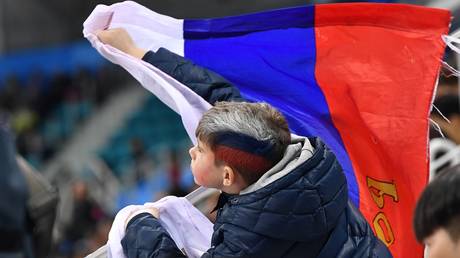
This creates a specific structural flaw in the IIHF's flagship events, particularly the World Junior Championship (U20) and the annual Men's World Championship. Fans pushing back against the ban are responding to this exact degradation in product quality. From a purely athletic standpoint, a gold medal won without navigating a bracket containing Russian elite talent carries an implicit asterisk in the consumer's mind. When fans chant "let them play," they are articulating an intuitive grasp of competitive economics: artificial supply restrictions on talent diminish the legitimacy of the championship trophy.
The Asymmetrical Revenue Mechanics of International Hockey
Understanding why fan outrage has failed to alter IIHF policy requires analyzing how the federation generates capital. Unlike the National Hockey League (NHL), which relies heavily on localized gate receipts, regional sports network broadcasts, and direct-to-consumer merchandise in North America, the IIHF is an event-driven governing body whose solvency depends on European broadcast rights, centralized corporate sponsorships, and host-city municipal subsidies.
This creates a severe principal-agent problem. The fans demanding Russia's return are disproportionately concentrated in North America and Russia, yet neither demographic directly funds the IIHF's annual operating budget through ticket purchases at the Men's World Championship. The IIHF's primary revenue engine is the European market—specifically Finland, Sweden, Czechia, Switzerland, and Germany.
Within these core revenue-generating jurisdictions, consumer sentiment and corporate risk tolerance invert the North American "let them play" narrative. European blue-chip sponsors—automotive manufacturers, financial institutions, and telecommunications firms—operate under strict Environmental, Social, and Governance (ESG) mandates and European Union regulatory frameworks. For an IIHF sponsor headquartered in Zurich, Munich, or Stockholm, brand association with state-backed Russian athletic entities constitutes an unacceptable reputational and compliance liability.
If the IIHF prioritizes the competitive demands of North American fans by reinstating Russia, it faces immediate capital flight from its primary European sponsors. Conversely, by maintaining the ban, the federation absorbs a manageable decline in competitive prestige while preserving its core commercial partnerships. In pure fiduciary terms, the IIHF is rationally protecting its primary cash flows at the expense of secondary consumer satisfaction.
The Sovereign Veto and Insurance Underwriting Bottlenecks
A critical blind spot in fan-led advocacy is the assumption that the IIHF possesses unilateral authority to reinstate a suspended member federation. In practice, international sports federations are tenants of sovereign states. Every IIHF tournament requires physical infrastructure, customs clearance, visa issuance, and municipal security guarantees provided by the host government.
This dynamic introduces a hard geopolitical constraint: the sovereign veto. Even if the IIHF Council voted tomorrow to lift the suspension, the decision would collapse at the execution layer. Key hockey nations—including Finland, Sweden, Czechia, Latvia, and Poland—have implemented stringent visa restrictions and airspace closures affecting Russian nationals. A governing body cannot force a sovereign ministry of foreign affairs to issue entry visas to a national delegation.
The second limitation involves commercial insurance and liability underwriting. Organizing a major international tournament requires comprehensive event cancellation, terrorism, and civil unrest insurance policies. Underwriters evaluate the security profile of participating delegations. The presence of a Russian national team in a European host city necessitates a massive escalation in state-funded security perimeters to prevent civil disruption, protests, or physical altercations.
When the projected cost of municipal security exceeds the economic stimulus generated by the tournament, host cities withdraw their bids. The IIHF already observed this mechanism in action when it stripped Russia of the 2023 World Junior Championship and the 2023 Men's World Championship, relocating the events to maintain operational viability. Fan petitions cannot underwrite sovereign security costs or override border control legislation.
The NHL-IIHF Bifurcation and the Best-on-Best Paradox
The tension surrounding the ban is amplified by the structural split between the NHL and the IIHF. Because the NHL is a private North American closed league rather than a national federation, individual Russian players continue to compete nightly in the Stanley Cup Playoffs without restriction. Fans watch Alexander Ovechkin, Nikita Kucherov, Igor Shesterkin, and Kirill Kaprizov dominate the world's premier professional league, creating cognitive dissonance when those same athletes are barred from representing their country in February or May.
This institutional divergence sets the stage for a major competitive anomaly in upcoming best-on-best international tournaments, specifically the NHL-organized 4 Nations Face-Off and the 2026 Winter Olympics in Milan-Cortina.
- The NHL's Commercial Calculus: The NHL and the NHL Players' Association (NHLPA) control the labor supply for true best-on-best hockey. When the NHL organizes its own international exhibitions, it bypasses IIHF governance entirely. However, the NHL still relies on European broadcast partners and national federations (like the Swedish Ice Hockey Association and Finnish Ice Hockey Association) to sanction the participation of their players. If the Finnish and Swedish federations threaten a boycott over Russian inclusion, the NHL must drop Russia to preserve the tournament's viability.
- The Olympic Trilemma: The International Olympic Committee (IOC) operates under a different political framework than the IIHF, attempting to thread the needle via the "Individual Neutral Athletes" (AIN) designation for individual sports. However, the IOC explicitly maintains that teams of athletes with a Russian passport cannot be considered for collective competition. Because ice hockey is a team sport requiring a sovereign federation's jersey and organizational apparatus, the AIN workaround is structurally incompatible with Olympic hockey.
The Long-Term Degradation of the Russian Talent Pipeline
While immediate fan discourse focuses on missing stars in current tournaments, the more consequential impact of the multi-year ban is the silent degradation of Russia's player development ecosystem. Elite hockey development relies on international benchmarking. Between the ages of 16 and 20, top prospects test their tactical systems and physical conditioning against contrasting styles of play—North American north-south speed versus Scandinavian puck-possession structures.
Isolation forces a closed-loop developmental environment. Russian junior players in the MHL and KHL are now competing exclusively within a domestic ecosystem. Without exposure to international refereeing standards, varied ice dimensions, and elite foreign peers at the U18 and U20 levels, tactical stagnation becomes a statistical certainty.
Historically, when Soviet or Russian hockey programs experienced prolonged isolation or domestic league contraction, their draft efficiency and NHL transition rates suffered a measurable lag three to five years later. NHL general managers and amateur scouting departments already face massive informational friction regarding Russian prospects. Unable to evaluate these players in high-leverage, best-on-best IIHF tournaments, North American franchises apply a higher risk discount to Russian draft picks, leading to lower draft slots, delayed entry-level contracts, and reduced developmental investment. The fans chanting "let them play" are witnessing the surface-level symptom of a systemic erosion that will depress Russian representation in the upper echelons of global hockey through the end of the decade.
Strategic Forecasts and Institutional Trajectories
The pushback from hockey fans, while commercially rational from a consumer experience perspective, lacks the structural leverage required to alter the policies of the IIHF or the IOC. Governance decisions in international sport are dictated by institutional survival, sponsor compliance, and host-nation sovereignty, not ticket-buyer sentiment.
For stakeholders navigating this fractured landscape, the trajectory over the next 24 to 36 months is defined by three operational realities:
- Maintain Complete Segregation of Private and National Competitions: The NHL will continue to protect its Russian labor assets within its domestic league structure while excluding Russia from NHL-sanctioned international events to appease European national federations. Expect no unified policy between North American club hockey and international tournament governance.
- Discount Best-on-Best Branding: Broadcasters and corporate partners must price upcoming international tournaments—including the 2026 Winter Olympics—as incomplete competitive cycles. Marketing campaigns must pivot away from historical national rivalries and focus entirely on hyper-concentrated North American versus Nordic matchups (specifically Canada, the United States, Sweden, and Finland) to sustain viewership engagement.
- Monitor the Domestic KHL Contraction: Watch the Kontinental Hockey League's salary cap adjustments and foreign import limits as the primary leading indicators of Russian hockey's health. As international isolation persists, expect increased state subsidization of domestic clubs paired with a steady decline in the competitive parity of the league, further widening the developmental gap between Russian-trained prospects and their North American or European counterparts.
Until the underlying geopolitical hostilities cease and European Union diplomatic sanctions are formally rescinded, the IIHF council will keep the suspension intact, regardless of the volume of fan discontent in arenas or across digital platforms.