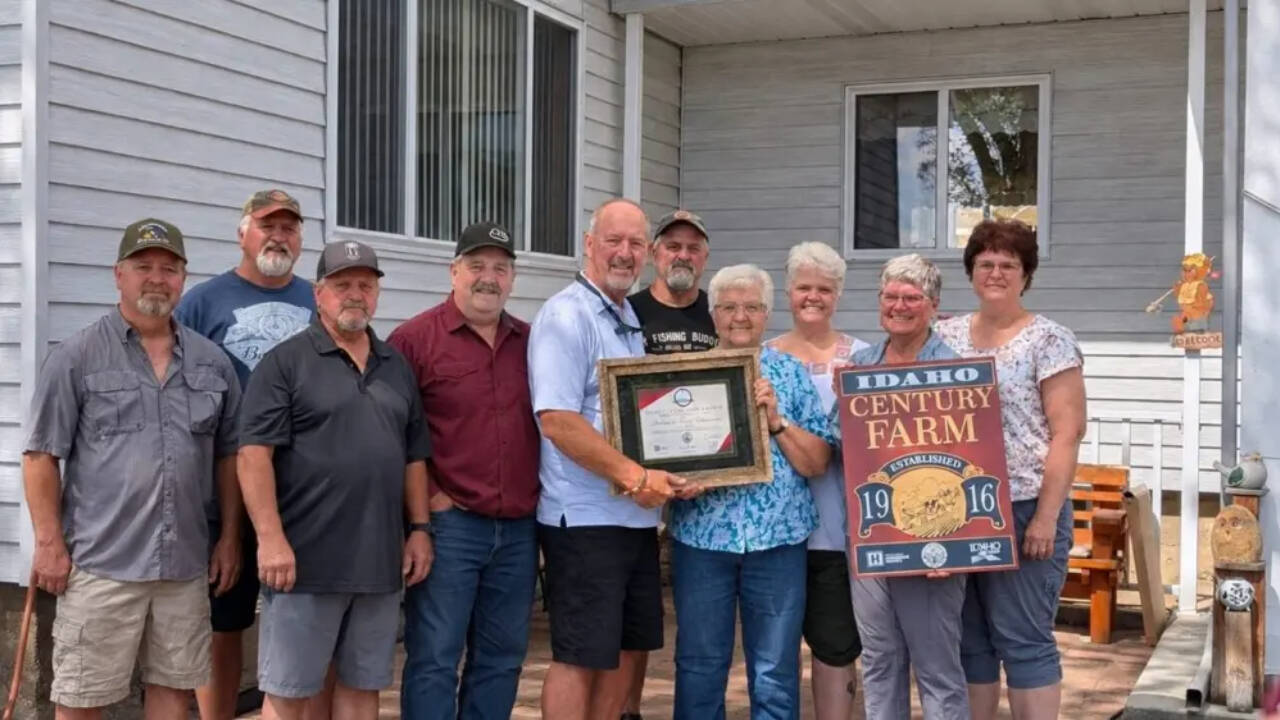
The formal recognition of century-old agricultural homesteads—such as an Idaho farm originally acquired at a nominal baseline cost per acre in 1916 and maintained across multiple generations—offers a rare empirical lens into the mechanics of multi-decadal asset retention. Popular media accounts routinely frame such longevity through sentimental narratives of family dedication or romanticized agrarian tradition. A rigorous structural analysis, however, reveals that multi-generational asset preservation is fundamentally a problem of corporate governance, capital allocation, risk mitigation, and institutional adaptation under extreme temporal volatility.
The Capital Structure and Real Asset Inflation
Evaluating an agricultural acquisition executed in the early twentieth century requires stripping away nominal price distortions to analyze the real cost of capital. At an acquisition cost of roughly $87.50 per acre during the mid-1910s, the initial capital outlay for a multi-hundred-acre homestead represented a substantial liquidity commitment, heavily dependent on debt structuring or localized private financing.
The primary economic variable governing century-long survival is not the initial purchase price, but the compounding rate of real asset appreciation relative to the carrying costs of land ownership. Property taxes, shifting localized tax regimes, and cyclical commodity downturns create an ongoing operational expenditure that can easily force liquidation if cash flow optimization fails. Over a span of one hundred and ten years, surviving agricultural entities must navigate multiple macroeconomic shocks, including the Great Depression, the farm crisis of the 1980s, and successive cycles of inflationary and deflationary monetary policy.
The Operational Pivot Imperative
A static agricultural business model guarantees failure over a century. The longevity of historical family farms is anchored in continuous operational restructuring rather than strict adherence to legacy practices. Historical operational logs of enduring farms typically reveal multiple major transitions in revenue models.
- Input Diversification: Transitioning from single-crop dependency to varied commodity rotations protects the operation from localized blight, weather anomalies, and structural price crashes in a single commodity class.
- Value-Chain Integration: Moving upstream or downstream—such as shifting from raw grain production to vertically integrated livestock feed or direct dairy processing—captures higher-margin capture points within the agricultural supply chain.
- Asset Utilization: Capital assets such as machinery and acreage must maintain a high utilization rate. Multi-generational survival demands rigorous depreciation tracking and disciplined reinvestment cycles, ensuring that obsolete mechanical infrastructure does not deplete operational liquidity.
Intergenerational Governance and Succession Friction
The primary point of failure for century-old assets is not macroeconomic volatility; it is internal governance failure during generational transfer. Without explicit legal and structural frameworks, the partition of land among multiple heirs inevitably triggers a liquidity crisis or a forced sale to satisfy non-farming beneficiaries.
Enduring multi-generational entities typically transition from informal family arrangements to formalized corporate or trust structures long before succession occurs. This institutionalization separates ownership from operational control.
- Voting Control vs. Equity Distribution: Assets are held within trusts or limited liability structures that concentrate operational decision-making power in the hands of active operators while distributing equity value to non-operating heirs.
- Liquidity Buffers: Maintaining retained earnings specifically earmarked for estate tax liabilities and buyout options for heirs who choose to exit the operation prevents the forced liquidation of core acreage.
- Clear Meritocratic Thresholds: Incoming operators are subjected to rigorous operational performance standards rather than automatic inheritance rights, mitigating agency risk and managerial incompetence.
The Cost of Regulatory and Environmental Compliance
Modern survival requires managing an exponentially more complex regulatory matrix than that faced by homesteaders in 1916. Water rights adjudication, environmental runoff regulations, soil conservation mandates, and labor compliance impose significant administrative and capital overhead.
Farms that cross the century threshold successfully are those that treat regulatory compliance not as an external nuisance, but as a core operational constraint. Investments in precision agriculture, soil health preservation, and water-rights optimization directly protect the underlying collateral value of the real estate.
Strategic Execution for Long-Horizon Assets
To replicate or analyze the resilience of century-old land holdings, operators and investors must evaluate land assets through a multi-variable matrix:
- Isolate the operational cash flow from land appreciation to ensure the business model is self-funding during commodity troughs.
- Implement governance structures that insulate the physical acreage from the volatile estate dynamics of the owning family.
- Reinvest a fixed percentage of generational yield directly into infrastructural and environmental capital maintenance to counteract biological and chemical soil degradation.
The century-old designation is ultimately a lagging indicator of superior risk management, capital discipline, and structural adaptability in the face of structural decay.