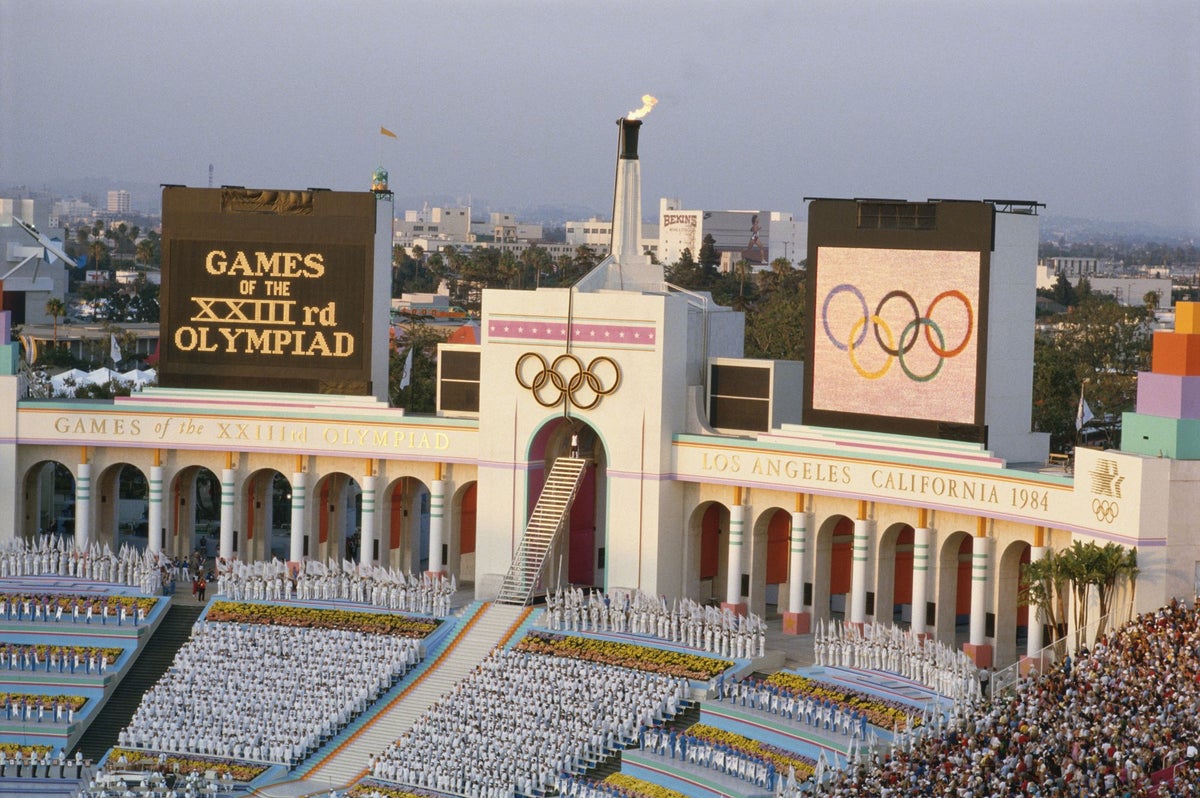
The structural failure of the "Affordable Olympics" narrative in Los Angeles rests on a fundamental misunderstanding of the dynamic pricing elasticity inherent to global mega-events. While the Los Angeles Organizing Committee (LA28) anchored its initial bid on a "radical accessibility" promise, the fiscal reality of 2028 involves a collision between fixed infrastructure costs, private-sector revenue requirements, and an inflationary environment that has decoupled from 2017-era projections. To analyze why $5,000 tickets have become a reality, one must deconstruct the financial architecture of the Games into three specific friction points: the scarcity-premium model, the corporate subsidy gap, and the failure of the "No-Build" cost-saving hypothesis.
The Scarcity-Premium Model and Algorithmic Friction
The primary driver of the $5,000 ticket price is not a single executive decision but the application of yield management systems similar to those used by airlines and luxury hospitality groups. In a traditional public-utility model, prices are set based on cost-recovery. In the modern Olympic model, prices are set based on the maximum clearing price the market can sustain for high-demand "Finals" sessions.
This creates a bifurcated ticketing ecosystem:
- The Loss-Leader Tier: Small batches of $25–$50 tickets marketed to fulfill the "affordability" mandate. These are statistically insignificant to the bottom line but vital for public relations.
- The Revenue-Engine Tier: High-demand events (Gymnastics, Athletics, Basketball) where prices scale exponentially.
- The Hospitality Integration: A significant percentage of prime seating is removed from the public pool entirely and bundled into "Experience Packages." By bundling a seat with lounge access or transportation, the organizer can bypass price-cap optics, effectively charging $5,000 for a seat that technically has a lower "face value."
The $5,000 price point serves as a market-clearing mechanism for the global elite, effectively subsidizing the nominal availability of lower-cost seats. However, when the volume of "Revenue-Engine" tickets outweighs the "Loss-Leader" tickets, the average price paid by a resident exceeds the median discretionary income of the host city, rendering the "affordable" label mathematically false for the local population.
The Corporate Subsidy Gap and Revenue Realignment
The LA28 Games are unique because they are privately funded, relying heavily on domestic sponsorships, television rights, and ticket sales rather than direct taxpayer injections. This private-funding mandate creates an aggressive Return on Investment (ROI) requirement. If sponsorship revenue lags due to market saturation or economic downturns, the shortfall must be recovered through the only other liquid variable available: the consumer.
Three distinct financial pressures force this upward price pressure:
- Broadcast Dilution: As traditional linear television viewership fragments, the value of domestic broadcast rights—historically the bedrock of Olympic funding—faces downward pressure. Organizers must compensate by extracting higher per-capita revenue from live attendees.
- Sponsorship Cannibalization: With multiple major events hitting North America (FIFA World Cup 2026, Super Bowls), the pool of corporate sponsors is stretched. When high-value "Tier 1" sponsorships fail to meet targets, the ticket pricing strategy shifts from "accessibility" to "solvency."
- Insurance and Security Escalation: Post-2020 security protocols and the rising cost of event cancellation insurance have created a "security tax" that was underestimated in the original 2017 bid. These costs are fixed; they do not scale down if tickets are sold cheaply.
The Fallacy of the No-Build Cost Savings
A central pillar of the LA28 bid was the use of existing venues (the "No-Build" strategy) to keep costs low. The logic suggested that by avoiding the "White Elephant" stadium problem, the savings could be passed to the consumer. This logic ignores operational retrofitting costs.
While the structures exist, the technical requirements for a 2028 Olympic broadcast—including 5G integration, advanced media centers, and temporary overlays—require billions in capital expenditure. The "No-Build" strategy reduces the construction budget but does nothing to mitigate the operational budget. In fact, using older venues often increases costs due to the need for temporary infrastructure (tents, modular seating, power generators) which are high-rent items.
The logistics of moving 15,000 athletes and millions of spectators through a city with Los Angeles's decentralized geography requires a transportation overlay that the city's current infrastructure cannot support. The "Transit First" promise necessitates accelerated capital projects. While these are often categorized under different municipal budgets, the pressure to deliver them by 2028 creates an inflationary loop for labor and materials within the region, further driving up the cost of hosting and, by extension, the price of entry.
The Velocity of Displacement: Hidden Costs Beyond the Ticket
The true cost of the Olympics for a Los Angeles resident is not limited to the $5,000 ticket. A rigorous analysis must include the opportunity cost of displacement.
- Accommodation Inflation: The "Olympic Effect" on short-term rentals (Airbnb, VRBO) creates a temporary but violent spike in housing costs. For a local resident, the ability to attend an "affordable" event is negated if their surrounding cost of living—food, transport, and utilities—inflates by 200% during the 17-day period.
- The Policing Premium: LA28's designation as a National Special Security Event (NSSE) brings federal resources but also requires massive local police overtime. Even if the organizing committee reimburses the city, the social cost of increased surveillance and restricted movement acts as a "non-monetary tax" on the citizenry.
- The Displacement of Micro-Economies: Street vendors and small businesses often find themselves zoned out of "clean zones" established for official sponsors. This destroys local wealth-building opportunities, making the "economic boon" a centralized gain for global corporations while local residents face restricted earning potential.
Reforming the Olympic Fiscal Framework
To move beyond the cycle of broken affordability promises, host cities must shift from a "Revenue-Max" model to a "Social-Equity Tiering" system. This would require a structural change in how the International Olympic Committee (IOC) and local committees distribute burden.
- Mandated Residency Quotas: A fixed percentage of tickets (e.g., 30%) must be geo-locked to residents of the host county at prices indexed to the local median wage, not global market demand.
- The Luxury Surcharge: Instead of hiding $5,000 prices in "hospitality packages," a transparent luxury tax on high-end tickets could be used to directly fund free tickets for local youth and underserved communities.
- Transparent Overlay Budgeting: Organizers must decouple "construction savings" from "operational costs" in their public communications to prevent the bait-and-switch narrative that leads to public disillusionment when $5,000 tickets are announced.
The Los Angeles 2028 Games are currently on a trajectory where the "affordable" label is a branding exercise rather than a fiscal reality. The transition from a civic festival to a high-net-worth networking event is a logical outcome of the current private-funding model. Without a radical intervention in ticket distribution mechanics, the $5,000 ticket will not be the exception—it will be the benchmark for any session featuring a podium-contending athlete.
The strategic play for the LA28 committee is to immediately move toward a Verified Resident Distribution (VRD) model. This involves using municipal data to verify residency and providing a non-transferable, capped-price ticket pool. Failure to do so will result in a "Ghost Games" scenario: stadiums filled with global corporate tourists while the local population, who bore the logistical and social burden of the event, remains priced out of the venues they helped sustain. The metric of success for LA28 cannot be total revenue; it must be the Local Participation Ratio, or the Games risk becoming a permanent case study in the failure of the private-funding Olympic archetype.