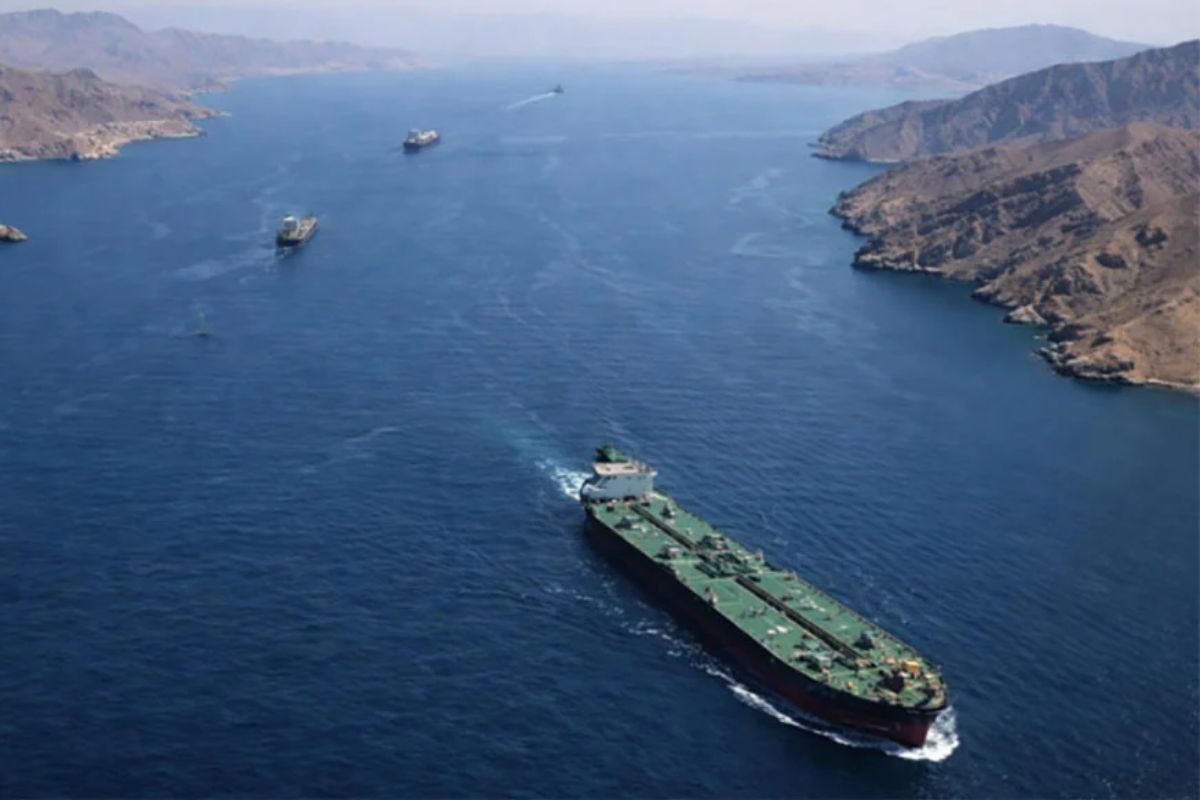
The Strait of Hormuz functions as the carotid artery of global energy markets, facilitating the passage of approximately 21 million barrels of oil per day. When a sovereign actor, in this case, Iran, shifts from conventional geopolitical posturing to a direct "toll-based" extraction model—specifically demanding $2 million per transit—it transforms a maritime security issue into a fundamental disruption of global supply chain economics. This is not merely a provocation; it is the implementation of a high-stakes rent-seeking strategy designed to weaponize the physical geography of the Persian Gulf.
The Mechanics of Asymmetric Maritime Leverage
The reported demand for a $2 million "passage fee" from shipping companies represents a shift from kinetic interference (ship seizures) to economic coercion. To understand why this creates immediate shockwaves, one must analyze the Three Pillars of Maritime Cost Escalation that occur when a transit route is monetized by a non-market actor.
- Direct OpEx Inflation: The average daily operating cost of a Very Large Crude Carrier (VLCC) fluctuates between $30,000 and $50,000. A $2 million fee represents a 4,000% increase in the cost of a single day’s transit. For a voyage that may already have thin margins, this fee single-handedly negates the profitability of the cargo.
- Insurance Risk Premiums: The maritime insurance market operates on "War Risk" premiums. The moment a sovereign state formalizes extortion as a policy, underwriters reclassify the entire zone. This triggers "Additional Premium" (AP) charges that can equal up to 1% of the hull value of the vessel per transit. On a $150 million tanker, that adds another $1.5 million in cost, independent of the bribe.
- The Precedent of Normalization: If a single shipping company pays, it establishes a "shadow tariff." This creates a floor for future demands, effectively privatizing the revenue of the Strait of Hormuz for the Iranian Revolutionary Guard Corps (IRGC).
The Cost Function of Redirection
Shipping companies face a binary choice: pay the "toll" or reroute. However, the geography of the Middle East offers no easy alternatives. The cost function of avoiding Hormuz is prohibitive due to the Infrastructure Bottleneck Theory.
Pipelines such as the Habshan–Fujairah line in the UAE and the East-West Pipeline in Saudi Arabia have finite capacities. They cannot absorb the total volume of sea-borne trade. Consequently, the "avoidance cost" is not just the price of a longer route; it is the total loss of market access for any volume exceeding pipeline capacity.
The logistical math for a vessel diverted from the Persian Gulf to an alternative port involves:
- Fuel Consumption (Bunker Costs): An extra 10 days of steaming at 13 knots can consume 400-600 metric tons of fuel.
- Opportunity Cost of Deadweight Tonnage: Every day a ship spends on a longer route is a day it is not available for its next charter, reducing the global supply of available hulls and driving up freight rates (Worldscale) globally.
The Geopolitical Rent-Seeking Framework
Iran's strategy operates within the framework of Geopolitical Rent-Seeking. Unlike a standard toll (like the Suez Canal), which provides a service (shorter distance) and maintains a predictable legal structure, the Hormuz demand is an extraction based on the threat of force.
The Escalation Ladder of Maritime Coercion
- Phase 1: Harassment. Low-level interference to test international response.
- Phase 2: Judicial Seizure. Using domestic law to "legally" detain ships under the guise of environmental or safety violations.
- Phase 3: Formalized Extortion. Demanding direct payment for "security" or "passage rights."
- Phase 4: Kinetic Blockade. Complete closure of the waterway.
By moving to Phase 3, Iran is attempting to create a revenue stream that bypasses international sanctions. If $2 million is extracted from even 10% of the daily traffic (roughly 80-100 ships pass through the Strait weekly), the monthly revenue exceeds $200 million. This capital is entirely liquid and sits outside the monitored banking systems, providing a direct bypass to oil export restrictions.
Impact on Global Energy Elasticity
The global economy is currently hypersensitive to energy price volatility. The "Hormuz Premium" does not just affect the ships in the Gulf; it alters the Global Price Discovery Mechanism.
Oil traders price in "risk of delivery." When the physical safety of a barrel cannot be guaranteed without an illegal surcharge, the spot price of Brent and WTI crude reflects that friction. Even if no ship actually pays the $2 million, the threat of the demand causes a "shadow price" increase of $3 to $5 per barrel.
- Refinery Compression: Refineries in Asia (specifically India and China), which are the primary destinations for Gulf crude, operate on tight margins. A sudden $2 million spike in landed cost per VLCC forces refineries to either pass the cost to the pump or reduce throughput, leading to regional energy shortages.
- Contractual Force Majeure: Shipping companies may begin declaring Force Majeure, a legal clause that frees them from liability due to unforeseeable circumstances. This triggers a wave of litigation across the global trade sector, as buyers and sellers argue over who bears the "extortion cost."
Strategic Deficiencies in International Response
The current maritime security architecture, including Operation Prosperity Guardian and other multinational task forces, is designed to counter kinetic threats like missiles and drones. It is poorly equipped to handle Administrative Piracy.
If Iran utilizes its coastal authority to demand fees through official-looking "maritime service" front companies, military intervention becomes legally murky. A destroyer can shoot down a drone, but it cannot easily intervene in a "commercial dispute" where a ship is being denied port clearance or radioed with payment instructions.
The strategy relies on the Collective Action Problem. While it is in the collective interest of all shipping companies to refuse payment, it is in the individual interest of a company with a $100 million cargo to pay $2 million and escape the zone safely. Iran is betting on the breakdown of industry solidarity.
Institutional Fragility and the Insurance Trigger
The most critical vulnerability lies in the P&I (Protection and Indemnity) Clubs. These are mutual insurance associations that provide cover for 90% of the world’s ocean-going tonnage. If P&I Clubs determine that the $2 million demand is a "standard risk" of the route, they may refuse to cover the loss, citing it as an "avoidable business expense" rather than an accidental loss.
This would effectively ground the fleet. No rational shipowner will move a vessel into the Persian Gulf without P&I coverage. This creates a Stall Point in global trade where the physical ships are available, the oil is available, but the legal and financial framework to move them has collapsed.
The Shift to Sovereign Escorts
The logical progression for nations heavily dependent on this route—specifically the "Quad" and major European powers—is a transition from "patrolling" to "sovereign escorting." This involves:
- Direct Naval Convoys: Moving merchant vessels in groups under the direct protection of state warships, effectively daring the IRGC to interfere with a sovereign military asset.
- Financial Sanctioning of Intermediaries: Identifying the specific bank accounts or crypto-wallets used for these "fees" and placing them under immediate global freeze.
- The "Reciprocal Toll" Model: G7 nations could theoretically impose a "sovereign risk tax" on all Iranian state-controlled assets globally, equal to the extortion demands, creating a net-zero gain for the aggressor.
The situation in the Strait of Hormuz is no longer a simple matter of regional tension; it is a stress test of the United Nations Convention on the Law of the Sea (UNCLOS). The "Right of Transit Passage" is the bedrock of globalism. If it can be sold for $2 million per ship, the concept of international waters is effectively dead, replaced by a patchwork of feudal maritime fiefdoms.
The immediate strategic requirement for shipping firms is the establishment of a "No-Pay" compact, backed by sovereign guarantees from flag states. Without this, the $2 million demand will scale, the insurance markets will withdraw, and the "Hormuz Premium" will become a permanent tax on global energy consumption. The final move is the deployment of permanent, ship-integrated security details coupled with a re-routing of all non-essential tonnage to the Cape of Good Hope, despite the 30% increase in transit time, to starve the extortion model of its "customers" until the cost of enforcement for the IRGC exceeds the revenue generated.