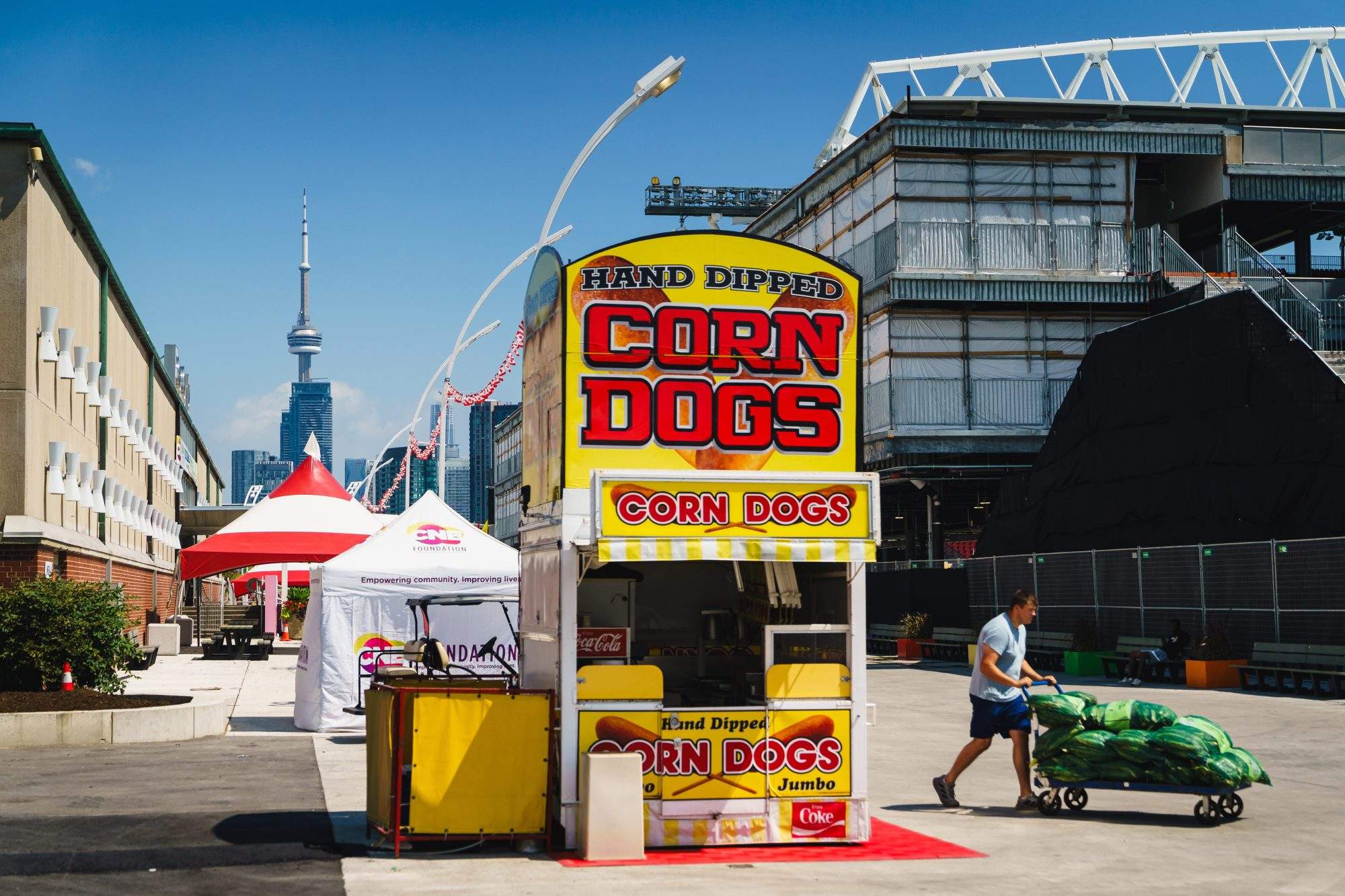
Large-scale temporary events operate under an unforgiving operational mandate. Planners must compress multi-million-dollar economic footprints, complex crowd management logistics, and diverse entertainment portfolios into narrow operating windows. The Canadian National Exhibition represents a prime case study in urban temporary attraction management, converting historical acreage into a high-density consumer ecosystem for eighteen days. Evaluating an operation of this magnitude requires moving beyond standard promotional coverage to examine the structural mechanics, yield management strategies, and capacity constraints that govern its success.
The Operational Matrix and Temporal Constraints
The economic viability of temporary exhibitions depends entirely on asset utilization rates. Operating from August 21 to September 7, 2026, the exhibition maximizes fixed capital investments within a compressed timeframe.
- Fixed infrastructure costs remain constant regardless of the operational duration, meaning revenue concentration must occur within the 18-day window.
- Daily operational hours span from 10:00 AM to midnight for grounds and major attractions, creating a continuous 14-hour consumption cycle that requires shift-based labor models.
- The transition to a shortened schedule on Labour Day, concluding at 9:00 PM with gate closures at 5:00 PM, reflects a strategic labor wind-down to manage overtime thresholds and initiate teardown logistics.
This temporal compression introduces significant variance risk. Adverse weather conditions on high-volume days, such as weekends or statutory holidays, directly erode revenue targets without offering operational extensions to recover lost foot traffic. Consequently, event architecture relies on parallel programming to distribute visitor density and maintain continuous throughput across disparate zones.
Revenue Architecture and Dynamic Pricing Mechanics
Visitor acquisition models utilize tiered pricing structures designed to smooth demand curves and incentivize early conversion. The pricing strategy balances broad accessibility against premium add-ons to capture consumer surplus.
- General admission prices target the 14 to 64 demographic, bundling ground access with entry to indoor exhibits, agricultural displays, and outdoor stages.
- Comprehensive ride bundles, such as the Ride All Day pass, integrate gate entry with unlimited midway access via third-party wristband distribution systems.
- Price discrimination strategies rely on temporal thresholds, offering pre-event discounts through regional transit partnerships like PRESTO to shift ticket purchases away from gate windows and minimize queue friction.
The integration of transit ticketing discounts serves a dual economic purpose. Beyond consumer incentives, fare integration with regional transit networks externalizes parking congestion management, shifting commuter logistics onto high-capacity rail infrastructure like GO Transit and the Exhibition GO station.
Programming Diversification and Yield Maximization
Attraction portfolios must appeal to fragmented consumer segments simultaneously. Economic returns are driven by maximizing dwell time, which correlates directly with secondary per-capita spending on food, merchandise, and ticketed upgrades.
- Cultural and musical anchors, including the Bell Soundstage at the Bandshell and the integrated North by Northeast (NXNE) partnership, provide high-capacity, zero-additional-cost entertainment that underpins baseline admission value.
- Niche vertical attractions, ranging from specialized agricultural showcases to the CNE Gaming Garage, capture specialized demographic cohorts who exhibit distinct expenditure behaviors.
- Premium monetization layers, such as Front Row VIP Experience add-ons for headliner concerts, extract higher margins from inelastic consumers willing to pay for proximity and reduced friction.
The structural inclusion of these diverse touchpoints transforms the grounds from a simple amusement park into a multi-category consumer market. The economic baseline relies on balancing free-access educational and cultural exhibits with high-velocity commercial zones like the midway and culinary vendors.
Capacity Management and Urban Logistics
Operating a massive urban fair within a dense metropolitan corridor creates severe spatial bottlenecks. Crowd management protocols must account for peak-flow dynamics, emergency egress routes, and multi-modal transit surges.
- Perimeter access points, historically anchored by landmarks like the Princes' Gates, function as primary chokepoints requiring granular queue engineering and real-time electronic ticketing validation.
- Internal circulation pathways are engineered to handle unidirectional surges following major events, such as the Canadian International Air Show or evening concerts.
- Waste diversion and sustainability frameworks operate under strict municipal mandates, requiring continuous back-of-house logistics to clear high volumes of commercial refuse without disrupting pedestrian flows.
Urban integration requires close coordination with municipal transit authorities. The concentration of arrivals around regional transit hubs necessitates active platform management and dedicated express routing to prevent spillover congestion onto adjacent municipal arterial roads.
Align promotional discounting directly with real-time transit data feeds to dynamically adjust gate staffing levels during unexpected weather anomalies. Optimize perimeter entry sequencing by decoupling digital barcode scanning from physical security screening to compress queue latency during peak afternoon arrival windows.