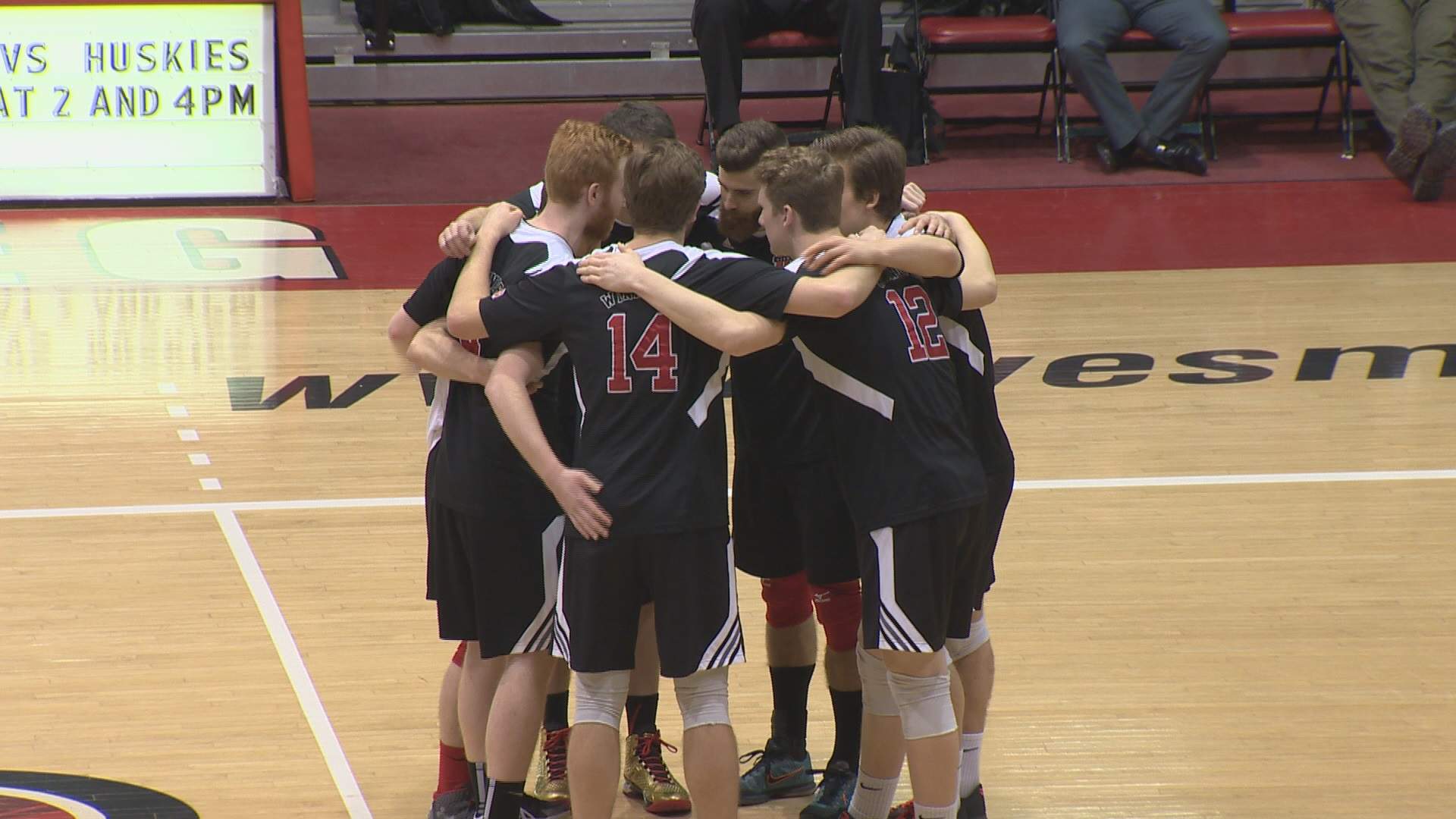
Hosting a national collegiate athletic event is rarely a philanthropic exercise in school spirit; it is a calculated capital allocation decision designed to capture economic spillover, elevate institutional brand equity, and optimize athletic recruitment pipelines. When U SPORTS awards the national volleyball championship to an institution like the University of Winnipeg, the decision reflects a rigorous evaluation of venue capacity, municipal subsidy structures, and operational readiness rather than simple geographic rotation. To understand the true value of bringing the U SPORTS national volleyball tournament to Winnipeg, one must strip away standard press-release platitudes and examine the underlying mechanisms of collegiate sports hosting: revenue generation, infrastructure utilization, competitive home-court advantage, and long-term athletic program valuation.
The Bid Selection Mechanism in Collegiate Athletics
National governing bodies like U SPORTS operate under strict risk-mitigation mandates when selecting host institutions for marquee championships. Because television broadcast contracts and corporate sponsorships are often centralized, the host university assumes the localized operational risk in exchange for gate receipts, merchandise splits, and municipal tourism grants. The selection committee evaluates bids across four primary operational variables.
- Venue Capacity and Broadcast Readiness: A championship venue must balance seating density with broadcast sightlines. The Duckworth Centre at the University of Winnipeg—or a larger municipal partner arena like the Canada Life Centre if capacity scaling is required—must meet strict vertical clearance standards for high-level volleyball, lighting lux requirements for high-definition broadcasting, and dedicated media workrooms. High-ceiling gymnasiums prevent ball-trajectory interference, a non-negotiable technical constraint in elite volleyball.
- Financial Guarantees and Municipal Backing: Universities seldom absorb the upfront hosting fees alone. Successful bids rely on tripartite funding models combining institutional athletic budgets, provincial sport governing bodies (such as Volleyball Manitoba), and municipal destination marketing organizations (such as Tourism Winnipeg). These entities underwrite the bid fee based on projected hotel room nights generated by visiting teams, officials, and traveling spectators.
- Logistical Proximity and Transit Infrastructure: Winnipeg occupies a central geographic position in Canada, minimizing asymmetric travel costs for teams flying in from both the Pacific and Atlantic coasts. Furthermore, the proximity of athlete accommodations to the competition floor directly impacts athlete recovery cycles and reduces local ground transportation expenditures.
- Proven Operational Execution: Governing bodies favor institutions with established track records of managing multi-day, multi-court tournament logistics. Executing a national championship requires synchronizing match schedules, anti-doping protocols, medical staffing, and volunteer cohorts across three to four consecutive days without broadcast delays.
The Economic Multiplier and Cost Function of Hosting
Standard sports media coverage routinely inflates the economic impact of mid-sized sporting events by conflating gross spending with net new economic activity. A rigorous financial breakdown separates direct institutional cash flows from broader municipal spillover, exposing both the upside and the structural limitations of hosting.
The host institution's direct profit-and-loss statement is governed by a tight cost function. Fixed costs include the U SPORTS hosting rights fee, court flooring installation (often requiring specialized Taraflex surfaces laid over existing hardwood), broadcast production contributions, and official hospitality. Variable costs scale with attendance and include event security, ticketing platform fees, and facility maintenance.
On the revenue side, the University of Winnipeg captures value through three distinct channels:
- Gate Receipts and Hospitality Suites: Unlike regular-season Canada West matches, national championships command premium ticket pricing, particularly for weekend medal rounds. However, ticket revenue is heavily dependent on local market saturation and whether the host team advances to the final day. If the host Wesmen are eliminated in the quarterfinals, walk-up ticket sales for the semi-finals and finals historically drop by 25 to 40 percent, creating a major revenue vulnerability.
- Sponsorship Inventory: Hosting unlocks temporary, high-visibility corporate sponsorship assets—court-side LED signage, floor decals, and broadcast title placements—that do not exist during standard conference play. Local corporate partners that rarely buy into regular-season collegiate athletics will allocate marketing budgets to a national championship due to concentrated local media coverage.
- Municipal Tourism Rebates: When visiting fans, parents, and scouts book blocks of hotel rooms, municipal accommodation taxes generate a pool of funds that tourism boards redistribute to the host organizing committee as performance-based grants. This mechanism converts external visitor spending directly into institutional budget relief.
The limitation of this economic model lies in the substitution effect. Local residents who purchase tickets to the national volleyball championship are largely reallocating entertainment dollars they would have otherwise spent at local restaurants, cinemas, or Winnipeg Jets games. True net economic gain for the city of Winnipeg relies almost exclusively on out-of-province visitors—specifically the families of the seven visiting rosters, national team scouts, and sports administrators.
Competitive Asymmetry and the Automatic Berth
From a purely sporting perspective, the most valuable asset acquired by the University of Winnipeg through a successful championship bid is the automatic host berth. In the hyper-competitive Canada West conference—historically the deepest and most unforgiving collegiate volleyball conference in the country—securing a top-three national tournament spot through regular-season and playoff attrition is statistically brutal.
Awarding the championship to Winnipeg alters the competitive probability matrix for the Wesmen program in several measurable ways:
- Elimination of Qualification Risk: Knowing a national tournament spot is guaranteed twelve to twenty-four months in advance allows the coaching staff to fundamentally alter their periodization and roster management. Instead of peaking early to secure crucial November and January conference points, the coaching staff can treat the regular season as an extended laboratory—testing rotational variations, resting key starters with minor soft-tissue injuries, and peaking physical conditioning specifically for the March championship window.
- Environmental Familiarity: Volleyball is a sport heavily influenced by spatial perception. Serving and passing efficiency depend on a player's subconscious calibration of ceiling height, background lighting contrast, and depth perception behind the end lines. Visiting teams receive only a brief, standardized practice window on the competition court prior to the quarterfinals. The University of Winnipeg roster trains in that exact visual environment daily, yielding a measurable advantage in serve-receive passing ratings and jump-serve accuracy.
- Crowd-Induced Momentum Shifts: In a rally-scoring format where sets are decided by a two-point margin, crowd noise directly impacts opponent communication and officiating pressure. A packed home venue amplifies cognitive load on visiting setters and passers during high-leverage points late in sets.
The operational risk of the automatic berth is complacency. Historically, host teams that fail to maintain top-tier competitive intensity during the regular season—because their postseason entry is assured—often struggle to match the playoff readiness of teams that had to survive brutal conference elimination series to earn their spot. The coaching staff must artificially manufacture high-stakes pressure during January and February to prevent competitive atrophy.
The Recruiting Funnel and Brand Equity Valuation
Athletic departments operate as marketing arms for their parent universities. For an urban commuter institution like the University of Winnipeg, national athletic visibility serves a dual purpose: differentiating the university in a crowded domestic higher-education market and dominating regional talent acquisition.
High-level volleyball recruits in Manitoba and across Western Canada evaluate programs based on three criteria: academic fit, coaching stability, and national exposure. Hosting a national championship provides undeniable proof of institutional commitment to the sport. When elite high school athletes watch a packed venue with national broadcast cameras, the perceived prestige of the host program spikes. This reduces the "recruiting friction" coaches face when competing against larger, more heavily endowed U SPORTS programs like Trinity Western University, the University of Alberta, or the University of British Columbia.
Furthermore, the event acts as a concentrated scouting showcase. Provincial club teams, youth development academies, and regional high school coaches attend the tournament en masse. By integrating youth clinics and coaching symposiums into the championship week schedule, the University of Winnipeg converts passive spectators into active participants in its recruiting ecosystem. The athletic department captures contact data, builds direct relationships with club directors, and anchors the university as the epicenter of regional volleyball culture.
Infrastructure Legacy and Capital Depreciation
A frequently overlooked component of championship hosting is the physical legacy left behind after the broadcast trucks depart. National championship standards mandate specific equipment upgrades that bypass standard, slow-moving university capital expenditure queues.
To meet U SPORTS technical manuals, the host institution often secures funding for upgraded sound systems, high-lumen LED arena lighting, digital scoreboards, and pristine competition flooring. While the championship lasts four days, the varsity teams and recreational student body utilize these upgraded assets for the subsequent decade. In accounting terms, the university uses a concentrated, short-term event to accelerate capital improvements, effectively subsidizing long-term facility maintenance through external sponsorship and grant revenues.
However, facility managers must account for the operational disruption caused by the event. Shutting down a primary campus athletic facility for seven to ten days (including setup, competition, and teardown) displaces intramural leagues, academic physical education classes, and community rental groups. The athletic department must absorb the lost rental revenue from these displaced user groups and manage the political friction on campus caused by restricted student access.
Strategic Execution for the Host Organizing Committee
To maximize the return on investment from hosting the national volleyball championship, the University of Winnipeg's organizing committee cannot rely on organic ticket demand or standard university marketing channels. Executing a financially solvent and competitively successful event requires a disciplined operational playbook.
First, the athletic department must decouple ticket sales from the host team's on-court performance by aggressively selling full-tournament passes to regional club volleyball organizations six months prior to the event. By bundling youth club team registrations with mandatory tournament ticket blocks, the organizing committee locks in guaranteed baseline revenue and ensures a full arena for the Sunday gold-medal match regardless of whether the Wesmen advance.
Second, the coaching staff must structure their regular-season schedule to peak against top-five national opponents in late January, simulating tournament elimination pressure to neutralize the psychological softness associated with holding an automatic host berth.
Third, university administrators must deploy targeted corporate hospitality packages aimed specifically at Winnipeg's mid-market business sector, positioning the championship not as a student sporting event, but as a premier civic networking venue. By locking in corporate suite revenue early, isolating youth club ticket blocks, and maintaining competitive edge through deliberate scheduling, the University of Winnipeg converts a four-day athletic tournament into a multi-year financial and recruiting asset.



