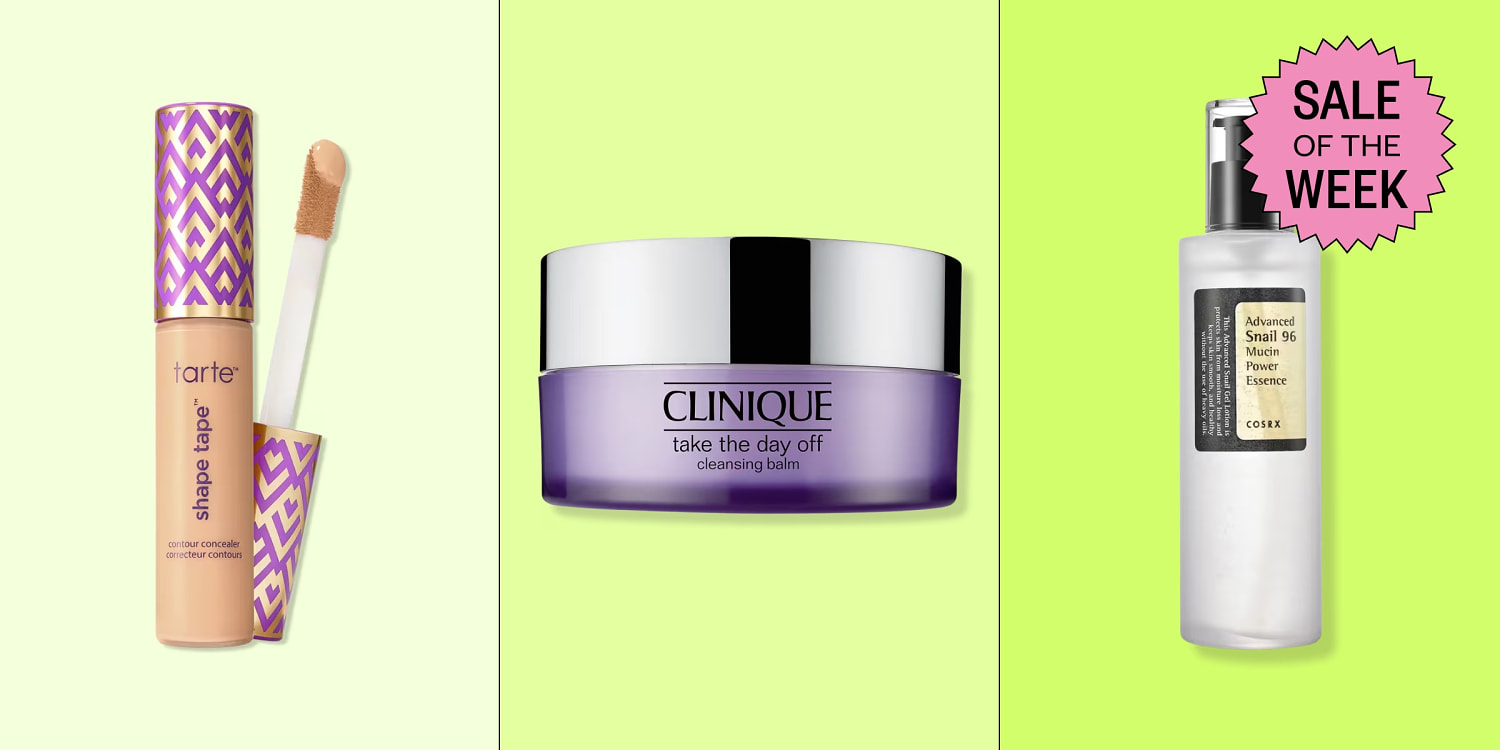
Retail promotional calendars rely on deliberate margin compression to pull forward fourth-quarter consumer demand, and Ulta Beauty’s Early Black Friday event—featuring up to 50% reductions on heritage brands like Clinique alongside high-velocity K-beauty entrants like Medicube—is a textbook execution of split-tier inventory liquidation and customer acquisition. Rather than treating these discounts as random seasonal generosity, buyers and retail analysts must view them through the mechanics of unit economics, gross margin preservation, and customer lifetime value (LTV) engineering. To extract maximum value from this promotional window, consumers must separate true loss-leader acquisitions from margin-protected bundle clearances.
The Structural Logic of Early Q4 Promotional Windows
Traditional Black Friday concentrated retail volume into a single four-day weekend, creating severe supply chain bottlenecks, elevated fulfillment costs, and high cart abandonment rates. By launching an Early Black Friday tier in mid-to-late November, specialty beauty retailers flatten their operational demand curve.
This temporal shift solves three distinct operational problems for the retailer:
- Warehouse Throughput Optimization: Shipping single-unit skincare and cosmetics orders across a three-week period rather than a 72-hour window prevents third-party logistics (3PL) surcharges and warehouse overtime expenses.
- Wallet-Share Preemption: Beauty spending is largely discretionary and finite per household per quarter. Capturing $100 of a consumer's budget two weeks before Thanksgiving permanently removes that capital from competing ecosystems like Sephora, department stores, or direct-to-consumer (DTC) brand portals.
- Data Signal Harvesting: Early markdown conversion rates act as a real-time demand forecast. If a specific SKU clears at 30% off in week one, algorithmic pricing engines hold firm on remaining stock; if velocity lags, the retailer deepens the markdown to 50% during Cyber Week without risking post-holiday dead stock.
Asymmetric Brand Mechanics Clinique Versus Medicube
Pairing a legacy conglomerate label like Clinique (owned by The Estée Lauder Companies) with a viral, device-and-topical K-beauty brand like Medicube (owned by APR Corp) illustrates two entirely different pricing and inventory strategies operating under the same promotional banner.
Legacy Prestige Margin Cushioning
Clinique operates with high gross margins—often exceeding 70% at the manufacturer level—and deeply entrenched supply chains. When Clinique products hit 30% to 50% off during an Early Black Friday event, the discount rarely reflects distress. Instead, it relies on two mechanisms:
- Gift-Set Arbitrage: Legacy brands frequently discount pre-packaged holiday sets or hero SKUs (such as Moisture Surge or Take The Day Off) at high percentages because the blended Cost of Goods Sold (COGS) across multi-unit packaging is significantly lower than individual retail cartons.
- Replenishment Lock-In: Clinique’s core demographic exhibits high brand loyalty and low churn. Acquiring a lapsed buyer at a 50% discount on a cleanser yields positive unit economics by the second or third full-price replenishment cycle in Q1 and Q2 of the following year.
Viral K-Beauty Velocity and Ecosystem Capture
Medicube represents a contrasting operational model built on rapid product iteration, social proof velocity, and hardware-consumable pairing. Unlike legacy prestige brands that protect price integrity to preserve luxury signaling, K-beauty operators prioritize market share capture and repeat consumable usage.
When Medicube topicals (such as Zero Pore Pads or Collagen Jelly Cream) or beauty devices are discounted up to 50%, the underlying objective is ecosystem lock-in. At-home microcurrent and electroporation devices require conductive gels and specific serums to function optimally. Subsidizing the entry price of the topical or the introductory hardware unit lowers the consumer's barrier to entry, shifting future revenue into high-margin, recurring serum purchases.
Deconstructing the Up to 50% Off Pricing Architecture
The phrase "up to 50% off" is a standard retail anchor designed to maximize click-through rates while protecting blended storewide gross margin. In practice, promotional assortments are segmented into three distinct pricing tiers.
Tier 1 Deep Loss Leaders (40% to 50% Off)
This tier typically accounts for less than 15% of the total promotional catalog. It consists of high-recognition hero items, discontinued packaging iterations ahead of a Q1 reformulation, or seasonal shade extensions that carry high obsolescence risk after December 25. Retailers absorb margin compression here strictly as a customer acquisition cost (CAC) expense, banking on basket-building behavior once the shopper enters the checkout funnel.
Tier 2 Blended Margin Protectors (25% to 35% Off)
The bulk of core prestige skincare and cosmetics sits in this bracket. At 30% off, both the retailer and the brand vendor share the margin reduction through co-op promotional agreements. The unit remains profitable on a contribution margin basis, especially when purchased via Buy Online, Pick Up In Store (BOPIS) channels that eliminate last-mile shipping costs.
Tier 3 Ancillary Basket Builders (10% to 20% Off or Buy More Save More)
To offset the margin lost on Tier 1 items, retailers place high-frequency essentials—cotton pads, travel sizes, brushes, and mass-market staples—at shallow discounts or tiered spend thresholds (e.g., $10 off $40). Because beauty shoppers rarely purchase a single discounted item in isolation, the blended margin of a four-item basket remains well within the retailer's quarterly profitability targets.
The Hidden Variables Loyalty Multipliers and Expiration Risk
Evaluating a 50% discount strictly on sticker price ignores two critical variables that dictate the true economic value of a beauty purchase: loyalty point arbitrage and chemical shelf-life degradation.
Loyalty Point Stacking Dynamics
Ulta’s Ultamate Rewards program operates as a closed-loop currency system that materially alters net effective pricing. Because points are redeemable as cash equivalents at escalating tiers (with 2,000 points yielding $125 in value, an effective 6.25% return per dollar spent at base earning rates), stacking a 50% sale price with a 5x brand-specific point multiplier or a 20% prestige coupon reduces the net cost of goods far below wholesale thresholds. However, point multipliers are algorithmic tools used to steer demand toward high-margin house brands or vendor-funded promotions; they rarely align simultaneously with peak 50% clearance markdowns unless a SKU is nearing end-of-life.
Active Ingredient Degradation and Stockpiling Limits
Skincare is a perishable chemical asset, not a durable commodity. Buying three units of a product at 50% off produces a negative return if the third unit oxidizes before opening.
- High-Instability Actives: L-ascorbic acid (Vitamin C), retinoids, and benzoyl peroxide begin degrading immediately upon exposure to heat, light, and oxygen. Even sealed, deep-discount promotional stock may have already spent six to nine months in warehouse distribution. Purchasing more than a six-month supply of unstable actives introduces significant efficacy loss.
- High-Stability Formulations: Surfactant-based cleansers, hyaluronic acid humectants, ceramide creams, and occlusive balms maintain structural stability for 24 to 36 months unopened. These categories represent the only mathematically sound targets for bulk stockpiling during early Q4 markdowns.
Limitations of Early Black Friday Purchasing
Treating Early Black Friday as the definitive price floor for the fourth quarter carries measurable opportunity cost. Retail pricing algorithms operate dynamically across the entire November-to-December arc, creating three structural traps for buyers:
- Cyber Week Price Undercutting: While Early Black Friday captures risk-averse shoppers worried about out-of-stock scenarios, brands that miss their November unit volume targets routinely release deeper flash discounts or higher-value Gifts With Purchase (GWPs) between Black Friday and Cyber Monday.
- Minimum Spend Friction: Online free-shipping thresholds (typically $35 to $50) force single-item bargain hunters to add low-utility filler items to their carts, eroding the net savings of a 50% discount on a $28 moisturizer.
- Return Policy Asymmetry on Value Sets: Breaking up discounted holiday kits to gift individual components voids standard return eligibility, locking capital into non-refundable inventory if shade matches or skin tolerances fail.
Tactical Execution Protocol for Q4 Beauty Procurement
To capture genuine arbitrage during Ulta’s Early Black Friday window without falling into margin-padding traps, execute purchases using a strict four-step filter:
- Audit Unit Price Per Milliliter: Ignore percentage-off badges on holiday value sets. Divide the sale price by the total volume in milliliters or grams and compare it against the standard full-size SKU. Only execute if the net unit cost is at least 35% below the baseline everyday price.
- Restrict Bulk Buying to Stable Formulations: Limit multi-unit purchases strictly to cleansers, barrier creams, and mechanical tools or pads (such as Medicube’s toner pads). Buy single units only for volatile actives like retinoids and pure Vitamin C.
- Leverage BOPIS to Eliminate Shipping Threshold Friction: Route single-item Tier 1 loss-leader purchases through local store pickup. This captures the full 50% markdown without forcing unnecessary basket additions to clear free-shipping minimums.
- Delay Non-Essential Prestige Purchases Until Cyber Week: If a core item from Clinique or an equivalent legacy house is discounted by less than 30% during the early window, hold capital. Historical promotional cadence dictates that items held at shallow discounts in mid-November are prime candidates for 40% reductions or high-tier point multipliers during the final five days of November.