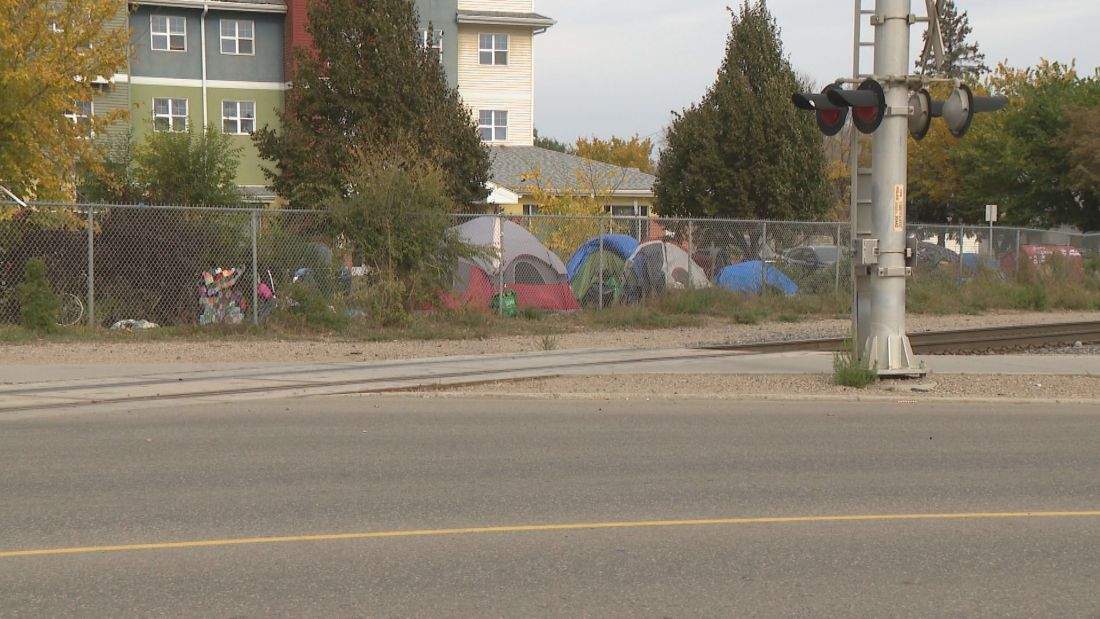
Municipal responses to unsheltered homelessness follow a predictable, self-defeating operational loop. When local authorities mobilize municipal enforcement to dismantle urban encampments—such as the recent clearances along Saskatoon's 20th Street corridor—they deploy a high-cost intervention that achieves a net-zero reduction in population displacement while generating negative externalities across public health, legal, and administrative budgets.
To analyze this dynamic accurately, we must deconstruct the mechanics of municipal displacement, the structural limitations of emergency shelter capacity, and the systemic cost functions governing urban homelessness. If you enjoyed this piece, you should check out: this related article.
The Operational Mechanics of Displacement
When enforcement agencies clear an encampment, they alter the geographic distribution of a population without changing its aggregate size. The core error in municipal strategy is treating the physical manifestation—tents, structures, and accumulated property—as the primary variable rather than a symptom of systemic structural deficit.
The immediate post-clearance timeline follows a consistent structural sequence: For another angle on this development, see the latest update from NBC News.
- Phase One (Intervention): Municipal and protective services issue notices to vacate, followed by physical dismantling, disposal of personal assets, and perimeter fencing.
- Phase Two (Dispersion): Displaced occupants scatter into adjacent neighborhoods or immediately re-establish camps on nearby parcels, such as the secondary encampments that emerged near Station 20 West following the Avenue K clearings.
- Phase Three (Friction): Administrative and legal challenges multiply, including Charter challenges, court injunctions, and public safety debates that strain municipal legal departments.
This cycle demonstrates that physical clearances act as a displacement mechanism rather than a resolution mechanism. The population remains unhoused, but their social networks, survival supports, and points of contact with outreach workers are systematically fractured.
The Cost Function of Municipal Enforcement
Evaluating the efficiency of encampment sweeps requires examining direct operational expenditures alongside hidden systemic costs.
[Traditional Sweep Model]
Municipal Enforcement Spend ---> Physical Removal ---> Immediate Re-establishment ---> Net-Zero Population Reduction (High Repeat Cost)

[Targeted Optimization Model]
Resource Allocation ---> Permanent Housing Pipeline + Low-Barrier Access ---> Reduction in Aggregate Unsheltered Count
The direct financial footprint of a single clearance operation includes specialized labor hours for police and fire personnel, heavy machinery deployment, waste management for thousands of kilograms of debris, and subsequent remediation. Layered on top of these operational outlays are the downstream legal expenditures required to defend municipal actions against constitutional challenges.
Conversely, these funds bypass preventative interventions. When municipal budgets prioritize recurring tactical removals over permanent housing acquisition or low-barrier supportive infrastructure, they lock themselves into an escalating fiscal feedback loop. Each cycle incurs identical capital expenditure for zero structural progress.
Structural Bottlenecks in the Housing and Shelter Matrix
The justification for clearing encampments often hinges on the availability of emergency shelter beds. However, aggregate bed counts frequently obscure structural mismatches between shelter supply and population requirements.
Several variables explain why displaced populations routinely reject standard shelter options:
- Barrier Profiles: Traditional congregate shelters enforce strict curfews, sobriety requirements, and gender-segregated layouts that exclude couples, individuals with companion animals, or those managing severe substance use disorders.
- Asset Security: Shelters rarely accommodate personal belongings or survival gear, forcing unhoused individuals to choose between indoor sleeping and the loss of essential survival assets.
- Safety Deficits: High-density congregate settings present documented risks of physical violence, theft, and psychological distress, particularly for vulnerable demographics such as women, the elderly, or individuals with physical disabilities.
When municipal policies present shelters as a binary alternative to encampments without addressing these systemic friction points, compliance rates drop. Occupants evaluate shelters as high-cost environments relative to their autonomy and safety, choosing instead to re-pitch tents in decentralized locations.
The Policy Horizon and Strategic Alternatives
Sustained management of urban unsheltered populations requires shifting from tactical enforcement to supply-side logistics. Jurisdictions that have achieved structural reductions in encampment footprints utilize integrated frameworks rather than episodic clearings.
The primary operational pivot involves establishing designated, managed temporary spaces equipped with core civil infrastructure—potable water, sanitation facilities, waste management, and on-site health outreach—while simultaneously expanding the pipeline of permanent, low-barrier housing units. This approach minimizes public health hazards while preserving the social cohesion and access channels required for outreach workers to transition individuals into permanent stability.
Municipalities must abandon the metric of visual clearance. True operational success is measured not by the absence of tents in a specific field of view, but by the velocity at which unhoused individuals move through the housing continuum into secure, permanent living conditions. Until municipal strategies align expenditure with that velocity, encampment removals will remain an expensive administrative exercise in spatial shuffling.