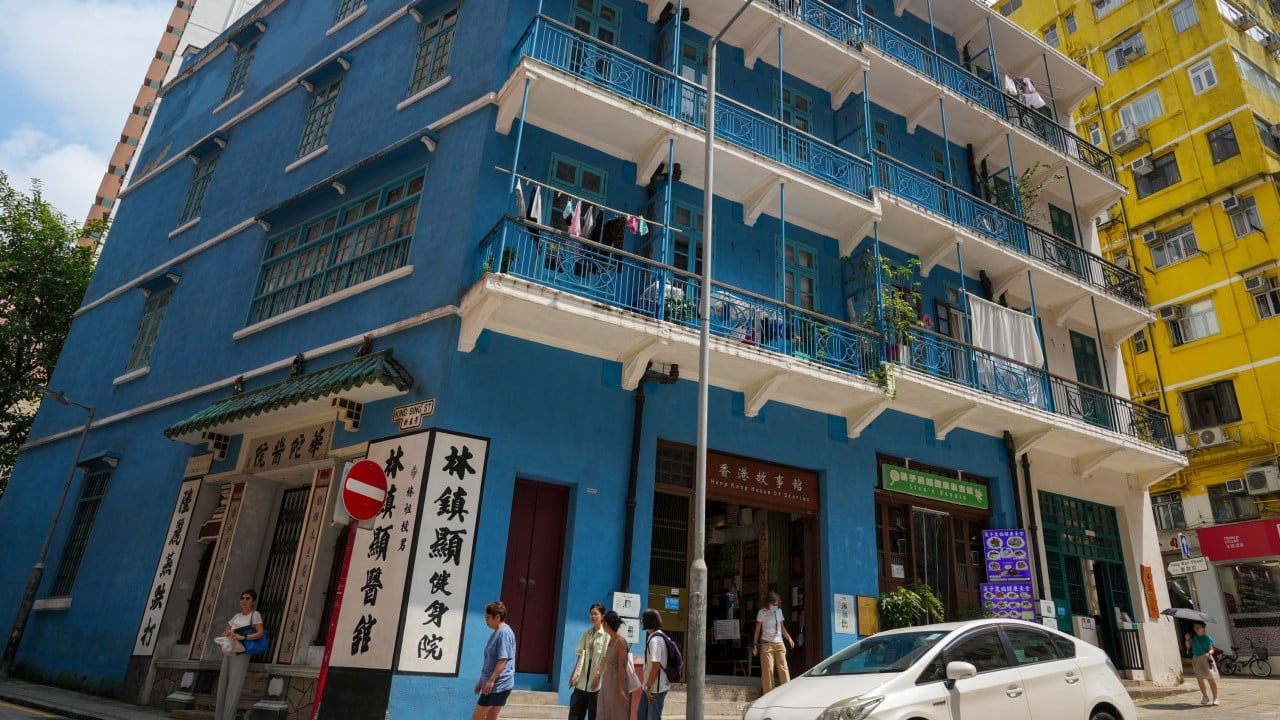
Hong Kong's urban core is decelerating under the weight of its own geometry. By 2047, approximately 80% of the building stock in the critical high-density corridors of Yau Ma Tei and Mong Kok will exceed 70 years of age. Unlike horizontal metropolises where urban expansion can mitigate central decay, Hong Kong operates within a hyper-dense, high Floor Area Ratio (FAR) environment. This reality renders conventional, market-driven redevelopment models financially insolvent. The structural intersection of exhausted plot ratios, fragmented multi-owner land titles, and strict statutory caps has created a systemic bottleneck. Resolving this crisis requires moving past superficial architectural preservation to execute a fundamental recalibration of urban asset optimization.
Evaluating the viability of renewing hyper-dense urban environments requires analyzing the specific economic and structural constraints that dictate Hong Kong's urban lifecycle.
The Plot Ratio Trap and Value-Generation Disruption
The foundational engine of private-led urban renewal is the generation of net new Gross Floor Area (GFA). In traditional urban settings, developers acquire low-rise or mid-rise assets, demolish them, and build higher-density structures. The delta between the original GFA and the newly permitted GFA funds the acquisition, demolition, and construction costs while providing a risk-adjusted return on investment.
In Hong Kong's older urban districts, this engine has seized. Decades of aggressive mid-century development utilized maximum statutory plot ratios. In many instances, changes to zoning laws, micro-district density caps, or aviation height restrictions mean that existing buildings possess an equal or higher plot ratio than the maximum currently permitted by law.
This creates a negative value-generation function:
$$GFA_{New} - GFA_{Existing} \le 0$$
When the GFA delta is zero or negative, a private developer cannot generate the surplus square footage necessary to offset the high costs of site acquisition and tenant rehousing. The asset possesses negative redevelopment potential.
Without statutory intervention to transfer or artificially inflate plot ratios, these buildings remain trapped in a state of terminal physical depreciation, structurally excluded from market-led renewal cycles.
Multi-Owner Title Fragmentation and the Compulsory Sale Threshold
The legal architecture of Hong Kong property ownership introduces friction into site assembly. Property ownership in multi-story buildings is governed by undivided shares of the underlying land lot, coupled with exclusive right-of-occupancy covenants for specific units. To redevelop a single building plot, an acquisition entity must assemble these highly fragmented fractional interests.
The transaction costs of assembling 100% of undivided shares through open-market negotiation are prohibitive due to the holdout problem. Strategic holdouts—or "nail houses"—rationally demand prices far exceeding the marginal economic value of their individual units, capturing an disproportionate share of the project's anticipated surplus. Furthermore, in buildings over 70 years old, missing owners, unprobated estates, and defective titles create absolute legal barriers to voluntary title consolidation.
To mitigate this friction, statutory mechanisms like the Land (Compulsory Sale for Redevelopment) Ordinance establish a legal threshold where a majority owner can petition the Lands Tribunal for a compulsory auction of the entire lot.
The policy levers operate on an age-stratified matrix:
| Building Age Cohort | Historical Compulsory Sale Threshold | Lowered Policy Threshold | Structural Objective |
|---|---|---|---|
| Less than 50 Years | 90% | 90% (Unchanged) | Protection of asset lifecycle stability and minority owner equity. |
| 50 to 69 Years | 80% | 70% | Acceleration of mid-century building stock replacement before structural failure. |
| 70 Years or Older | 80% | 60% | Bypassing title blocks caused by missing owners and unprobated estates in ancient stock. |
| Industrial (Outside Industrial Zones) $\ge$ 30 Years | 80% | 70% | Facilitating structural conversion of obsolete industrial zones into commercial or residential land. |
Lowering the statutory threshold alters the risk profile for assembly capital. It curtails the financial leverage of holdout owners and reduces the time required to achieve site control.
However, this policy lever creates a clear trade-off: it accelerates urban transformation by reducing individual property protections, shifting the systemic burden toward the judicial adjudication of minority owner compensation within the Lands Tribunal.
The Strategic Trilemma of the 4R Framework
The Urban Renewal Authority (URA) operates under a statutory mandate driven by four core pillars: Redevelopment, Rehabilitation, Preservation, and Revitalization. In a hyper-dense environment, these four pillars function as a trilemma, where maximizing performance in one category forces capital and operational trade-offs across the others.
Capital Destruction in Pure Preservation
Preservation isolates an asset from the real estate market to protect its historical or cultural value. From an economic perspective, pure preservation represents total capital immobilization. The site's plot ratio is permanently capped, and it ceases to generate market-rate economic returns.
Furthermore, historical structures like pre-war tong lau (shophouses) require continuous maintenance expenditures to meet modern building codes, fire safety regulations, and structural load standards. The URA's execution of projects like the Central Market or the Mallory Street/Burrows Street complex demonstrates that preservation requires long-term operational subsidies. These subsidies must be funded by revenues generated from high-density redevelopment projects elsewhere, making preservation a net consumer of urban renewal capital.
Extended Lifecycles Through Structural Rehabilitation
Rehabilitation aims to extend the physical lifecycle of buildings aged 30 to 50 years to delay the need for capital-intensive redevelopment. By providing technical guidance, financial subsidies, and structural inspection frameworks (such as the Mandatory Building Inspection Scheme), the state shifts the financial maintenance burden back onto Owners' Corporations.
The mechanism reduces the immediate demand on public rehousing resources and slows the rate of urban decay. The limitation, however, is that rehabilitation cannot fix fundamental flaws in urban design. It cannot widen narrow lanes, add green space, optimize regional transport networks, or fix deficient sanitation systems built into the original fabric of old neighborhoods. It fixes the container but leaves the urban infrastructure constraints untouched.
Displacement and Local Market Distortion via Revitalization
Revitalization alters the functional use of a neighborhood or building cluster to stimulate economic activity. While distinct from physical demolition, its deployment often distorts local real estate markets. The transformation of industrial structures or traditional street markets into commercial hubs can trigger localized cost increases.
When traditional commercial clusters—such as the historical shop concentrations on Lee Tung Street (Wedding Card Street) or Hong Lok Street (Bird Street)—are modified, the local economic network breaks down. The unique cluster economics that allowed low-margin, highly specialized businesses to survive on low transaction costs are disrupted by modern, corporate real estate management. This results in the displacement of the original commercial ecosystem.
Spatial Arbitrage and the Node-Line-Plane Model
To break the logjam caused by zero-GFA-growth sites, renewal strategies must shift from isolated building-plot replacements to regional macro-planning. The URA addresses this through the "Node-Line-Plane" framework, an approach designed to capture spatial arbitrage across entire districts.
[Node: Heritage/Transit Hub] <====== Line: Pedestrian Corridor ======> [Plane: High-Density Redevelopment]
          |                                                                     |
   Generates Foot Traffic                                              Offsets Conservation Costs
A Node is a specific point of high cultural, historical, or transit value, such as a restored historic building or a Mass Transit Railway (MTR) interchange. Nodes act as anchor points that draw pedestrian traffic and define the identity of a neighborhood.
A Line represents the connectivity infrastructure—such as pedestrianized corridors, elevated walkways, or green pathways—that links these nodes together. These corridors convert foot traffic into economic vitality along specific pathways.
A Plane refers to a broader zone of consolidated land parcels targeted for high-density, mixed-use redevelopment.
The integration of these elements enables a spatial cross-subsidy system. A private developer or the URA cannot generate an acceptable return by treating an old building plot as an isolated project. However, by consolidating multiple adjacent blocks into a single comprehensive plan, planners can reallocate density across the entire zone.
Under this model, the historical node's unutilized or preserved space is transferred to the redevelopment plane via Transfer of Development Rights (TDR) mechanisms. The developer can then build beyond standard plot ratio limits on the plane site, because the regional infrastructure has been designed to handle the increased density. The increased profits from the plane site fund the conservation of the node and the construction of the connecting lines.
Strategic Execution Plan for High-Density Urban Renewal
Accelerating urban renewal under these structural constraints requires moving away from piecemeal real estate acquisitions toward an integrated capital and regulatory strategy.
- Establish District-Wide Plot Ratio Transfer Mechanics: Municipal planning authorities must decouple development rights from physical land parcels. By creating a formalized market for Transfer of Development Rights (TDR), properties with negative redevelopment potential can sell their unused or preserved plot ratios to designated high-density receiving zones. This incentivizes owners of heritage assets to maintain their structures while providing the private sector with the density surplus required to make renewal projects profitable.
- Deploy AI-Driven Predictive Structural Analysis: Rather than relying entirely on reactive, manual building inspections, municipal authorities should implement predictive structural modeling platforms. By integrating age data, historical maintenance records, concrete core sampling results, and IoT deformation sensors, the state can identify buildings at risk of structural failure before visual decay appears. This allows capital for rehabilitation to be deployed to buildings where it will extend their lifespans the most, while avoiding wasteful spending on structures that require immediate redevelopment.
- Establish Public-Private Redevelopment Investment Funds: To bridge the funding gap for complex site assemblies, governments should set up co-investment frameworks with institutional private capital. The public sector contributes statutory acquisition powers via compulsory sale mechanisms and infrastructure upgrades, while private funds provide the capital for market-rate acquisitions and construction. This structure limits direct public financial exposure while de-risking long-term projects for private investors.
- Implement Phased Modular Transition Housing: The primary operational bottleneck in large-scale district redevelopment is the displacement and rehousing of residents. Urban renewal agencies should construct permanent, high-density modular transition developments on available reclamation land or underutilized brownfield edges. Affected tenants can be moved as entire community units into these transition hubs for fixed durations, allowing developers to clear and rebuild multiple adjacent blocks simultaneously. This reduces project timelines and avoids the community fragmentation caused by scattered cash compensations.