The financial press is having a collective meltdown. For two consecutive nights, US forces have struck targets in the Middle East, and Brent crude has ticked past $85 a barrel. The immediate, lazy consensus is already cemented across the major desks: we are on the precipice of a structural supply shock, inflation is about to roar back, and energy security is dead.
It is a neat, terrifying narrative. It is also completely wrong.
If you are managing money, running a business, or trying to understand the global economy based on these breathless headlines, you are being sold a dummy. An $85 oil price in the wake of active military exchanges between global powers is not a sign of panic. It is a sign of profound, structural weakness in the oil market.
I spent fifteen years pricing energy derivatives and watching physical cargo flows during major geopolitical escalations. I have seen what real panic looks like. This is not it. This is a paper tiger.
The media wants you to ask: How high will oil go?
The real question you should be asking is: Why on earth is oil only eighty-five dollars?
The Eighty Five Dollar Mirage
To understand why this price spike is an illusion, we have to look at what $85 actually means in today's economy.
Adjusted for inflation, $85 today is the equivalent of roughly $60 a decade ago. It is not an elevated crisis price. It is barely a survival price for high-cost producers.
During the geopolitical flare-ups of the late 2000s or even the early 2010s, a direct military strike involving US forces and Iranian proxies would have sent crude screaming past $110 within minutes. Today, the market barely registers a yawn before settling back into a comfortable trading range.
Why? Because the structural mechanics of global supply have been fundamentally rewritten. The financial press is still using a 2008 playbook to analyze a 2026 market.
The Algorithm Tax: Why Headlines Move Prices, Not Oil
When the US bombs a target, oil prices spike because of algorithms, not physical buyers.
The modern oil market is dominated by commodity trading advisors (CTAs) and quantitative hedge funds. These algorithms do not read geological surveys or look at port waiting times. They trade on natural language processing. They scan news wires for words like "strikes," "Iran," "missile," and "Red Sea," and they automatically buy front-month futures contracts to chase momentum.
This is the "Algorithm Tax." It creates a short-term, artificial pump in the paper market.
But here is the catch: paper barrels do not run refineries. Physical barrels do.
While the paper market is bid up by trend-following algorithms in New York and London, the physical market is telling a completely different story. Physical differentials—the premium or discount that actual refiners pay for real, wet barrels of crude—are incredibly weak. If there were a genuine scramble for supply, physical crude would be trading at a massive premium to the futures market. It isn’t. Refiners are taking their time, playing one seller against another, because they know there is plenty of oil to go around.
The Beijing Veto
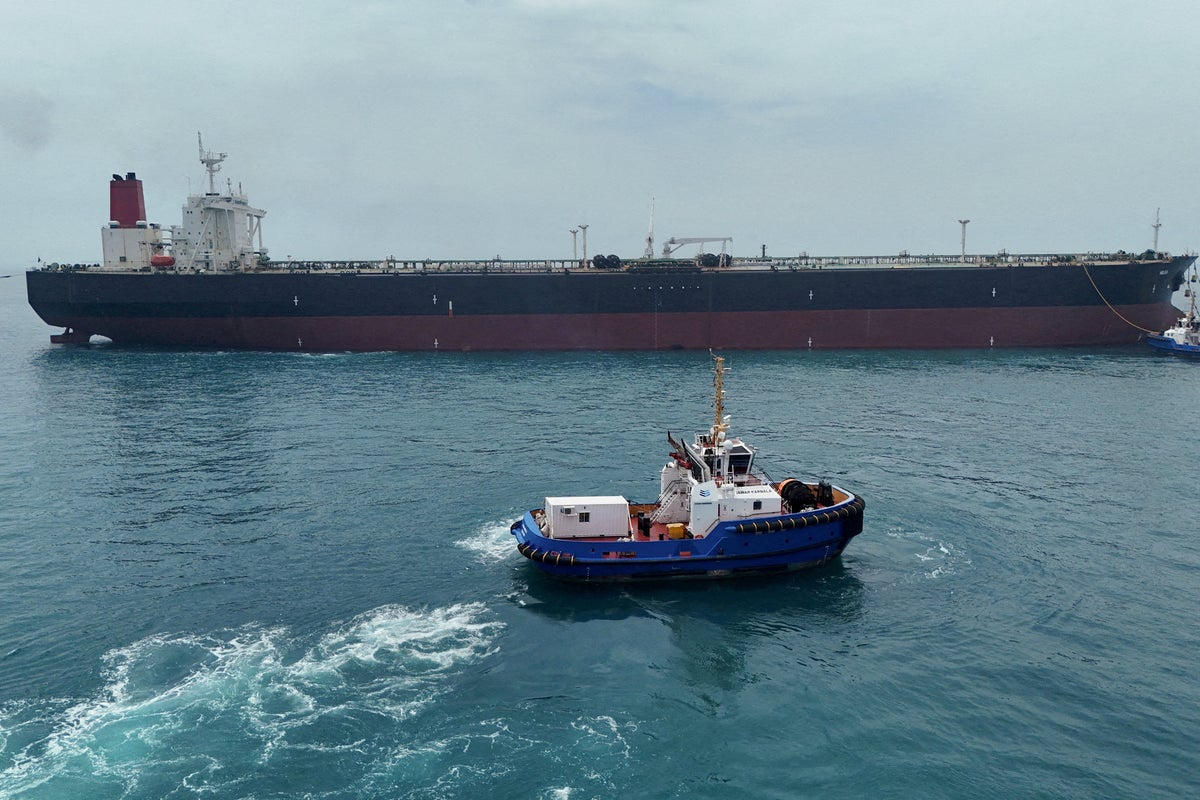
The ultimate fear-mongering headline always points to the Strait of Hormuz. "Iran could close the strait!" the pundits scream, warning that 20% of the world's oil consumption could vanish overnight.
This is a fundamental misunderstanding of geopolitical leverage. Iran will not close the Strait of Hormuz for one simple reason: Beijing will not let them.
Let us look at the raw data. Iran’s economy is currently kept on life support by illicit oil exports. Roughly 90% of those exports go to one destination: independent refineries in China, often referred to as "teapots."
Iranian Crude Export Destinations:
┌──────────────────────────────────────┐
│ China (Teapots): 90%                 │
├──────────────────────────┬───────────┘
│ Other: 10%               │
└──────────────────────────┘
If Iran shuts down the Strait of Hormuz, they do not just block Saudi and Emirati crude from reaching the West. They choke off China’s primary source of cheap, discounted energy. They would trigger a devastating industrial slowdown in the very nation that acts as their sole geopolitical and financial patron.
Tehran’s survival depends on keeping China happy. Closing the strait is an act of economic suicide. The threat is a rhetorical weapon, not a military reality.
The Ghost Supply of OPEC Plus
The second reason $85 oil is a sign of weakness is the massive overhang of spare capacity currently sitting offline.
For the past year, Saudi Arabia and its OPEC+ allies have been aggressively cutting production in an attempt to keep prices artificially elevated. This strategy has left the group sitting on an estimated 4 million to 5 million barrels per day of spare capacity.
To put that in perspective: if a major regional war managed to knock out entire chunks of Middle Eastern production, OPEC+ could turn the taps back on and replace that lost supply within weeks.
OPEC+ Spare Capacity vs. Potential Disruption:
┌──────────────────────────────────────────────┐
│ OPEC+ Spare Capacity: ~5,000,000 bpd         │
├──────────────────────────────────────────────┤
│ Major Red Sea Transit Disruption: ~3,000,000 bpd│
└──────────────────────────────────────────────┘
This massive supply buffer acts as a hard ceiling on oil prices. Every time the price creeps toward $90, the temptation for individual OPEC+ members to cheat on their quotas and pump more oil increases exponentially. They need the cash. Iraq, the UAE, and Kazakhstan are already pushing the limits of their compliance. The cartel is held together by scotch tape and wishful thinking.
The Unmatched Dominance of US Shale
The competitor article lamented the vulnerability of global supply chains. What they completely ignored is the monster in the backyard: US domestic production.
The United States is currently producing over 13.2 million barrels of crude oil per day. That is more than Saudi Arabia, and more than Russia. It is the highest rate of production in human history.
Global Oil Production Leaders (Million Barrels Per Day):
┌─────────────────────────────────────────┐
│ United States: 13.2+                    │
├─────────────────────────────────────────┤
│ Saudi Arabia: ~9.0 (excl. spare cap)    │
├─────────────────────────────────────────┤
│ Russia: ~9.5                            │
└─────────────────────────────────────────┘
The shale sector has transitioned from a chaotic, debt-fueled growth engine into a highly disciplined, cash-generative machine. Through technological efficiencies—longer lateral wells, faster drilling times, and advanced fracking fluids—American producers can now break even at $40 to $50 a barrel.
At $85 oil, American producers are printing money. They do not need to embark on massive capital expenditure cycles to increase production; they can simply optimize existing acreage to marginalize OPEC’s influence. Every time geopolitical tensions flare, US shale drillers quietly lock in their hedges for the coming year, guaranteeing their own survival and ensuring that any spike in global oil prices is short-lived.
Dismantling the Ignorant Questions
When the general public and mainstream media look at rising oil prices, they ask fundamentally flawed questions. Let us dismantle them one by one.
Does a conflict with Iran mean $100 oil is inevitable?
No. For oil to reach and sustain $100 a barrel, you need more than just headlines; you need a physical, prolonged disruption to infrastructure that cannot be replaced by US production or OPEC+ spare capacity. A brief exchange of missile strikes is not a physical disruption. It is a media event.
Will rising oil prices cause a global economic recession?
This gets the relationship backward. High oil prices do not cause recessions anymore; rather, weak global demand prevents oil prices from staying high. European manufacturing is already in a structural slump. China’s property sector is flatlining. The global economy is simply not running hot enough to support $100 oil. Demand destruction kicks in long before the price can do serious damage to Western economies.
Should we deplete the Strategic Petroleum Reserve to fight these spikes?
The panic over the US Strategic Petroleum Reserve (SPR) levels is entirely political. The SPR is designed for severe physical supply disruptions, not to manage price volatility caused by paper traders. Releasing oil from the SPR into a well-supplied physical market is a waste of a strategic asset.
The Cold Reality of the Energy Transition
There is one final, uncomfortable truth that the oil bulls refuse to acknowledge.
Every time geopolitical tension pushes oil prices high, it accelerates the long-term decline of oil demand. High oil prices are the best advertisement for electric vehicles, heat pumps, and localized renewable power.
When oil stays above $85, it forces logistics companies, manufacturers, and consumers to find alternatives. They rewrite their supply chains. They swap out diesel fleets. They build efficiency into their operations.
In trying to squeeze a few extra dollars out of the market through artificial scarcity and geopolitical fear-mongering, oil producers are actively destroying their own future demand. It is a classic economic trap: the cure for high prices is high prices.
The next time you see a headline screaming about $85 oil and imminent economic doom, ignore the noise. The physical market is quiet. The supply is there. The revolution is already televised, and it isn't being run by OPEC.