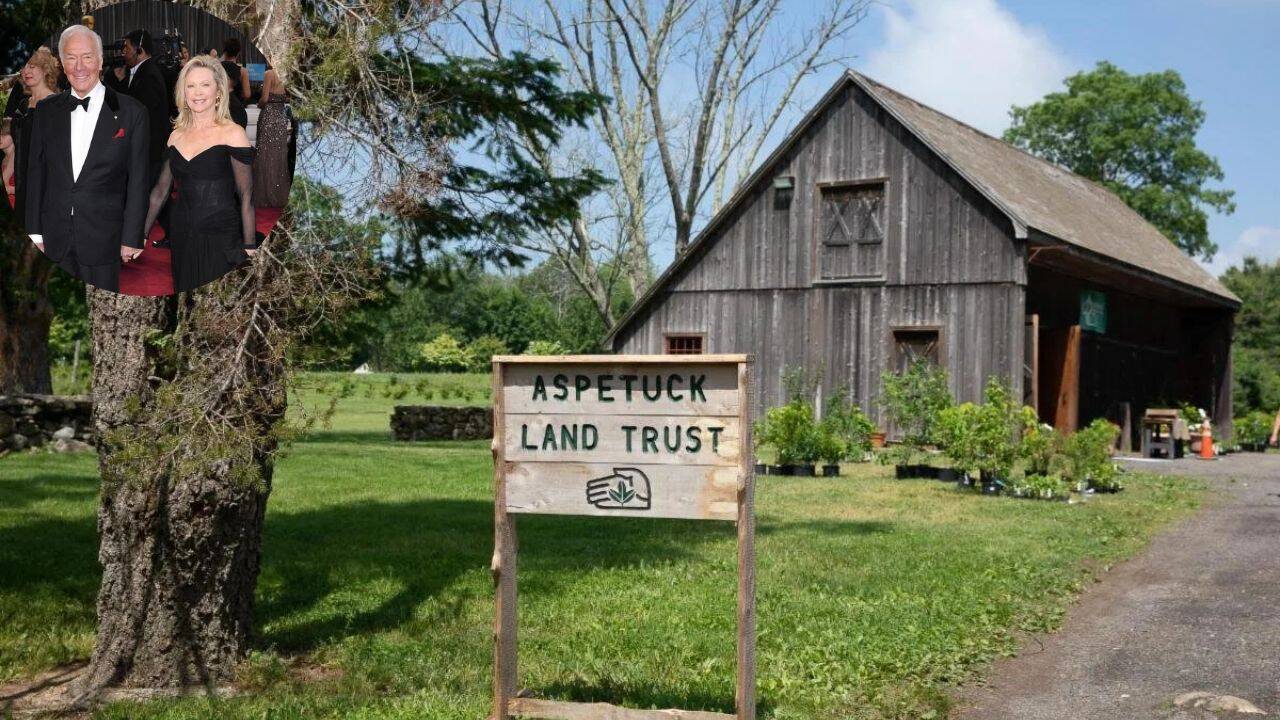
Most celebrity estates end up chopped into luxury subdivisions or auctioned off to the highest bidder. Not this one. Elaine Taylor, the widow of Oscar-winning actor Christopher Plummer, decided to hand over roughly 750 acres of prime Connecticut woodland to permanent conservation instead.
It's a massive move. And honestly, it says a lot more about how the couple actually lived than any red-carpet interview ever could.
When Christopher Plummer died in February 2021 at age 91, headlines focused on The Sound of Music, Beginners, and his razor-sharp wit. What got way less airtime was the quiet life he and Taylor built in Weston, Connecticut, over several decades. They didn't just buy a weekend retreat. They pieced together a sprawling, contiguous tract of New England forest, wetlands, and ridgelines in one of the wealthiest, most development-hungry counties in the United States.
Now, through a partnership involving the Aspetuck Land Trust and state conservation efforts, that land is locked away from bulldozers forever.
What Actually Happened With the Weston Property
Let's look at the numbers because scale matters here. Fairfield County, Connecticut, is notoriously expensive. Developers pay millions for a couple of acres to throw up five-bedroom colonials. Keeping 750 acres intact in Weston isn't just generous—it's practically unheard of in modern southern New England real estate.
Elaine Taylor, a British-born actress who married Plummer in 1970, worked closely with local conservationists to ensure the property wouldn't get carved up after she's gone. The land sits near existing protected corridors, including portions tied to the Aspetuck Land Trust's broader greenway vision and nearby state parklands like Devil's Den.
Here is why that geographic connection is huge. A random 10-acre park surrounded by strip malls is nice for walking a dog, sure. A 750-acre block that connects directly to thousands of other protected acres? That's an actual functioning ecosystem.
Wildlife doesn't care about property lines. Bobcats, black bears, barred owls, and migratory songbirds need uninterrupted forest canopies to survive. Fragmentation kills biodiversity faster than almost anything else. By keeping this massive parcel whole, Taylor effectively preserved a critical wildlife highway right in the middle of the Northeast megalopolis.
Why Celebrity Land Conservation Is Usually Complicated
I've followed land trust deals for years, and most people assume donating land is as simple as signing a deed and taking a tax write-off. It's not. In fact, wealthy landowners run into massive headaches when they try to do the right thing.
First, land trusts don't always want your property. Sounds crazy, right? But nonprofits like the Aspetuck Land Trust have to maintain whatever they accept. They need funds for boundary monitoring, invasive species removal, trail maintenance, and legal defense if a neighbor decides to build a shed twenty feet over the property line. Many donors have to pair their land gift with a cash endowment just so the trust can afford to steward it.
Second, property taxes and estate taxes in states like Connecticut create intense pressure on surviving spouses. When an estate is "land-rich," heirs often face a brutal choice. Either sell off parcels to pay the tax bill or put the whole thing on the open market.
Taylor bypassed the easy cash-out. Even with the federal tax incentives available for conservation easements and fee-simple donations, you always make vastly more money selling 750 acres in Fairfield County to luxury homebuilders than you ever save on taxes by giving it away. She left tens of millions of dollars on the table so trees could keep growing.
The Quiet Side of Christopher Plummer and Elaine Taylor
If you only knew Plummer from his late-career resurgence—winning his Academy Award at 82 for Beginners or stepping into All the Money in the World on nine days' notice—you might picture a jet-setting theater grandee. He loved London. He loved good wine. He loved the stage.
Yet Weston was his anchor.
Plummer and Taylor bought their historic farmhouse there in the early 1970s, shortly after getting married. Over the next fifty years, whenever neighboring parcels went up for sale, they bought them. Not to build guest houses or tennis courts. Just to keep the woods quiet.
Taylor was the driving force behind much of that stewardship. Friends and local Weston residents knew them not as untouchable Hollywood royalty, but as neighbors who fiercely guarded the rural character of their town. When Plummer passed away at their Weston home with Taylor by his side, that land was already the physical embodiment of their fifty-year marriage.
Turning it into a permanent nature preserve guarantees the property stays exactly what they spent half a century protecting.
What This Means for Local Hikers and Connecticut Residents
Whenever a huge land preservation deal hits the news, the first question locals ask is simple. Can I hike there?
The short answer is patience. Transitioning private residential acreage into a public nature preserve doesn't happen overnight. Conservation organizations have to conduct ecological inventories first. They need to map vernal pools, identify endangered plant habitats, figure out where parking areas won't ruin the surrounding neighborhood, and cut sustainable trails that don't cause erosion.
In Weston and neighboring towns like Redding and Easton, public access is managed carefully to protect the land itself. Look at the nearby Lucius Pond Ordway/Devil's Den Preserve, managed by The Nature Conservancy. It covers roughly 1,750 acres and draws thousands of visitors, yet strict trail rules keep the core habitat undisturbed.
Taylor's 750-acre addition strengthens that entire regional network. Even before new trailheads open to the public, residents immediately benefit from cleaner watershed protection. Those 750 acres filter millions of gallons of rainwater that feed into local reservoirs and eventually flow into Long Island Sound. Forests are basically free water-treatment plants.
Common Misconceptions About Nature Preserves
People hear "nature preserve" and immediately picture either a manicured city park with paved paths or a completely locked gate where nobody is ever allowed to set foot. Both assumptions miss the mark.
Here is how modern land trust preserves actually operate in New England:
- Passive recreation is the standard. Expect hiking, birdwatching, and snowshoeing. Don't expect mountain biking, dirt bikes, or hunting unless specifically designated by the managing trust.
- No dogs—or strict leash laws. Many large preserves in Fairfield County ban dogs entirely. Why? Even well-behaved dogs leave scent markers that stress ground-nesting birds and drive away native mammals.
- Zero commercial development. Unlike state parks that might build campgrounds, visitor centers, or boat launches, land trust preserves stay primitive on purpose.
- Ongoing active management. Leaving woods completely alone isn't always healthy anymore. Because deer populations in Connecticut are way out of balance and invasive plants like Japanese barberry choke out native saplings, land trusts actively manage the forest through selective clearing and ecological monitoring.
How Regular Landowners Use the Same Playbook
You don't need 750 acres or an Oscar winner's bank account to protect land in your own community. The exact legal tools Elaine Taylor used are open to anyone who owns a few acres of woods, farmland, or wetlands.
If you own property and hate the idea of seeing it paved over someday, you basically have three real options.
- Donate the land outright. Known as a "fee-simple" donation, you transfer the title directly to a qualified land trust or municipality. You walk away from property taxes and maintenance duties, and the organization takes over permanent stewardship.
- Place a conservation easement on the deed. You keep owning the land. You can still live on it, farm it, or pass it to your kids. However, you permanently strip away the development rights. Even if your great-grandkids sell the house in 2090, the easement stays attached to the deed forever.
- Set up a bargain sale. You sell the property to a conservation group for less than its fair market value. You get cash in hand today, and the difference between the sale price and the appraised value counts as a charitable tax deduction.
If you're curious how this works in your specific area, look up your local organization through the Land Trust Alliance directory. Reach out to their land protection director before you ever talk to a real estate developer. Even a five-acre buffer next to an existing stream or park can make a massive difference to a local watershed. And if you live near Fairfield County, consider supporting the Aspetuck Land Trust directly—keeping hundreds of new acres healthy takes serious boots-on-the-ground funding long after the ink on the deed dries.