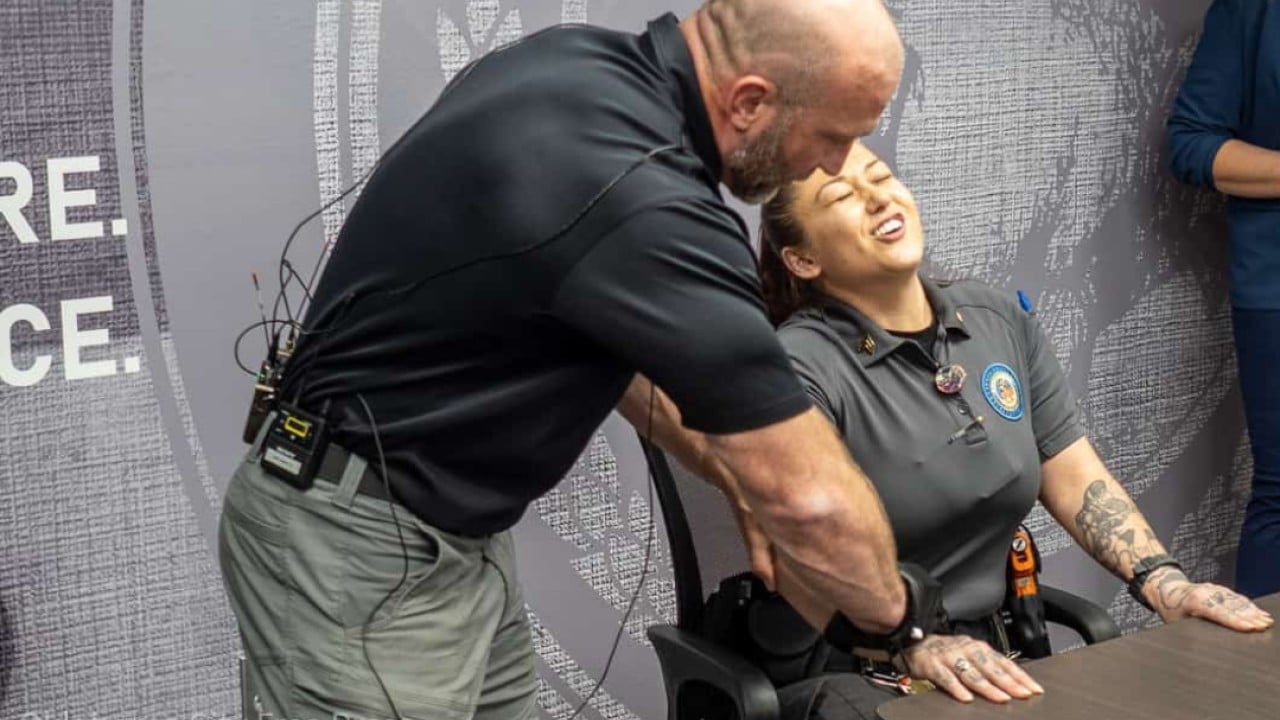
The media outrage machine found its latest panic button. Headlines scream about ICE agents getting outfitted with electric shock gloves, framing it as a dystopian sci-fi nightmare brought to life. Activists clutch their pearls. Pundits warn of unchecked brutality. Everyone agrees this is a terrible, heartless escalation.
They are wrong.
Strip away the emotional manipulation, and you find a piece of equipment that is vastly more humane, safer, and more precise than the current tools sitting on an officer's belt. We have bought into a lazy consensus that assumes any non-traditional compliance tool is automatically malicious.
I have spent years watching agencies bungle use-of-force policies. I have seen millions of taxpayer dollars wasted on ineffective training programs that leave officers panicked and civilians injured. The outcry over shock gloves completely ignores the chaotic reality of physical apprehension.
The Lethal Fallacy of the Status Quo
Let us look at what ICE agents use right now. Heavy flashlights, heavy boots, physical wrestling, pepper spray, and firearms.
When a physical struggle breaks out, the margin for error shrinks to zero. Wrestling a resisting individual on concrete is a recipe for broken bones, torn ligaments, and head trauma for both the suspect and the officer. Pepper spray creates an indiscriminate cloud that blinds everyone in the vicinity, lingers in the air, and causes prolonged respiratory distress. And firearms? That is the binary choice critics claim they want to avoid, yet their opposition to intermediate compliance tools forces officers back toward higher-level force multipliers.
Electric shock technology is not new. Tasers have been standard issue for decades. The primary complaint against traditional Tasers has never been the electricity itself; it has been the deployment mechanism. Dart-based systems require a clear line of sight, proper clothing penetration, a specific distance, and an agonizing second probe connection to complete the circuit. When those darts miss or fail to make proper contact, the situation instantly escalates into a chaotic brawl.
Gloves remove the dart variable entirely.
Precision Versus Chaos
Imagine a scenario where an agent needs to maintain physical control of a flailing arm during a high-stakes arrest. With traditional methods, the officer resorts to joint locks that can tear rotator cuffs or strikes that cause blunt-force trauma.
An electrical contact glove operates on a fundamentally different principle. It applies localized, low-amperage neuromuscular incapacitation directly through touch. There are no flying darts. There is no guesswork about distance. The officer grabs a wrist, applies a controlled pulse, and neutralizes the motor function of that specific limb instantly.
The injury rates plummet. Blunt force trauma leaves bruises, fractures, and internal bleeding that take weeks to heal. Electrical muscle disruption ceases the exact second the current stops, leaving no lingering tissue damage.
Critics call this torture. Data calls it restraint.
The Transparency Paradox
The loudest objection is that gloves turn agents into walking cattle prods, inviting casual abuse behind closed doors. This argument relies on a profound misunderstanding of modern law enforcement accountability.
Every advanced compliance tool deployed today comes integrated with telemetry. Modern smart-integration gear records activation duration, voltage output, GPS coordinates, and biometric data the millisecond the circuit closes. Supervisors do not have to guess what happened. The audit trail is absolute.
Agencies that adopt these tools do so because liability forces their hand. No police chief or federal director wants rogue officers lighting up detainees for fun. The logging mechanisms built into these gloves create an evidentiary paper trail that makes abusive behavior instantly verifiable and punishable.
If you want to reduce misconduct, you do not take tools away. You make every action trackable.
Confronting the Downside
Is this approach without risk? No. Every intervention carries a residual hazard profile.
Individuals with severe underlying cardiac conditions face hypothetical risks when exposed to electrical currents, though peer-reviewed studies on neuromuscular incapacitation devices consistently demonstrate that the frequency used targets skeletal muscle rather than the heart. Furthermore, the psychological impact of seeing compliance technology evolve can stoke public distrust.
Admitting these friction points does not invalidate the technology. It means we must regulate deployment strictly, train rigorously, and accept that policing is inherently messy. Pretending we can manage violent resistance with polite conversation is a dangerous delusion.
The critics want perfection in a profession defined by split-second imperfection. They want officers to rely on empty hands and wishful thinking.
We do not need fewer tools on the belt. We need smarter ones that end physical altercations before they turn into hospital visits or morgue runs. The shock glove is not a descent into tyranny. It is an overdue step toward clinical, measurable, and ultimately less violent restraint.
Stop fighting the technology that keeps people out of the emergency room.