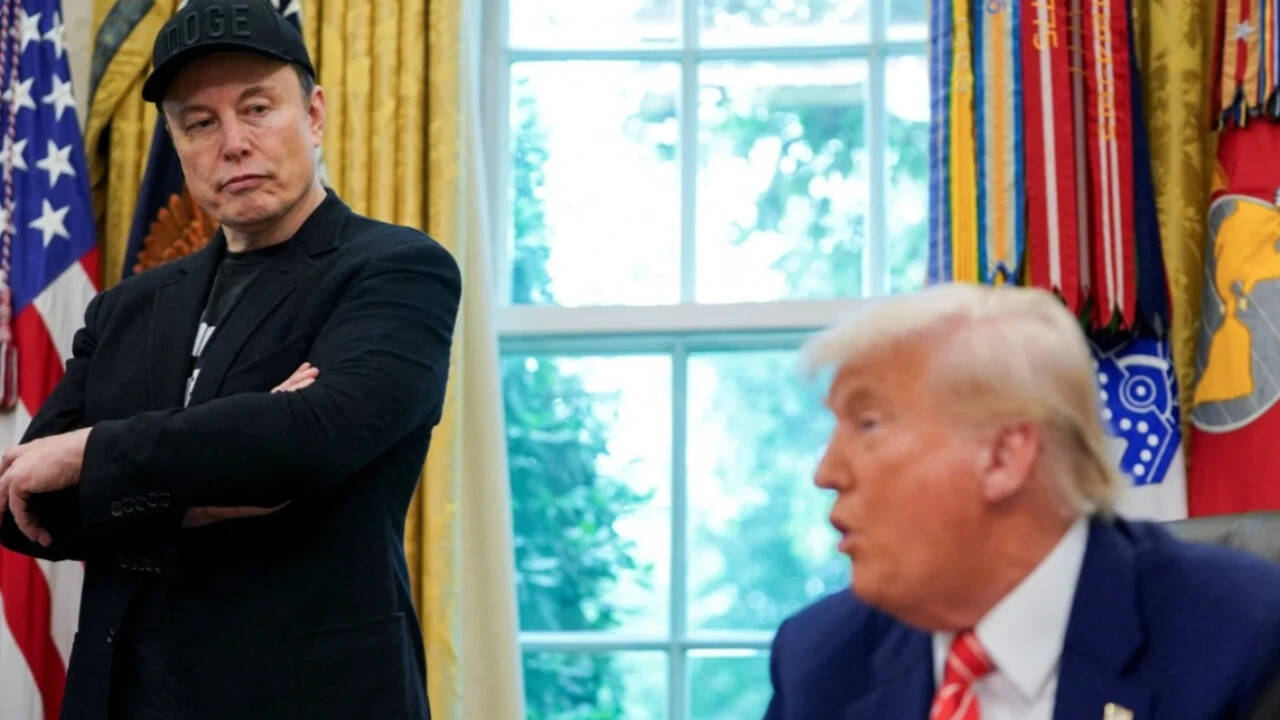
Spending $458 million on an election only to scrub your own endorsement posts before breakfast isn't a strategy. It's damage control.
On November 3, 2026, Elon Musk posted a simple three-word message on X to his massive audience: "Vote red today!" It racked up nearly 12 million views. Within hours, as the 2026 midterm election results rolled in and Republicans suffered a sweeping defeat across both chambers of Congress, that post vanished. So did an October 29 pinned message urging followers to elect Republican senators. Learn more on a related topic: this related article.
You don't need a political science degree to see what happened here. Musk tried to buy the 2026 midterms the same way he helped power Donald Trump's 2024 return to the White House. Except this time, the voters didn't play along, his hand-picked candidates got crushed, and the world's richest man got caught scrubbing his timeline—confirmed by his very own AI chatbot, Grok.
What Actually Happened on Election Night
Let's look at the timeline, because the speed of the backtrack says everything. Throughout the final stretch of the 2026 campaign, Musk poured money into conservative super PACs and candidate committees at a historic clip. Reports from The New York Times and Forbes tracked his midterm spending to roughly $458 million (with some tallies pushing the final figure closer to $474 million once last-minute transfers were counted). That blew past the roughly $291 million he spent during the entire 2024 presidential cycle. Further journalism by TIME explores comparable views on the subject.
On Election Day itself, Musk kept his direct endorsements relatively tight compared to his wall-to-wall posting in 2024. He pinned a pro-GOP Senate appeal from late October, fired off his "Vote red today!" call to action, and dropped a raised-eyebrow emoji under a post from Michigan Democratic Senate candidate Abdul El-Sayed.
Then the polls closed.
By late Tuesday night and early Wednesday morning, November 4, the scale of the Democratic wave became undeniable. Democrats flipped control of both the House of Representatives and the Senate. Abdul El-Sayed won his Michigan Senate race. Worse for Musk, his biggest financial bet—Texas—collapsed completely.
By Wednesday morning, users noticed that clicking on Musk's "Vote red today!" link led to a dead page. Fact-checkers at Snopes verified archived versions and screen recordings of the post, proving it was real and had pulled nearly 12 million views before being wiped. When X users asked Grok whether Musk had deleted his Election Day endorsement, the chatbot didn't sugarcoat it. Grok confirmed that both the "Vote red today!" post and the pinned October 29 Senate endorsement had been removed following major Republican losses, while noting that Musk hadn't offered an explanation.
Musk quickly pivoted back to posting about Starship, Starlink, and space-based data centers, even joking, "Guess my election-interfering space lasers didn't work this time". Funny line. Expensive punchline.
The Brutal Math Behind Musk's $458 Million Return on Investment
If you run a business—and Musk runs several massive ones—you measure capital allocation by return on investment. By any objective metric, his 2026 political spending was one of the worst capital deployments in modern American history.
According to an analysis by Forbes, Musk-backed groups and direct contributions supported candidates across 106 House and Senate races. Here is how that scoreboard looked once the dust started settling on November 4:
- 47 backed candidates lost their races outright, including top-tier Senate and House targets.
- Only 19 won by midday Wednesday, and every single one of those victories came in deep-red districts or states that Republicans were already guaranteed to hold without spending a dime.
- 40 remaining contests were still too close to call at that mark, with Democrats already having locked down congressional majorities.
Think about that ratio. Nearly half a billion dollars bought zero competitive pickups. Not one.
In political consulting, we call this the "ceiling effect" of billionaire money. Cash can buy television ads, digital impressions, canvassing software, and direct mail. It cannot buy likability for flawed candidates, and it definitely cannot override macro voter anger over inflation, gas prices, or foreign entanglements. When voters have already made up their minds to punish the party in power, flooding their mailboxes with glossy flyers paid for by the richest man on earth often backfires. It turns the donor himself into the campaign issue.
How Texas Became Musk's Most Expensive Nightmare
Nowhere did that backlash sting harder than in Texas. Over the past few years, Musk relocated SpaceX's primary operational hub and Tesla's corporate headquarters out of California and into Texas specifically to escape Democratic regulators, state income taxes, and strict environmental oversight. For years, Texas Republicans led by Governor Greg Abbott and Attorney General Ken Paxton gave Musk practically free rein.
So when polling in autumn 2026 showed Ken Paxton trailing Democratic state representative James Talarico in the U.S. Senate race, Musk panicked and opened the floodgates. The New York Times estimated that Musk dumped roughly $224 million into Texas alone—nearly half of his entire national midterm budget.
It didn't work. In fact, it blew up in his face.
On November 3, James Talarico defeated Ken Paxton by a wide margin—55.09% to 42.99%—becoming the first Democrat to win a U.S. Senate seat in Texas since 1988. During his victory remarks, Talarico aimed straight at Musk's checkbook, declaring that the outcome sent a clear message that "Texas is not for sale".
The Senate race wasn't an isolated fluke. Democrats swept every statewide office on the Texas ballot:
- Governor: Democrat Gina Hinojosa unseated the GOP stronghold, immediately putting Musk's massive Texas AI and data center expansion plans in the crosshairs of proposed state moratoriums.
- Attorney General: Democrat Nathan Johnson won the state's top law enforcement post and wasted no time signaling plans to scrutinize state grants awarded to SpaceX and Starlink.
- U.S. House: Musk-backed Republicans in competitive South Texas districts like TX-28 and TX-34 went down in defeat.
Musk fled California to avoid Democratic state governments. After spending $224 million to protect his Texas fortress, he woke up on November 4 facing a Democratic governor, a Democratic attorney general, and a Democratic U.S. senator in his own backyard.
Why Deleting the Posts Actually Makes Sense for Business
Most commentators framed the deleted X posts as pure embarrassment—a billionaire throwing a quiet tantrum because his team lost. There is probably plenty of ego bruised in Boca Chica and Austin right now. Still, if you look at Musk's balance sheet the day after the election, deleting "Vote red today!" looks a lot like cold corporate self-preservation.
Wall Street hated the midterm results for Musk's empire. On Wednesday, November 4, Tesla shares dropped 3.3% and SpaceX's private valuation slipped 3.8%, wiping out roughly $120 billion in combined market value and shaving $23.7 billion off Musk's personal net worth in a single day, according to Bloomberg and Forbes.
Why did investors flinch? Because a Democratic House, a Democratic Senate, and a Democratic Texas statehouse mean subpoenas, regulatory reviews, federal contract audits, and environmental permitting delays.
When you depend on federal defense contracts for SpaceX, federal EV and autonomous-driving rules for Tesla, and state permits for massive AI compute clusters, keeping a pinned post telling Americans to vote against the people who now hold subpoena power is terrible business. Scrubbing the most overtly partisan calls to action doesn't erase FEC filings, of course. Everyone in Washington and Austin knows who wrote the checks. What it does is stop bleeding brand equity on X and reset his public feed back to rockets, satellites, and AI before congressional oversight committees start drafting letters.
What People Get Wrong About Billionaire Money in Politics
Every election cycle, pundits claim that whoever spends the most money automatically wins. Musk's 2026 flop proves how flawed that assumption really is.
In 2024, Musk's $291 million worked because it rode alongside a top-of-the-ticket presidential campaign with massive organic turnout and clear economic grievances against the incumbent administration. Musk wasn't creating the wave in 2024; he was surfing it.
Midterm elections operate under completely different physics. Without Donald Trump on the ballot, lower-propensity MAGA voters stayed home, while frustrated independent and suburban voters showed up to check the White House. You cannot brute-force midterm turnout with super PAC TV ads when your own coalition isn't motivated to show up.
Even worse, Musk's high-profile involvement gave Democratic campaigns an easy, recognizable villain. Instead of running solely against local Republican candidates, Democrats in Texas, Michigan, and swing House districts ran against the idea of a single tech oligarch buying their state's representation. Talarico's "Texas is not for sale" message landed because voters could see the $224 million price tag in the headlines every week.
How to Track Political Megadonor Spending Yourself
If you want to cut through viral social media screenshots and see where billionaires are actually putting their money in future cycles, don't rely on X timelines that can be deleted in two clicks. Check the public paper trail directly:
- Search the Federal Election Commission (FEC) database: Go to fec.gov and search individual contributor records or independent expenditure reports (Form 24/48) to see exact dollar amounts spent for or against specific candidates.
- Use OpenSecrets donor profiles: Platforms like OpenSecrets.org aggregate super PAC transfers, dark-money 501(c)(4) disclosures, and cycle-over-cycle totals so you can compare 2024 versus 2026 spending side by side.
- Check state ethics commissions for local races: Federal databases won't always capture governor or attorney general races. For states like Texas, the Texas Ethics Commission tracks state-level PAC contributions that funded races like Paxton versus Talarico or statewide executive contests.
Elon Musk learned a $458 million lesson on November 3. You can buy a social media platform, and you can buy every billboard between El Paso and Houston, but when voters decide they want a change, hitting delete on a tweet won't rewrite the scoreboard.