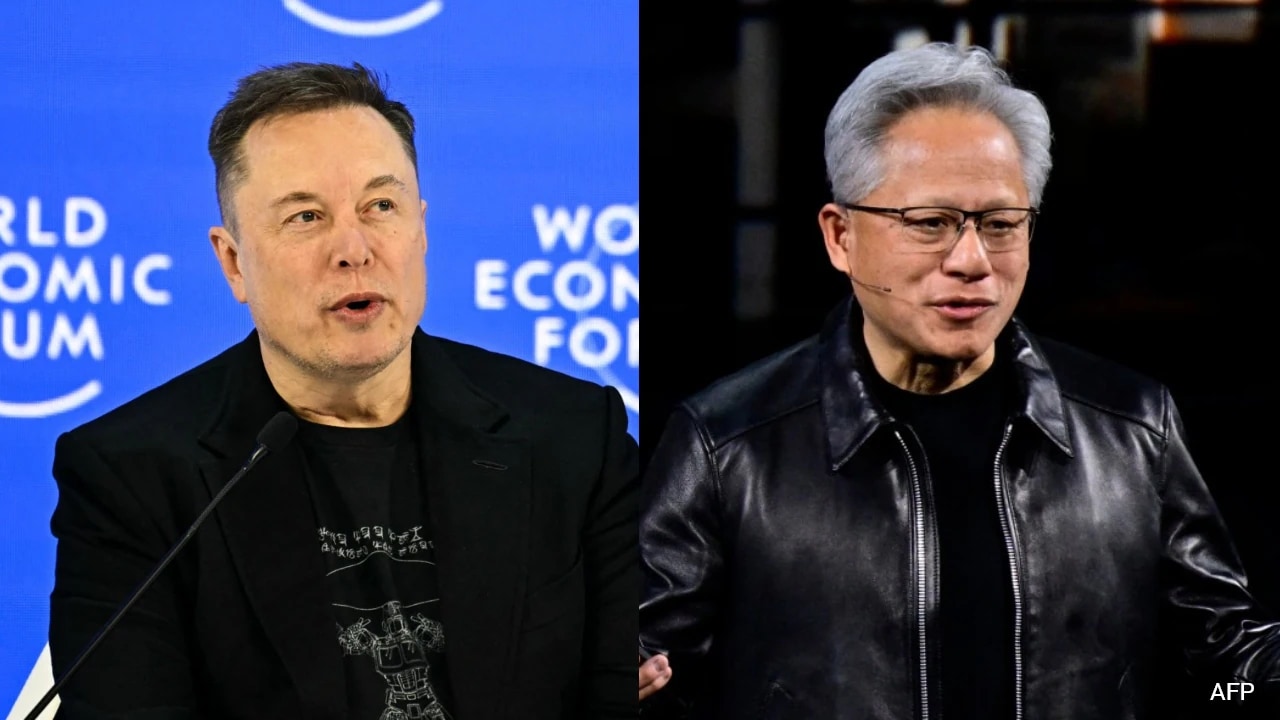
Jensen Huang has never actually left Nvidia, making rumors of a dramatic "return" to the company he co-founded in 1993 a classic case of social media telephone gone off the rails. The latest wave of market chatter stems from a cryptic post by Elon Musk on X, which traders, algorithmic news scrapers, and retail investors instantly misread as a hint of an executive shakeup or a major strategic pivot at the world's most valuable chipmaker. In reality, Huang remains firmly entrenched as Nvidia's chief executive officer, president, and longest-serving tech chief in Silicon Valley—a seat he has occupied without interruption for more than three decades.
Understanding why a single tweet from Musk can send financial message boards into a frenzy requires looking at the hyper-reactive ecosystem surrounding artificial intelligence stocks. When two of the most influential figures in modern computing interact online, every emoji, reply, or offhand remark gets dissected like a Federal Reserve policy statement.
Anatomy of a Viral Misunderstanding
Social media platforms reward speed over accuracy. When Elon Musk engages with content involving Nvidia, automated trading bots and engagement-farming accounts immediately scramble to attach a narrative to the interaction. The phrase "Nvidia return for Jensen Huang" gained traction not because Huang stepped down, took a sabbatical, or was ousted by his board, but because internet rumor mills routinely conflate strategic pivots, product unveilings, and physical appearances with corporate leadership changes.
Consider how these narratives mutate in real time. A post from Musk referencing Nvidia's hardware supply, a joint data center milestone, or a throwback comment about early AI shipments gets screenshot, stripped of context, and reposted with speculative captions. Within hours, search algorithms pick up the spike in paired keywords—"Jensen Huang," "Nvidia," "return," and "Elon Musk"—creating a feedback loop where automated content farms generate headlines asking questions nobody in the semiconductor industry actually asked.
There is zero regulatory filing, board announcement, or credible reporting suggesting Huang ever vacated his post. At Nvidia, leadership stability is not merely a talking point; it is the structural foundation of the company's operational execution. Unlike peers that have cycled through multiple CEOs over the past twenty years—Intel, AMD, and Qualcomm among them—Nvidia has operated under a single continuous vision since Huang, Chris Malachowsky, and Curtis Priem sketched out their business plan at a Denny's booth in San Jose.
What Musk and Huang Actually Want From Each Other
To see through the noise of X speculation, look at the hard economics binding Tesla, xAI, and Nvidia together. Their relationship is not built on friendly banter; it is forged in multi-billion-dollar purchase orders and fierce competition for wafer capacity at Taiwan Semiconductor Manufacturing Company.
Musk is arguably Jensen Huang's most demanding customer—and his most vocal potential competitor. Through Tesla's Full Self-Driving supercomputers and xAI's massive Colossus cluster in Memphis, Musk has consumed tens of thousands of Nvidia H100, H200, and Blackwell graphics processing units. Every public nod Musk gives to Nvidia carries weight because his capital expenditure budgets move quarterly revenue needles.
Yet beneath the public camaraderie lies an intense strategic tug-of-war:
- Supply Chain Leverage: Musk frequently uses public platforms to signal hardware priorities, occasionally redirecting shipments between Tesla and xAI or praising Nvidia's execution speed to keep engineers motivated.
- Custom Silicon Hedging: Even as Musk buys everything Nvidia can ship, Tesla continues developing its Dojo supercomputer architecture and custom inference chips to reduce long-term reliance on Nvidia's high-margin ecosystem.
- Software Lock-In: Nvidia's real moat is not just silicon; it is CUDA, the proprietary parallel computing platform that makes switching away from Nvidia hardware painful and expensive for AI developers.
When Musk posts about Nvidia, market watchers immediately try to decode whether he is signaling a massive new hardware order, teasing a joint infrastructure project, or subtly pressuring Huang on pricing and delivery timelines. None of those scenarios involve Huang "returning" to a company he already runs.
The Origins of Silicon Valley's Favorite Executive Trope
Why do "founder return" rumors stick so easily in technology journalism? Because tech history is littered with dramatic second acts.
Steve Jobs returning to Apple in 1997 to rescue it from near-bankruptcy remains the archetype. Jack Dorsey returning to Twitter, Howard Schultz returning to Starbucks, and Sergey Brin stepping back into Google's AI labs during the generative AI boom have conditioned investors to view founder returns as an inevitable plot twist whenever a tech giant faces pressure.
When retail traders see a headline pairing "Nvidia," "return," and "Jensen Huang," their pattern-recognition instincts fire immediately. They assume one of two things: either Huang stepped away quietly and is coming back to fight off rising competition, or Nvidia is returning to an older strategic playbook, such as consumer gaming graphics or lower-margin enterprise hardware.
Both assumptions miss the reality of how Nvidia operates. Huang does not retreat from operational details; by all accounts from former executives and engineers, he maintains a flat organizational structure with dozens of direct reports, reviewing product roadmaps, packaging bottlenecks, and software releases with granular intensity.
Why "Return" Could Mean Something Entirely Different
If you strip away the clickbait distortion around executive leadership, the word "return" actually points to three legitimate strategic debates happening inside the semiconductor sector right now.
First is the return to gaming roots. For the past several years, Nvidia's data center division has completely eclipsed its traditional GeForce consumer graphics business in revenue and margin. Whenever supply constraints ease or AI infrastructure spending pauses for breath, analysts ask whether Nvidia will refocus engineering bandwidth on consumer GPUs, handheld gaming chips, or PC AI accelerators.
Second is the return of regional manufacturing and geopolitical exposure. Taiwan remains the beating heart of Nvidia's supply chain. Any mention of Huang "returning" to Taipei for Computex or supply-chain negotiations with TSMC immediately draws scrutiny from institutional investors tracking export controls, tariff threats, and fab diversification in Arizona.
Third is the return on invested capital (ROIC) question hanging over the entire AI sector. Hyperscalers like Microsoft, Meta, Alphabet, and Musk's own xAI have poured hundreds of billions of dollars into Nvidia clusters. Wall Street is no longer satisfied with hardware shipment numbers alone; institutional money managers want proof that end-user software revenues justify the massive capital outlay.
How Algorithmic News Loops Distort Market Reality
A decade ago, a rumor about a Fortune 500 CEO required a leaked memo, a whispered tip at a Sun Valley conference, or a verifiable SEC filing before reaching mainstream financial screens. Today, the pipeline from unverified social post to syndicated headline takes less than fifteen minutes.
Here is how the modern financial rumor engine works in practice. Suppose a prominent tech founder posts a vague four-word reply under a video clip of Jensen Huang speaking at a 2016 tech summit. Automated sentiment trackers flag the surge in engagement. Low-tier aggregator sites, often relying on automated rewriting tools, scrape the trending keywords and publish speculative articles framed as questions to dodge defamation liability.
Those articles then populate financial news feeds, where retail traders skim the headlines without clicking through. By the time a human editor or semiconductor analyst checks the primary source, the phantom narrative has already generated thousands of searches and moved short-term options volume.
Veterans of the chip industry recognize this cycle immediately. Semiconductors are brutally capital-intensive businesses governed by multi-year product roadmaps, lithography lead times, and physical manufacturing limits—not viral posts. A chip architecture like Blackwell or Rubin takes years of tape-out validation, CoWoS packaging allocation, and thermal engineering before a single unit reaches a server rack. No tweet alters that timeline.
The Real Succession Question Nobody Wants to Answer
While Jensen Huang is not returning because he never left, the fixation on his presence highlights an uncomfortable truth for Nvidia shareholders: key-person risk.
Huang is in his early sixties. He has led Nvidia for over thirty-three years, longer than almost any other major public company chief executive in the United States. Under his watch, Nvidia survived near-death experiences in the 1990s, bet the company on programmable shaders, endured the crypto-mining boom-and-bust cycles, and positioned itself at the exact center of the generative AI explosion.
Yet that extraordinary continuity creates a massive structural vulnerability.
Ask ten institutional semiconductor analysts who takes over Nvidia when Huang eventually decides to retire, and you will get ten different guesses—and a collective wince. Nvidia does not advertise an obvious heir apparent. Its senior leadership bench—featuring veterans like chief financial officer Colette Kress, executive vice president of operations Debora Shoquist, and engineering leaders like Dwight Diercks and Jonah Alben—is deeply respected inside the industry, yet none carries Huang's singular public authority or architectural veto power.
Unlike Apple, which spent years grooming Tim Cook in public view before Steve Jobs stepped down, Nvidia remains tightly fused to Huang's personal brand, his leather-jacketed keynotes, and his direct management style. That is precisely why even a fabricated rumor about Huang "leaving" or "returning" triggers an immediate emotional jolt across the market. Investors know that when the day actually comes for Jensen Huang to step aside, no social media post will soften the transition.
Separating Signal From Noise in AI Stock Coverage
For investors, engineers, and industry observers trying to track what actually matters at Nvidia, ignoring social media theatrics is the first rule of survival. Musk and Huang will continue trading compliments, sharing stages, and competing for leverage in the race to build massive AI compute clusters. That dynamic is great theater, but terrible investment research.
Real shifts at Nvidia show up in quarterly gross margin guidance, TSMC advanced packaging capacity reports, hyperscaler capital expenditure disclosures, and developer adoption metrics for new CUDA libraries. Watch the silicon supply chain and the balance sheets, not the timeline.