The silence between two nations is never truly silent. It is a heavy, pressurized thing, filled with the ghosts of shared history and the static of unsaid grievances. For weeks, the French embassy in Algiers felt that weight. It wasn't just a building; it was a symbol of a connection that had frayed to a single, snapping thread.
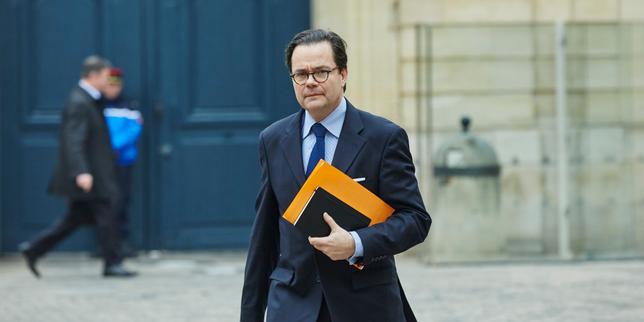
When Stéphane Romatet, the French Ambassador, was recalled to Paris, the physical vacancy in his office mirrored a deeper void in Mediterranean diplomacy. This wasn't a mere administrative shuffle. It was a cold front. Diplomacy, at its core, is the art of showing up. When you stop showing up, the machines of cooperation—visas, trade, security, historical reconciliation—grind to a halt. The gears lock. Also making waves in related news: Structural Instability and Constitutional Stress Tests The Mechanics of South African Presidential Accountability.
The Human Cost of High Politics
Consider a young student in Oran. She has a placement at a university in Lyon. Her future depends on a stamp, a signature, and a functioning consulate. To her, the high-level friction between the Elysée and the El Mouradia Palace isn't about "geopolitical recalibration." It is about whether she gets to start her life on schedule.
When the Ambassador's chair sits empty, that student’s paperwork sits in a pile. The businessman trying to export olive oil faces a wall of uncertainty. The families split across the sea, who rely on the steady flow of people and papers, find themselves held hostage by the weather of international relations. Further details regarding the matter are detailed by NBC News.
The announcement from the Elysée that Romatet is returning to his post is the sound of the pressure valve finally being released. It is a realization that while anger can be a political tool, it is a terrible long-term strategy for neighbors. France and Algeria are not just two countries on a map; they are two entities whose DNA is so intertwined that trying to separate them is a surgical nightmare.
The Language of the Return
The official statement mentioned "restoring an effective dialogue." That is the clinical way of saying they need to start talking again before the silence causes permanent damage. But the return of an ambassador is more than a resumption of talk. It is a gesture of presence.
In the world of international statecraft, presence is the only currency that matters. You can send emails. You can make phone calls. You can issue press releases through state media. None of it carries the weight of a man sitting in a room, looking his counterpart in the eye, and acknowledging that the relationship is difficult, necessary, and worth the effort.
Romatet’s return suggests that the immediate "crisis phase" has transitioned into a "management phase." The grievances haven't vanished. The scars of the colonial past and the friction of modern migration policies are still there, pulsating beneath the surface. However, the decision to send the envoy back indicates that both sides have looked into the abyss of a total break and decided they didn't like what they saw.
Beyond the Handshake
What does a restored dialogue actually look like? It looks like the mundane. It looks like meetings about energy security at a time when the world is desperate for stable gas supplies. It looks like the tedious work of coordinating counter-terrorism efforts in the Sahel, where a lack of communication can lead to literal life-and-death consequences on the ground.
It also looks like the painful, slow-motion work of memory. France and Algeria are locked in a struggle over how to remember their shared 132 years of colonial history. It is a battle of archives, apologies, and acknowledgments. Without an ambassador on the ground to navigate these sensitivities, these historical wounds are left to fester in the sun, used by hardliners on both sides to score cheap domestic points.
The stakes are invisible until they are gone. We don't notice the "effective dialogue" when the planes are flying and the trade is moving. We only notice it when the Ambassador’s car stays in the garage and the diplomatic cables go dark.
The Weight of the Mediterranean
The sea between Marseille and Algiers is narrow, but it can feel like an ocean when the politics are wrong. The return of Stéphane Romatet is a bridge being lowered. It isn't a "game-changer"—to use a tired phrase—but it is a necessary repair.
Relationships between nations are not like friendships; they are like infrastructure. They require constant maintenance, even when you don't feel like doing the work. You fix the pipes because if you don't, the house floods. You send the Ambassador back because without him, you are shouting into a void, and the void eventually shouts back.
As Romatet settles back into his office in Algiers, the paperwork will begin to move. The student in Oran might get her visa. The security officials will resume their hushed conversations. The "effective dialogue" is back online. It is a fragile peace, a tentative step toward a future that refuses to be untethered from a complicated past.
The chair is no longer empty. The silence has been broken. Now comes the hard part: finding something to say that both sides can bear to hear.