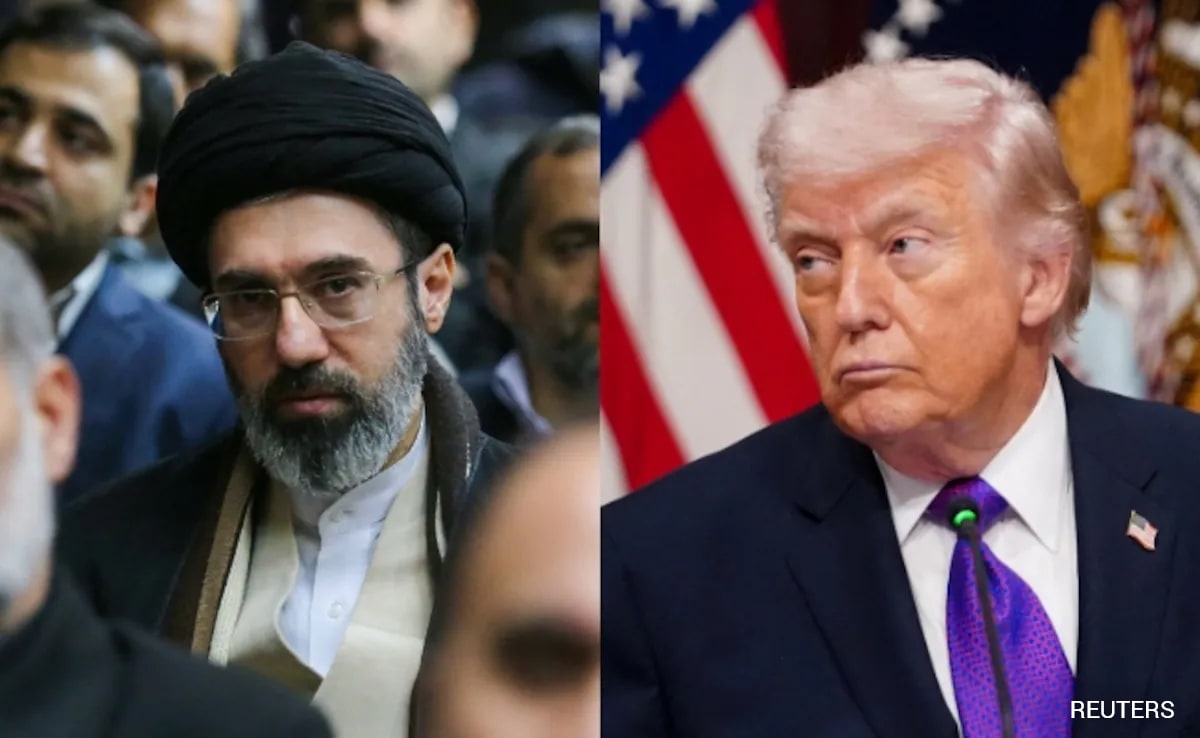
The tea in the Serena Hotel grew cold hours ago. In the high-security corridors of Islamabad, the air carries a specific, metallic tension—the kind that precedes a storm or a failed state. Outside, the traffic of Pakistan’s capital hums with the oblivious energy of millions, but inside these soundproofed rooms, the silence is deafening. There is an empty chair at the table. It was meant for an Iranian envoy. It remains vacant.
Diplomacy is often described as a game of chess, but that is a lie. Chess has rules. Chess has two players who agree to sit across from one another. What is happening between Washington and Tehran on Pakistani soil is more like a haunting. One party is waiting with a pen and a proposal; the other is a ghost, refusing to materialize, leaving the mediators to stare at their own reflections in the polished mahogany.
The stakes are not abstract. They are measured in the heat of a burning horizon. For months, the world has watched the Middle East teeter on the edge of a total conflagration, a regional war that would rewrite the maps and fill the graveyards. Pakistan, acting as the quiet go-between, offered a neutral stage. They offered a chance to whisper truths that cannot be shouted over the roar of missiles.
Iran said no.
The Weight of a Handshake
To understand why a refused meeting matters, you have to look past the press releases and into the eyes of a hypothetical mid-level diplomat. Let’s call him Elias. He has spent thirty hours without sleep, drafting a framework for a ceasefire that could save thousands of lives. He knows that if he can just get the Americans and the Iranians into the same zip code, the momentum of human proximity might do what cables and encrypted signals cannot.
Elias knows that when people sit in a room together, they smell the same coffee. They see the exhaustion in each other’s eyes. It becomes harder to treat the "other" as a monolith of pure evil. But when one side refuses to show up, Elias’s work isn't just delayed. It is insulted.
The Iranian refusal to meet U.S. officials in Pakistan isn't just a scheduling conflict. It is a deliberate act of diplomatic starvation. By denying the Americans face-to-face contact, Tehran is signaling that the time for words has passed, or perhaps, that the words being offered are no longer a currency they recognize.
The Invisible Wall
Why Islamabad? The choice of venue was a masterstroke of geography and necessity. Pakistan shares a porous, volatile border with Iran and maintains a complex, often strained, but functional relationship with the United States. It is the bridge. But bridges are only useful if both sides decide to cross them.
The reports filtering out of the diplomatic circles suggest a wall has been hit. Not a physical wall of stone and mortar, but a psychological one built from decades of broken promises and shifting red lines. The U.S. comes to the table with a list of demands: de-escalation, the curbing of proxy forces, the cooling of the nuclear centrifuge's hum. Iran looks at that list and sees a roadmap to its own irrelevance.
They see a trap.
Consider the optics from Tehran’s perspective. To sit with the Americans in Pakistan would be a concession of weakness to their domestic hardliners. It would be seen as a plea for mercy while the regional fires they’ve stoked are still burning bright. In the brutal logic of Middle Eastern power dynamics, showing up can sometimes be more dangerous than staying away.
The Human Cost of Silence
While the officials trade barbs through third-party intermediaries, the reality on the ground is far less clinical. Every day that a ceasefire remains a "report" rather than a reality, the body count shifts.
The mother in a border village doesn't care about diplomatic protocols. She doesn't care about the nuances of the JCPOA or the intricacies of Pakistani mediation. She cares about whether the sky will stay quiet tonight. When the news breaks that "efforts have hit a wall," it translates into a very simple, terrifying truth for her: the killing will continue.
The tragedy of the empty chair in Islamabad is that it represents a choice. War is often framed as an inevitability—a falling row of dominoes that no one can stop. That is a convenient myth for those who start them. The truth is that peace is a series of deliberate, often agonizing choices. Refusing to meet is a choice. It is a preference for the familiar rhythm of conflict over the terrifying uncertainty of compromise.
The Ghost in the Room
There is a specific kind of frustration that comes with being a mediator. You are the host of a party where the guests hate each other, and you are the one left cleaning up the broken glass. Pakistan has tried to play this role with a mix of desperation and duty. They know better than most that when Iran and the U.S. clash, the fallout doesn't respect international borders.
The American delegation sits in their secure compounds, checking their watches. They represent a superpower that is used to setting the terms of the engagement. To be stood up in Islamabad is a stinging reminder that the world is no longer a unipolar playground. There are now players who find more value in silence than in dialogue.
This refusal is a cold splash of water. It demotes the dream of a quick, clean resolution to the status of a fantasy. The "wall" isn't just a metaphor for a stalled negotiation; it is the tombstone of a specific hope—the hope that common sense would prevail over historical grievances.
The Mechanics of the "No"
We often think of a "No" as a finality. In diplomacy, a "No" is a tactical maneuver. By refusing to meet, Iran forces the U.S. to bid against itself. They are waiting to see how much the Americans are willing to give just to get them to the table. It is a high-stakes game of chicken played with the lives of millions as the currency.
The U.S., for its part, cannot appear too eager. If they scramble to offer more concessions just to secure a meeting, they lose leverage. So, they sit in Pakistan, issuing statements about their "readiness to engage," while the Iranians remain across the border, watching the clock.
It is a stalemate of pride.
But pride is a luxury of the safe. For the people caught in the crossfire of the various proxy wars that this meeting was meant to address, pride is a death sentence. The invisible stakes are the lives that will be lost in the weeks it takes to reschedule, to re-calibrate, and to find a new way to say the same things.
The Echoes in the Hallway
Walking through the corridors of power during a collapsed summit feels like walking through a house where someone has just died. There is a forced politeness, a lowering of voices, and a frantic effort by spokespeople to spin the failure into a "necessary step in a long process."
But you can’t spin an empty chair.
The Pakistani officials, who have risked much to facilitate this, are left to explain the unexplainable. They have to tell their own people, and the world, that the bridge they built leads nowhere. The effort hit a wall because the wall was more comfortable for the participants than the open road.
Consider the ripple effect. When these efforts fail, the hawks on both sides grow feathers. The voices calling for "decisive action" and "military solutions" get louder. The diplomats, the Eliases of the world, are pushed further into the corners. Their maps and frameworks are tossed into the shredder.
Beyond the Briefing
The news will tell you that the ceasefire efforts are "stalled." They will use words like "deadlock" and "impasse." These are clean words. They don't smell like cordite. They don't sound like a child crying in the ruins of a home.
The reality is that the failure in Islamabad is a victory for chaos. It is a signal to every extremist group and every regional actor that the grown-ups are not in control. It is an admission that the machinery of peace is broken, and no one has the parts to fix it.
The sun sets over the Margalla Hills, casting long, jagged shadows across the city of Islamabad. The American motorcade prepares to head back to the airport. The Pakistani hosts offer their final, stiff-lipped courtesies. Somewhere across the border, the decision-makers in Tehran are already moving on to the next move, satisfied with their defiance.
We are left with the image of that mahogany table. The water glasses are still full. The pads of paper are white and unmarred. The pens are capped. It is a pristine scene of a disaster.
The greatest tragedies in history aren't always marked by explosions. Sometimes, they are marked by the sound of a door that never opened and a conversation that never began. The wall isn't made of bricks; it's made of the seconds, minutes, and hours that pass while men with the power to stop the bleeding choose to keep their hands in their pockets.
The tea is cold. The room is empty. The world waits, and the horizon continues to glow with a fire that no one in Islamabad was brave enough to put out.