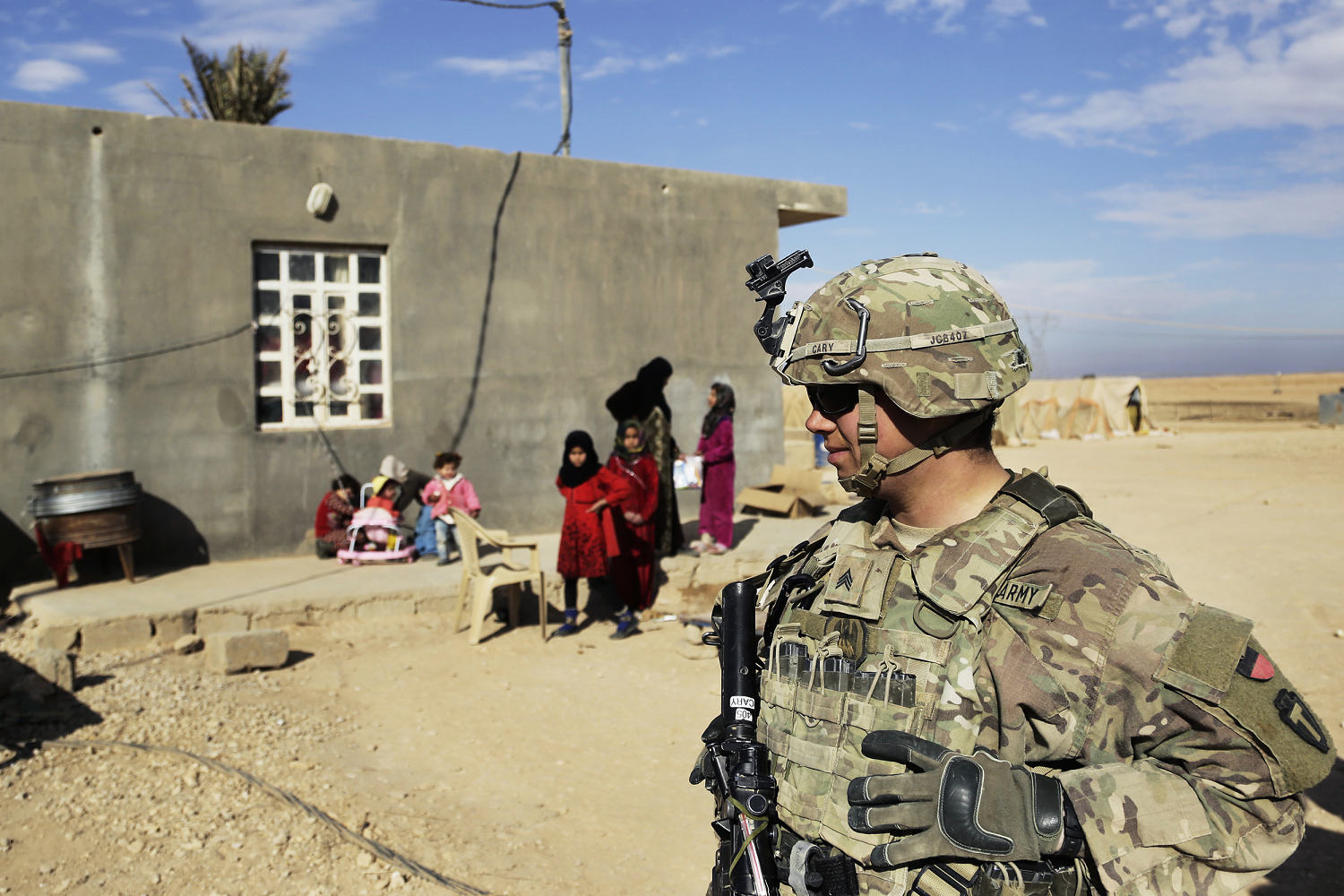
The headlines are drowning in manufactured panic. Turn on any cable news broadcast or read the standard wire dispatches, and you will find a chorus of anxious pundits wringing their hands over the United States winding down its military footprint in Iraq. The lazy consensus among defense establishment insiders is that withdrawing troops opens a vacuum, invites chaos, and hands an immediate victory to residual insurgent networks.
It is a narrative built on institutional inertia, bad history, and a fundamental misunderstanding of what military presence actually achieves in the twenty-first century.
I have spent years watching defense contractors and career bureaucrats treat permanent deployments as self-sustaining life support systems. The conventional wisdom treats boots on the ground as an unmitigated stabilizer, ignoring the reality that a stationary military presence often acts as a friction point, generating the very resistance it claims to deter. Ending the primary combat mission in Iraq is not a retreat; it is overdue structural surgery.
The Myth of the Vacuum
The core argument of the interventionist playbook relies on the vacuum theory. The premise goes like this: if Washington steps back, a worse actor steps in to fill the space.
This view treats sovereign nations as empty glass vessels waiting to be filled by foreign occupants. It ignores the complex domestic political machinery, local security forces, and regional diplomacy operating independently of American troop counts. By framing the departure as a dangerous abandonment, the press obscures a basic geopolitical truth: permanent military occupations breed permanent dependency. Iraqi security forces have spent years operating under American logistical cover. Keeping training wheels on an army indefinitely guarantees it never learns to ride.
When you remove the crutch, capability either develops or collapses. But pretending that keeping a couple of thousand troops in a fortified compound indefinitely prevents deep-seated regional power struggles is pure delusion. It is a holding pattern masquerading as a strategy.
The Cost of Staying Put
Let us look at the ledger. For over two decades, the security establishment has poured billions of dollars into indefinite entanglements across the Middle East, operating under the assumption that infinite staying power equals strategic success.
Every year spent maintaining logistical lines and force protection for a legacy mission diverts resources from actual great-power competition. While strategists in Washington obsess over mid-level insurgency suppression in the Mesopotamian basin, peer competitors are modernizing naval capabilities, investing in autonomous systems, and rewriting the rules of electronic warfare.
The opportunity cost of maintaining a redundant footprint is staggering. When you tie down operational bandwidth in low-yield holding actions, you sacrifice the flexibility required to adapt to a shifting global chessboard.
What the Pundits Get Wrong About Security
The prevailing commentary assumes that stability can be imported at gunpoint. It treats security as a commodity that can be deployed via cargo plane and sustained through perpetual patrols.
History suggests the exact opposite. Long-term stabilization requires domestic political legitimacy and local economic integration, neither of which can be manufactured by foreign battalions. In fact, a visible foreign military footprint frequently undermines local governance by allowing corrupt political actors to outsource their security responsibilities while blaming outside interference for their own structural failures.
By shifting away from a direct combat role, Washington forces local actors to negotiate their own power arrangements. Does that process involve friction? Absolutely. Regional politics is messy, brutal, and entirely outside the control of Pentagon slide decks. But attempting to insulate a country from its own internal political evolution through permanent garrisoning is a fool's errand.
The Real Shift
Make no mistake: winding down a specific mission framework does not mean abandoning regional intelligence cooperation or diplomatic engagement. Smart power relies on agility, precise oversight, and economic leverage, not multi-decade infantry commitments.
The real story here is not that America is abandoning the region. The real story is that Washington is finally being forced to adapt to a multipolar reality where permanent occupation is no longer financially, politically, or strategically viable.
The architects of endless deployments want you to fear the unknown because their entire careers depend on maintaining the status quo. Do not buy it. Ending a mission that has run its course isn't a failure of nerve. It is the beginning of strategic sanity.