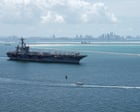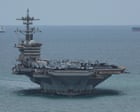
The USS Abraham Lincoln carrier strike group is returning to its home port in San Diego after an extended deployment that laid bare the crushing operational tempo defining modern naval power. Extended well beyond normal operational windows, this voyage highlights a grim reality across the armed forces. Sailors and aviators are absorbing the costs of relentless global commitments with inadequate force structure.
When a nuclear-powered aircraft carrier spends months circling contested waters without a break, the strain reaches far beyond the flight deck. It fractures families, burns out maintenance pipelines, and leaves hardware battered. The public sees the triumphant homecoming footage on local news. Veterans and defense analysts see the structural fatigue hiding beneath the grey paint.
The Cost of Persistent Forward Presence
For decades, the foundational doctrine of American naval strategy relied on forward presence. Keep hulls in the water. Show the flag. Deter adversaries by simply being in their backyard.
The strategy worked when the global fleet matched the global mission. Today, that equation is broken. With a shrinking total hull count and an expanding list of maritime flashpoints from the Red Sea to the Western Pacific, the math no longer works. The Navy is running a smaller fleet much harder to cover the exact same geographic acreage.
Extended deployments are no longer anomalies. They are a desperate substitute for end strength. When lawmakers and Pentagon officials talk about pacing challenges and peer competitors, they often omit the human attrition rate required to maintain the illusion of omnipresence.
Maintenance Backlogs and Hardware Stress
An aircraft carrier is a floating city operating in a corrosive saltwater environment at high stress tolerances. Nuclear propulsion plants, catapult systems, arresting gear, and radar arrays demand meticulous, time-consuming maintenance cycles in controlled shipyard environments.
When deployments stretch from six months to nine months or beyond, those maintenance windows compress. Crews perform band-aid fixes at sea. Deferred depot-level maintenance compounds over time, leading to cascading readiness failures down the road.
A carrier returning to San Diego after a record-breaking stint does not instantly become ready for the next crisis. It enters a lengthy post-deployment reset phase. During this window, the ship remains largely sidelined while technicians tear down machinery to reverse the wear of months spent operating at surge tempo. Every month added to a deployment is often paid back with interest in extended yard periods later.
The Human Element and Retention Crisis
Hardware can be welded, rewired, and refueled. Human endurance is finite.
Junior sailors and seasoned petty officers alike bear the brunt of operational extensions. Communication blackouts, disrupted sleep schedules, broken family milestones, and constant combat readiness states erode morale. Retention rates for critical technical ratings—nuclear operators, aviation structural mechanics, and electronics technicians—suffer when the lifestyle resembles an endless loop of sea trials without adequate stabilization ashore.
When experienced sailors leave the service because they can no longer tolerate the unpredictability of deployment extensions, the institutional memory departs with them. Replacements are younger, less experienced, and forced to learn complex naval operations under hostile conditions.
A Strategy Searching for Balance
The return of the USS Abraham Lincoln to San Diego marks the end of one grueling chapter, but it resolves none of the systemic pressures driving the fleet toward exhaustion.
Policymakers face an uncomfortable reckoning. The United States cannot perpetually rely on extension after extension to mask capacity shortages without breaking the force. Until fleet size aligns with global strategy, sailors will continue to pay the price for a defense posture stretched past its breaking point.