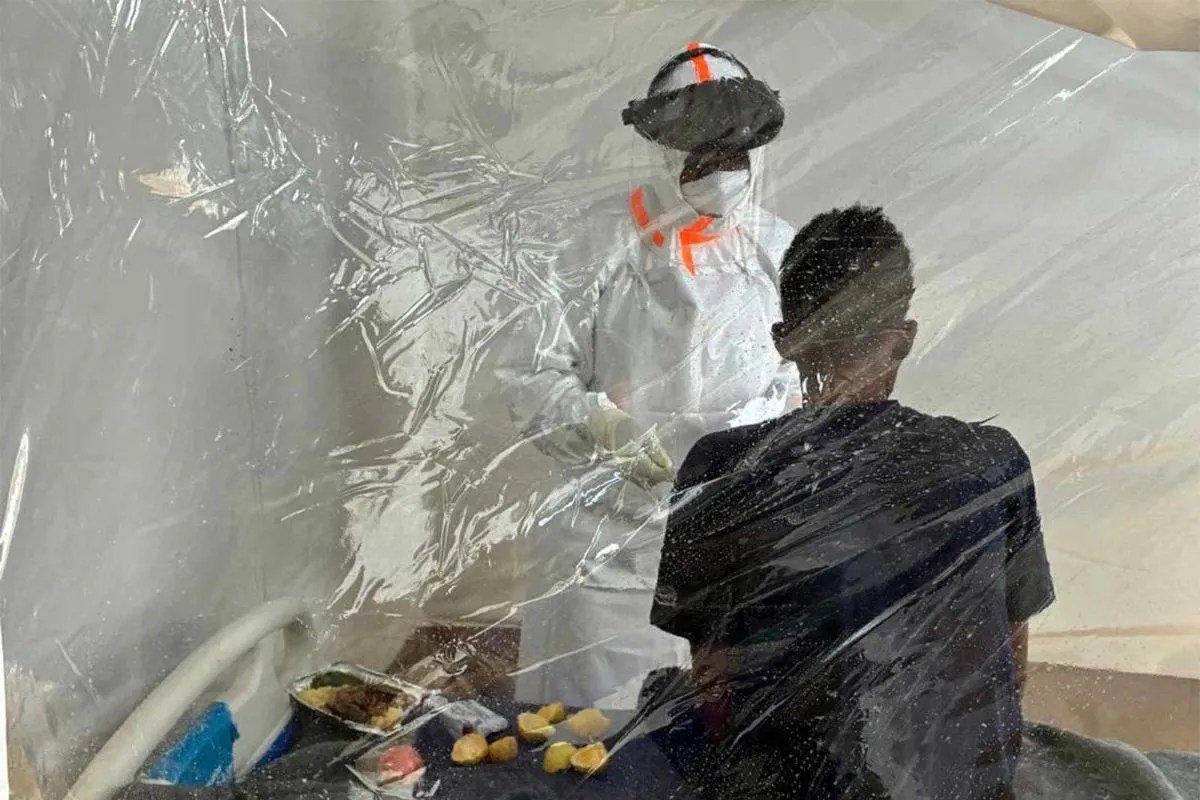
The containment of Ebola virus disease in the Democratic Republic of the Congo is routinely compromised not by virological novelty, but by structural vulnerabilities in operational delivery, supply chain integrity, and community trust architecture. When outbreak management defaults to reactive containment rather than systematic institutional hardening, mortality metrics escalate into thousands of preventable fatalities. Understanding why outbreaks sustain high casualty counts requires moving past descriptive reporting of case numbers and evaluating the precise mechanical points of failure within healthcare delivery systems, infection prevention protocols, and public health governance.
The Vector Dynamics of Systemic Transmission
Pathogen transmission efficiency in resource-constrained environments is a function of latency, diagnostic velocity, and vector mobility. The Democratic Republic of the Congo presents a distinct epidemiological terrain characterized by porous borders, active conflict zones, and decentralized healthcare infrastructure. These variables alter the fundamental reproductive number of the virus.
When health systems lack rapid-diagnostic capacity at the primary point of care, symptom onset to clinical isolation intervals widen. This delay expands the secondary exposure window. Each infected individual interacts with multiple nodes within densely populated trading hubs or rural family units before clinical recognition occurs. The resulting transmission chains outpace manual contact tracing capacity.
Furthermore, clinical presentation overlaps heavily with endemic pathologies such as malaria and typhoid. Without immediate molecular testing platforms deployed locally, triage protocols rely on probabilistic symptom matching. This introduces false negatives into the screening funnel, routing infectious patients back into general hospital wards where nosocomial amplification occurs.
Institutional Friction Points in Outbreak Response
Effective containment relies on a continuous feedback loop between epidemiological surveillance, laboratory processing, and community-level intervention. In practice, several operational friction points degrade this loop.
Logistics and Cold Chain Deficiencies
Thermolabile countermeasures, including vaccines and specialized therapeutics, require strict temperature management. Transporting these assets through regions with compromised road networks and irregular electrical grids introduces inventory spoilage. When supply replenishment fails to match localized flare-ups, clinicians face rationing decisions that compromise the therapeutic window for high-risk patients.
Surveillance Bottlenecks
Contact tracing depends on real-time data ingestion and field-level mobility. When fuel shortages, security restrictions, or communication infrastructure failures impede field teams, observation windows lapse. A missed contact for even forty-eight hours permits undetected movement across health zone boundaries, converting a localized cluster into a multi-province distribution problem.
Clinical Infrastructure Limitations
Isolating infectious patients requires dedicated infrastructure with negative pressure environments or strict barrier nursing protocols. Standard district hospitals frequently lack the physical segregation necessary to protect uninfected admissions. Nosocomial transmission then transforms clinical facilities into primary vectors of disease propagation, eroding whatever residual trust the population holds in formal medicine.
The Trust Deficit and Community Resistance Function
Epidemiological interventions do not occur in a political vacuum. Decades of institutional neglect, armed conflict, and economic marginalization create a foundational skepticism toward state-directed and international health interventions.
When response teams arrive accompanied by security forces or wearing high-isolation personal protective equipment without adequate prior consultation, they trigger defensive community behaviors. Safe burial protocols, which are non-negotiable for halting transmission chains, routinely violate traditional funerary rites. When these protocols are enforced coercively rather than through culturally calibrated negotiation, communities respond by concealing symptomatic individuals and burying the deceased secretly.
This behavioral adaptation creates a hidden reservoir of transmission. Official surveillance data diverges from ground truth, rendering epidemiological forecasting models inaccurate and misallocating scarce medical supplies away from active pockets of contagion.
Resource Allocation and Economic Externalities
The financial architecture of epidemic response is plagued by reactive funding cycles. Capital mobilization typically lags weeks behind the velocity of transmission acceleration. By the time emergency disbursements clear international bureaucratic hurdles, the outbreak has established deep roots across multiple administrative sectors.
This capital delay forces operational triage. Funds are funneled into emergency response overhead—such as temporary treatment centers and international logistics—while long-term health system reinforcement, local laboratory training, and municipal sanitation improvements remain underfunded. Consequently, each recurring outbreak resets institutional memory rather than building enduring capacity. Healthcare workers absorb the human cost, experiencing high attrition rates due to infection, trauma, and chronic under-compensation.
Strategic Operational Imperatives
Mitigating future catastrophic mortality events in Central Africa requires a structural pivot away from emergency paternalism toward decentralized, community-embedded resilience.
First, diagnostic autonomy must be pushed to the primary healthcare tier. Deploying cartridge-based nucleic acid amplification tests to rural clinics compresses the time from presentation to isolation from days to hours.
Second, community engagement architectures must precede clinical deployment. Local health committees, traditional leadership structures, and informal civil society networks must co-design response protocols, particularly concerning burial practices and patient transport, eliminating the friction caused by top-down edicts.
Third, supply chain resilience must be treated as a matter of national security. Pre-positioning durable medical goods, establishing redundant cold-chain nodes outside major urban centers, and training local technical maintenance personnel ensures that operational capacity survives regional instability.
The persistence of high mortality during Ebola outbreaks in the Democratic Republic of the Congo is a systemic failure of execution, not an immutable natural disaster. Addressing the underlying mechanical flaws in diagnostics, supply chains, and social contract management remains the only viable mechanism to alter the trajectory of future epidemics.