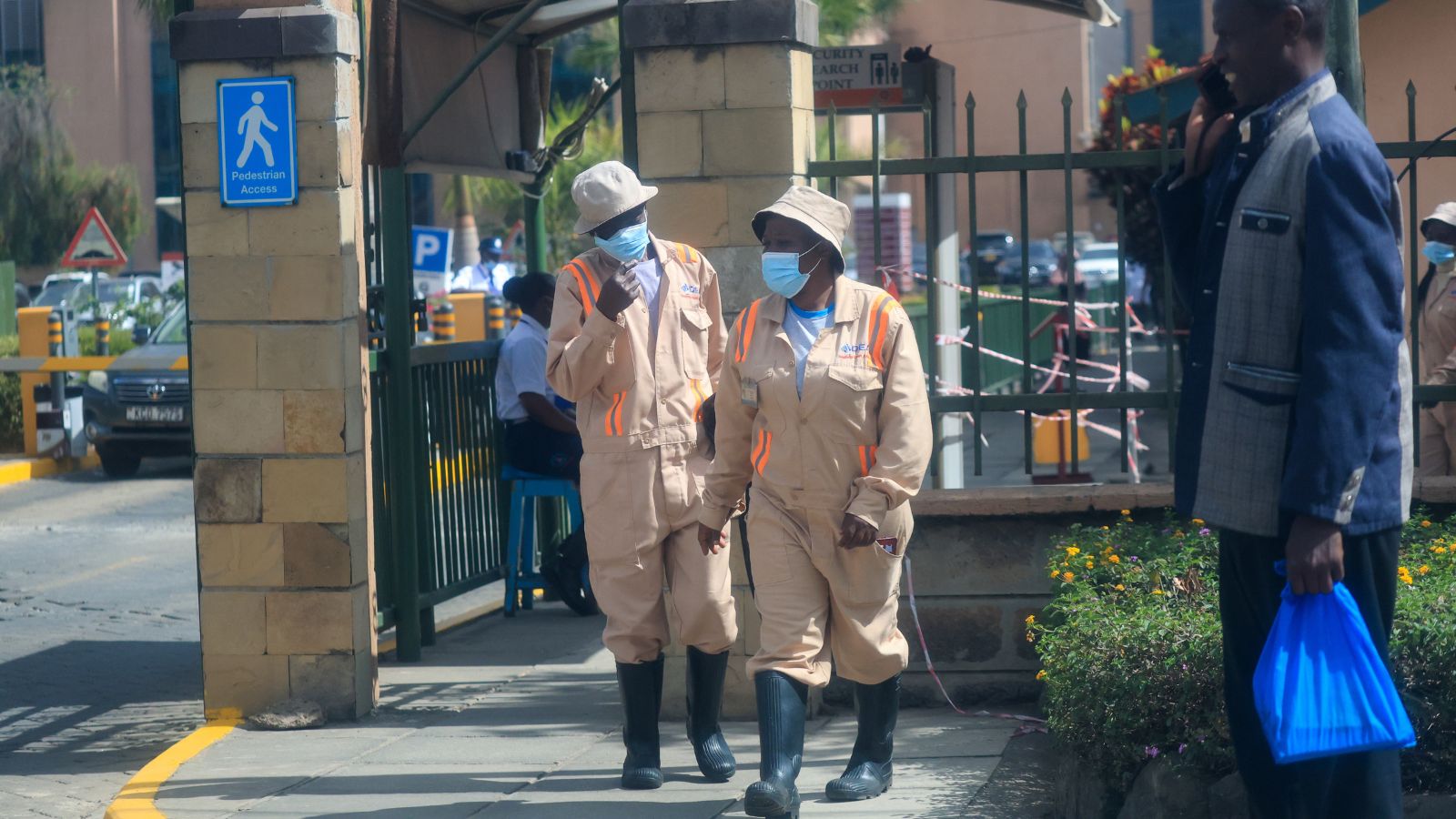
The containment failure of infectious disease across geopolitical borders is rarely a failure of medical science; it is a structural breakdown in surveillance velocity, transit screening fidelity, and contact tracing response times. When the index patient for Kenya's imported Ebola event traveled from the Democratic Republic of Congo through Uganda into Nairobi, the trajectory exposed predictable vulnerabilities in regional health architecture. Pathogen transport relies on mobility networks. Understanding how a viral vector breaches sovereign defenses requires examining the mechanics of incubation windows, border screening limitations, and institutional isolation protocols.
The primary variable governing cross-border importation is the latency period relative to transit duration. The Bundibugyo strain driving the central African outbreak possesses an incubation window ranging from two to twenty-one days. This temporal breadth creates an asymmetric advantage for the pathogen. A traveler can acquire the virus in an active transmission zone, remain asymptomatic or experience mild, non-specific prodromal symptoms during transit, and pass standard thermal or visual checks at international ports of entry. Symptom masking via antipyretic administration further reduces the efficacy of passive border surveillance, allowing infected individuals to enter dense urban nodes before clinical presentation forces hospitalization. You might also find this connected coverage useful: The Pharma Rush on Pediatric Weight Loss and Why the World Health Organization Drew a Hard Line.
Urban clinical environments present a distinct set of propagation vectors. Upon arrival in Nairobi, the patient sought care at a medical facility, where initial presentation with fever and systemic symptoms triggered isolation protocols. However, the window between clinical presentation and institutional containment defines the risk matrix for secondary transmission. Nosocomial spread typically occurs during this vulnerable interval before strict barrier nursing is enforced. In this specific event, subsequent transmissions were restricted entirely to immediate family members and healthcare workers who had direct contact with the index patient during the pre-isolation phase.
The containment efficacy observed in Kenya highlights the critical function of ring fencing and trace-and-isolate mechanisms. Public health authorities identified and quarantined all secondary contacts before clinical symptoms manifested in those cohorts. This operational speed short-circuited exponential community spread. Mathematical modeling of viral reproductive numbers indicates that an R0 value above 1 requires aggressive intervention to force reproduction rates downward. By isolating secondary cases early, health systems suppress the transmission chain, preventing localized clusters from graduating into endemic community diffusion. As highlighted in detailed articles by Psychology Today, the results are worth noting.
Evaluating the broader geopolitical response reveals systemic friction points across regional infrastructure. Cross-border population flows driven by commerce, family ties, and regional conflict outpace the administrative capacity of immigration and health ministries to execute comprehensive tracking. Border checkpoints often lack real-time diagnostic integration, relying instead on paper health declarations and delayed reporting structures. Consequently, containment strategies must shift away from perimeter border closures—which historically fail due to economic leakage and underground transit routes—toward high-density surveillance at transit hubs and rapid diagnostic deployment at peripheral clinics.
Resource allocation remains a structural constraint. Healthcare worker infection rates in primary outbreak zones underscore the hazard of inadequate personal protective equipment and protocol fatigue. Mitigating future importations requires standardizing point-of-care diagnostics across regional transit corridors, ensuring that molecular testing replaces presumptive clinical diagnosis during the critical diagnostic window. The operational blueprint moving forward demands institutionalizing real-time data sharing between ministries of health, hardening nosocomial infection control standards, and eliminating the diagnostic lag that allows mobile vectors to outpace containment infrastructure.