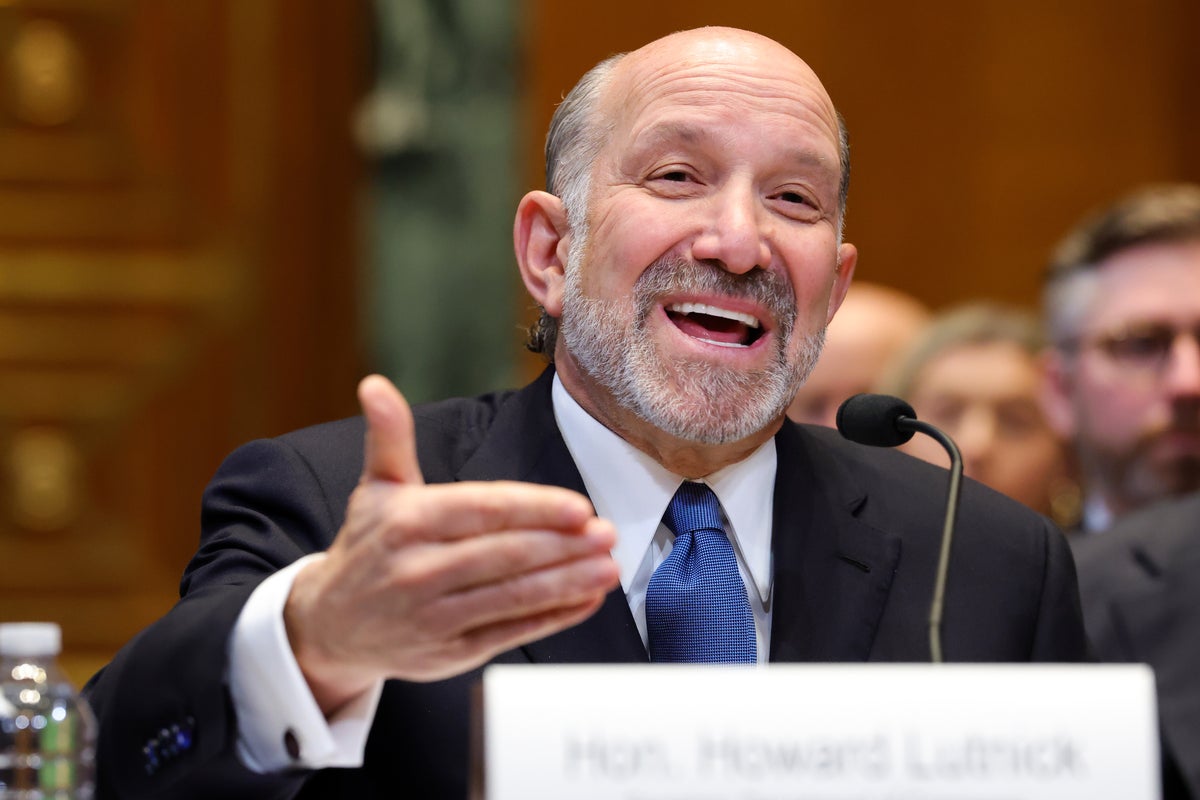
Congress loves a ghost story. Especially one with a villain as reliable as Jeffrey Epstein. As the confirmation hearing for Howard Lutnick nears, the headlines are already written. They focus on flight logs, social circles, and the proximity of a billionaire to a monster. It is the easiest, lowest-hanging fruit in the political orchard.
It is also a total waste of your time.
If you are watching the Lutnick hearing to find out "the truth" about his connections to the Epstein circle, you are falling for the oldest trick in the Beltway playbook. The obsession with Epstein is a tactical distraction—a shiny object waved by senators to avoid discussing the terrifyingly boring, and far more consequential, mechanics of global trade and the future of the American dollar.
The Guilt by Association Fallacy
The "lazy consensus" suggests that if Lutnick’s name appears in proximity to Epstein’s orbit, he is compromised. This is a fundamental misunderstanding of how the upper echelons of New York finance operated between 1990 and 2008. In that era, Jeffrey Epstein was a self-styled financier who embedded himself into the social fabric of the ultra-wealthy.
If we disqualified every executive who attended the same charity gala or sat on the same board as a future felon, the C-suites of every Fortune 500 company would be empty.
I’ve seen this movie before. In the early 2000s, it was the Enron contagion. Anyone who had ever shared a steak with Ken Lay was suddenly an accomplice. It’s a cheap way to score political points without having to understand a balance sheet. The real questions for Lutnick shouldn't be about who he saw at a party twenty years ago; they should be about how he intends to weaponize the Department of Commerce.
Why the Epstein Angle is a Gift to Lutnick
Ironically, the more Congress screams about Epstein, the easier Lutnick’s job becomes.
When a nominee faces sensationalist personal attacks, they get to play the victim of a "partisan witch hunt." It allows them to pivot away from grueling questions about tariffs, export controls, and the CHIPS Act. Every minute spent on a debunked conspiracy theory is a minute not spent asking Lutnick how he plans to manage the volatile trade relationship with China.
If I were Lutnick’s prep team, I would pray for Epstein questions. Those are easy to deflect with a rehearsed "I had no knowledge of his crimes and found them abhorrent." What’s harder to deflect is a deep dive into the $Cantor Fitzgerald$ business model and how those private interests might clash with public policy.
The Boring Reality You’re Ignoring: Protectionism
While the media chases ghosts, the Commerce Department is quietly becoming the most powerful agency in Washington. Historically, Commerce was where you stashed big donors so they could oversee the Census and the weather service. Not anymore.
In the current geopolitical climate, Commerce is the tip of the spear for:
- Entity List Management: Deciding which foreign companies are banned from buying American tech.
- Section 232 Investigations: Levying tariffs in the name of "national security."
- Semiconductor Sovereignty: Distributing billions in subsidies to domestic chipmakers.
Lutnick isn't being hired to be a socialite. He’s being hired to be an architect of a new, aggressive protectionism. This is the "nuance" the mainstream press misses: the shift from a globalist free-trade model to a mercantilist "America First" strategy is a massive structural change. It will affect the price of your phone, the stability of your 401(k), and the likelihood of a hot war in the Pacific.
But sure, let’s spend three hours talking about a private jet.
The "People Also Ask" Trap
People are asking: "Did Howard Lutnick know about Jeffrey Epstein's crimes?"
The brutal answer: Even if he did, you’ll never prove it in a hearing room, and it has zero bearing on whether he can run the Department of Commerce.
People are also asking: "Is Howard Lutnick qualified?"
This is the wrong question. In the current administration, "qualified" doesn't mean having a PhD in Economics. It means having the stomach to execute a trade war. Lutnick, a man who rebuilt Cantor Fitzgerald from the ashes of 9/11, has the stomach. The question isn't his competence; it's his intent.
The Danger of the Moral High Ground
The risk of this contrarian view is that it sounds dismissive of Epstein’s victims. It isn't. The crimes were horrific. But using them as a political cudgel in a confirmation hearing for a Commerce Secretary is a disservice to those victims. It turns their tragedy into a procedural hurdle.
The Senate floor is not a courtroom for sex crimes; it is a vetting chamber for the executive branch. When we confuse the two, we get bad policy and no justice.
The Trade-Off Nobody Admits
If you want a Commerce Secretary who is a "pure" outsider with no ties to the New York financial elite, you are asking for someone who doesn't understand how global capital moves. You cannot have it both ways. You cannot demand a titan of industry and then act shocked when they have the social calendar of a titan of industry.
Lutnick represents the merger of Wall Street aggression with Washington’s new desire for economic isolationism. That is a volatile, potent mix. It deserves scrutiny that goes deeper than a tabloid headline.
Stop looking for the Epstein connection. Start looking at the tariff schedules.
The hearing will be a circus. The senators will preen for the cameras. They will act outraged about "connections" and "associations." They will tweet out clips of themselves "grilling" the nominee. And while they are doing that, the actual mechanisms of the global economy will be reshaped behind a veil of theatrical moralizing.
The Epstein narrative isn't the story. It's the camouflage.
If you want to know what the next four years of American trade will look like, ignore the sensationalism. Watch the moments when the room goes quiet, when the cameras stop flashing, and when they actually start talking about the flow of silicon and steel.
Everything else is just noise for the cheap seats.
The reality is that Howard Lutnick is probably the most consequential Commerce pick in decades, not because of who he knew, but because of what he’s willing to do to the global trade order. If you're still looking for Epstein in the flight logs, you've already lost the plot.
Go ahead. Obsess over the guest list. The rest of us will be watching the bottom line.